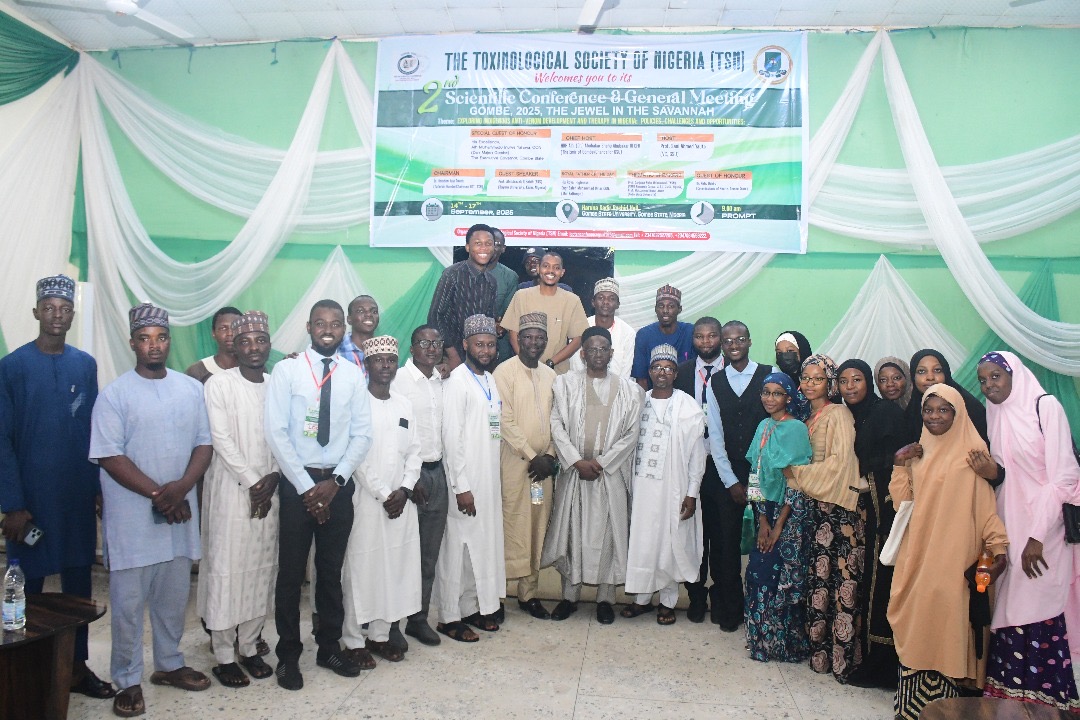
The Toxinological Society of Nigeria (TSN) has urged the Federal Government and state governments to increase funding to combat snakebite envenoming, a critical public health challenge in Nigeria.
According to Prof. Abdulrazak G. Habib, “Development of Local Anti-venom capacity either directly by the Government or through Public Private partnership is necessary to reduce the health and economic burden of envenomation and mortality rate due to snake bite”.
The TSN made this call during its 2nd Annual General Meeting held at Gombe State University, with the theme “Exploring Indigenous Anti-Venom Development and Therapy in Nigeria: Policies, Challenges and Opportunities”. The meeting brought together clinicians, researchers, academics, public health experts, traditional leaders, students, and policymakers to discuss the challenges and opportunities in addressing snakebite envenoming in Nigeria.
The society emphasised the need for sustained funding and infrastructural development to effectively manage snakebite cases in Nigeria. The Gombe State Government should prioritize the expansion of the Snakebite Treatment and Research Hospital (SBTRH) in Kaltungo to include specialized units for pediatric care and ophthalmology. The Federal Government should allocate dedicated funds for upgrading SBTRH’s infrastructure.
A National Centre of Excellence for Venom, Anti-Venom, and Natural Toxins Research should be established in Gombe State to develop locally relevant antivenoms and position Nigeria as a leader in Toxinology research. Gombe State should allocate 1 percent of its internal revenue to a dedicated snakebite response fund to cover free antivenom distribution and emergency care for victims.
The SBTRH should be upgraded to a National Snakebite Hospital with a mandate for national snakebite surveillance, data collection, and training for healthcare workers. This will improve outcomes for complex cases and facilitate nationwide data sharing for policy development.
Nigeria bears one of the highest burdens of snakebite envenoming in sub-Saharan Africa, with an estimated 43,000 cases and 1,900 deaths annually. The carpet viper is responsible for over 66 percent of bites, causing haemotoxic envenoming that requires immediate antivenom administration. Without decisive intervention, snakebite will continue to perpetuate cycles of poverty and disability in vulnerable communities.
The TSN urged the Federal Government, Gombe State Government, and international partners to act immediately on these recommendations.
“Snakebite envenoming is a preventable and treatable condition, yet it continues to cause needless deaths and disabilities due to systemic neglect,” said Dr. Mustapha Shehu Muhammad, Secretary General of TSN. “By investing in infrastructure, research, and sustainable financing, Nigeria can become a model for snakebite management in Africa and contribute to the WHO goal of halving the global burden of snakebite by 2030.”