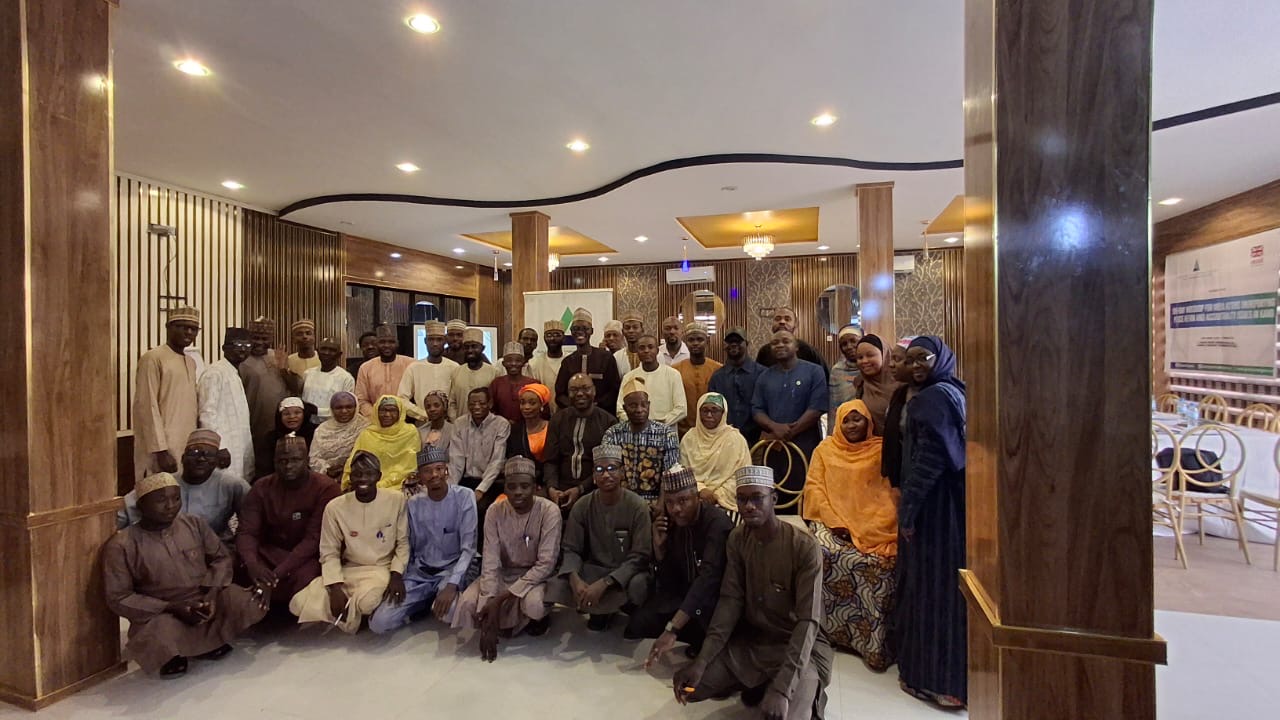
The Rule of Law and Empowerment Initiative, also known as Partners West Africa Nigeria (PWAN), has trained media practitioners on police reform, accountability and the effective implementation of the Police Act 2020 to enhance public trust.
Speaking at a one-day workshop for media actors, the Acting Programme Manager of PWAN, Mrs Aisha Isa-Yusuf, said the training was organised to sensitise journalists across media platforms on the provisions and innovations of the Police Act 2020.
She said the training was aimed at promoting awareness of policing reforms, strengthening accountability and fostering a violence-free society.
Isa-Yusuf described journalists as critical stakeholders and a bridge between security agencies, government institutions and the public.
“We organised this training to sensitise media practitioners on the new Police Act of 2020, its innovations and what it contains to ensure a more accountable and violence-free society.
“The journalists are the mouthpiece of the masses. They are the bridge between law enforcement agencies, government officials and the communities. Strengthening that bridge will help promote collaboration and accountability in society,” she said.
She urged journalists to raise public awareness on the provisions of the Act, noting that the law introduced reforms to address human rights violations, protect the dignity of suspects, and safeguard lives and property.
According to her, the Act prohibits arrest in lieu, prevents police from interfering in civil or contractual disputes, and ensures that women who meet bail conditions are not denied bail.
“There are new provisions in the Police Act that replace outdated colonial practices. The public must be sensitised on these reforms to promote a safer and more accountable society,” she said.
She emphasised the role of the media in monitoring police conduct at the grassroots and ensuring accountability through investigative and solutions-driven reporting.
Isa-Yusuf urged journalists to verify information through forensic journalism, sustain public engagement through cross-platform reporting, and follow up cases until court verdicts are delivered.
Also speaking, a facilitator, Mr Odoh Okenyodo, stressed the importance of developmental and solutions journalism in addressing policing challenges.
Okenyodo said journalists should highlight effective reforms while exposing existing gaps, noting that balanced reporting would enhance understanding between the police and the public.
“We are not saying journalists should stop investigative reporting. Rather, we are encouraging the use of solutions journalism as an additional tool to address complex policing challenges,” he said.
He added that the Police Service Commission and other oversight institutions created by law could be engaged by journalists to strengthen accountability mechanisms.
Another facilitator, Mr Aro Leonard, urged journalists to leverage their influence in promoting transparency and reform in the policing system.
Leonard said the media possessed significant power to shape public discourse and hold institutions accountable through factual and balanced reporting.
PWAN is a women-led non-governmental organisation committed to strengthening citizen participation, improving security governance, and enhancing protection systems across Nigeria and West Africa.
The programme, organised by PWAN with support from the Foreign, Commonwealth and Development Office (FCDO UKaid), is implementing a project titled “Enhancing Public Trust and Gender-Responsive Policing in Nigeria Through the Effective Implementation of Police Act 2020” across the six geopolitical zones of the country.