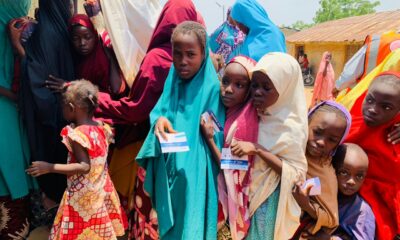
A woman in rural Northern Nigeria coughs through the night.
She has been coughing for weeks. Not because she does not care. Not because she refuses treatment. But because the nearest diagnostic facility is far. Because transport costs compete with feeding her children. Because stigma whispers louder than science. By the time she was diagnosed, the disease has already advanced, having silently spread in their crowded home.
Every single day in Nigeria, an estimated 1,200 to 1,300 people develop tuberculosis.
That is more than 50 Nigerians every hour, not in headlines, not in breaking news alerts.
But in homes, in markets, in schools, and in rural communities where diagnosis may be miles away.
Nigeria remains among the highest TB-burden countries in the world, first in Africa and among the top globally. With roughly 467,000 new cases recorded annually, in 2024, more than 400,000 new TB cases were notified, out of an estimated over 500,000 infections, and treatment coverage hovered around 79 %. Yet many cases remain undetected, fueling continued transmission across communities, the epidemic is not slowing at the pace required to meet global End TB targets.
Behind these numbers are deeper structural challenges. According to the World Health Organization (WHO), Nigeria faces a critical TB funding gap, with just 18% of required funds provided domestically and approximately 73% of the national TB budget unfunded in 2025.This heavy reliance on external funding undermines sustainability and risks stalling progress when donor commitments shift.
The funding gap isn’t just a fiscal problem, it slows scale-up of diagnostics, weakens community case detection, and limits outreach to underserved populations. When diagnostic tools like GeneXpert machines are unavailable in nearly half of local government areas, delays in diagnosis become inevitable barriers that cost lives.
Beyond finance, TB is burdened by silence and misconceptions. Stigma discourages people from seeking testing, delays treatment, and deepens fear. In Nigeria, undetected cases perpetuate the epidemic, as one untreated person can infect many others each year.
Yet in the midst of this challenge, there is a transformational force. The Leprosy and Tuberculosis Relief Initiative (LTR Nigeria) stands at the intersection of science, compassion, and advocacy. LTR Nigeria is mobilizing communities, countering myths, expanding awareness, and bridging the gap between policy frameworks and lived realities. Through targeted community engagement, stigma reduction campaigns, and support to persons affected by TB, LTR Nigeria demonstrates that when knowledge replaces fear, and support replaces silence, outcomes change.
But local efforts, no matter how noble, cannot substitute for national will.
Ending TB in Nigeria is possible, the science is clear, the treatment exists, and the tools for prevention are available. What remains is a collective choice: to fund the fight against TB with the same urgency we apply to crises deemed more visible; to build resilient health systems that prioritize TB detection, diagnosis and treatment; and to integrate care into universal health coverage without delay.
Tuberculosis is preventable. Tuberculosis is treatable.Tuberculosis is curable.
But every day we hesitate, families suffer and transmission continues.
Nigeria has the capacity to lead the change. The question is whether we will fund it, act on it, and commit to it, not just with words, but with sustained resources, inclusive policy, and unrelenting resolve.
Because ending TB is not only a public health goal, it is a moral mandate.
And with partners like LTR Nigeria driving community-centered solutions, that mandate can become reality.
Saleh Farouq Gagarawa (anipr)
Communication & Media Officer
LTR Nigeria