Across the world, leprosy is often described as an ancient disease nearing elimination. Yet in Nigeria, the story is far more complex and far more urgent. Behind national statistics and policy frameworks lie dozens of aging settlements where thousands of persons affected by leprosy continue to live in conditions that challenge the very idea of dignity in public health.
Globally, more than 182,000 new leprosy cases were reported in 2023, with Africa accounting for over 21,000 cases. Nigeria remains among the high-burden countries, contributing a significant share of cases worldwide. While the disease is curable with multidrug therapy, the social and structural consequences persist long after treatment ends.
Today, Nigeria officially records roughly 2,000 to 2,500 new cases annually, yet the deeper crisis lies in what happens after diagnosis.
Across 61 known settlements, more than 400,000 Nigerians live with the long-term consequences of leprosy, many in communities originally designed decades ago as isolation colonies. These settlements, once intended as temporary care spaces, have in many cases become permanent enclaves of exclusion.
Field observations and independent reporting continue to reveal a troubling pattern: aging infrastructure, limited access to healthcare, poor water and sanitation systems, and minimal social protection. In some colonies, families still rely on informal birth practices due to weak health access, while residents report persistent poverty and psychological trauma linked to stigma.
These conditions are not merely humanitarian concerns. They represent systemic policy blind spots.
Nigeria has made commendable progress in reducing prevalence rates nationally, yet pockets of high burden remain, particularly in underserved communities. The existence of deteriorating colonies underscores a critical truth: elimination as a public health metric does not equal elimination of suffering.
One of the most persistent structural challenges is financing. Evidence indicates that Nigeria’s leprosy response continues to depend heavily on external donor support for essential components such as diagnosis, drug supply, and community outreach.
More concerning is the absence of a clearly earmarked domestic budget line dedicated specifically to leprosy programming. Analysts note that while the broader health sector receives substantial allocations, public budget documents rarely show ring-fenced funding for leprosy control.
This creates three major risks:
• interruptions in drug supply
• weak rehabilitation and welfare services
• slow modernization of legacy colonies
Indeed, recent drug supply disruptions requiring external support highlight the fragility of current financing arrangements.
Behind every statistic is a human story.
Many persons affected by leprosy in Nigeria continue to face rejection in their communities, job loss, and social isolation long after they are medically cured. Experts consistently identify stigma as one of the most stubborn barriers to early detection and full reintegration.
For residents of old colonies, the challenge is compounded. Their physical environment often reinforces the very exclusion national programs seek to eliminate. When settlements remain visibly segregated and underdeveloped, stigma becomes spatially institutionalized.
This is the paradox Nigeria must confront.
Nigeria stands at an important crossroads. With political will, targeted financing, and coordinated partnerships, the country can transition from disease control to dignity restoration.
This is where Leprosy and Tuberculosis Relief Initiative Nigeria (LTR) continues to play a catalytic role.
LTR’s interventions increasingly focus on:
• community awareness to reduce stigma
• support for case detection and referral
• advocacy for inclusive policies
• strategic engagement with national and subnational stakeholders
• amplification of the voices of persons affected
Through its field presence and policy engagement, LTR is helping to shift the national conversation from charity to rights, from isolation to inclusion.
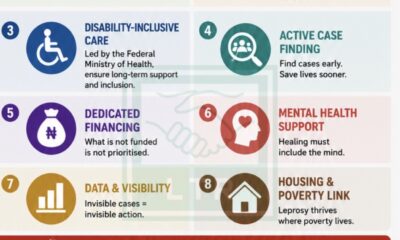
To close the gap between medical progress and social reality, Nigeria must urgently prioritize:
First, the modernization of existing leprosy colonies into inclusive community settlements with access to primary healthcare, water, sanitation, education, and livelihood support.
Second, the establishment of a dedicated domestic budget linefor leprosy within national and state health financing frameworks.
Third, the full mainstreaming of persons affected by leprosy into disability and social protection policies, ensuring no one falls between institutional mandates.
Fourth, sustained investment in anti-stigma communication to address the social drivers that continue to delay diagnosis and perpetuate discrimination.
A Call to Conscience
Leprosy may be curable. Neglect is not.
Nigeria has the technical tools to end transmission. What remains is the moral and policy courage to ensure that those already affected are not left behind in forgotten settlements.
The measure of progress is no longer how many cases we detect, but how many lives we restore to dignity.
LTR remains committed to working with government, donors, communities, and partners to ensure that Nigeria’s journey toward zero leprosy is also a journey toward zero exclusion.
Because in the end, elimination without inclusion is not victory.
SALEH FAROUQ GAGARAWA (anipr)
COMMUNICATION & MEDIA OFFICER
LTR NIGERIA