The Society of Nigerian Broadcasters (SNB) has successfully held its 2nd Annual National Conference and Induction Ceremony in Kano, drawing participants from across the country and reaffirming its commitment to ethical broadcasting in the digital age.
Themed “Broadcasting Ethics and Professionalism in the Age of Artificial Intelligence (AI), the conference brought together media professionals, government representatives, and industry stakeholders to address the evolving challenges facing the Nigerian broadcast industry.
in his address, Professor Umar Pate, Vice Chancellor, Federal University Kashere Gombe, and President of the SNB, expressed delight that the conference was held in Kano, a city with deep historical roots in Nigerian broadcasting dating back to the 1940s.
“We are proud to host this event in Kano, where broadcasting in Nigeria began as far back as 1940. This would not have been possible without the support of the Kano State Government,” Prof. Pate said.
He emphasized the critical role of broadcasters in combating the growing threats of misinformation, disinformation, and fake news, especially in an era marked by technological disruption, insecurity, and political instability.
“Today, anyone with a smartphone can claim to be a journalist. But at SNB, we are concerned with credibility, content quality, safety, and professionalism. Our mission is to enhance competence in communication, particularly in this age of misinformation, corruption, banditry, and thuggery,” he added.
Prof. Pate called for training and retraining of media professionals to keep pace with rapid technological advancements.
He stressed the need for collaboration among stakeholders to ensure that technology is harnessed responsibly and that quality content remains the hallmark of Nigerian broadcasting.
The President of the SNB reminded that “In broadcasting, trust is our currency. Across all cultures and religions, truthfulness is a virtue. Ethics define our humanity, and in this digital age, where information is democratized, we must uphold 5 R: relevance, resilience, responsibility and reputation.”
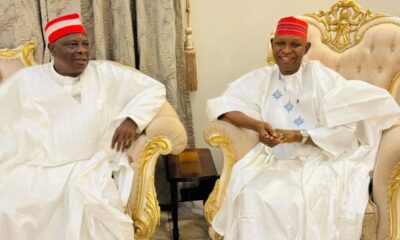
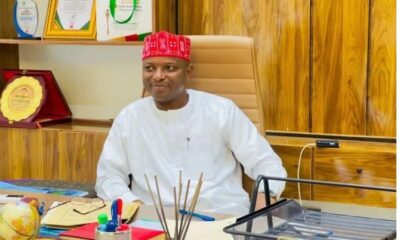
In his speech the Kano State Governor, Alhaji Abba Kabir Yusuf, represented by the Director General, Media and Publicity, Kano State Government House, Sunusi Bature Dawakin Tofa, said to enhance the media landscape in Kano, the Kano State Government established three institutes. According to him, they include:
The Institute of Development Journalism at ARTV, the Institute of Film Production in Tiga and the Institute of Information Technology in Kura.
He said these three institutions are fully functional and are working to help indigenes of the state become self-reliant.
He said during a 2025 stakeholders event took place in Lagos, through a consortium argument, Kano State Government challenged NBC to set a standard by ensuring the censorship, review, and regulation of online content that is creating problems, particularly political and religious tensions in society.
He further said “At the event, the Chairman of the Senate Committee on Information highlighted that the ongoing review of the NBC Law is in the pipeline, and Kano is ready to present its memorandum.”
The Kano State Governor called on all professionals to adhere to ethical standards to build a better society.
He said the government is ready to work with the media, which plays a significant role as an institution in shaping the minds, character, and attitudes of the people.
The Governor listed some of the awards he received from reputable national dailies, including being named the Best Media-Friendly Governor in 2025 by NUJ during its 70 years anniversary.
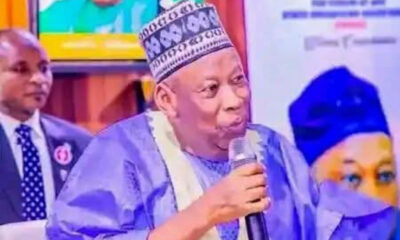
Ahmad Aminu, a veteran broadcaster, traced the history of broadcasting in Nigeria, from the relay service from London in 1932, the establishment of the first television station in Ibadan in 1959, to the liberalization of broadcasting after establishing of NBC in 1992 under the Babangida administration.
He warned against the overreliance on artificial intelligence, cautioning that it could lead to a decline in creativity and ethical standards.
According to the veteran broadcaster, “AI can be a powerful tool, but if misused, it may foster laziness and generate conflict. We must be cautious and intentional in how we integrate it into our media practices,” he said.
The conference also witnessed goodwill messages from dignitaries across the country. The Governor of Bauchi State, Bala Mohammed represented by the Commissioner for Information, Usman Shehu reaffirmed the state’s commitment to press freedom and praised the SNB as a unifying force in the media industry.
In a remark, Borno State Governor, Professor Babagana Umara Zulum, represented by Commissioner for Information of the State
Professor. Usman Tar, highlighted the strong institutional ties between the state and the SNB, emphasizing the importance of ethical journalism in fostering peace and development.
Salisu Ibrahim Riruwai, a member of the Kano State House of Assembly, called for sustained investment in training, noting that the future of broadcasting hinges on the capacity of its practitioners.
Other speakers included Yemisi Bamgbose, Secretary of the Broadcasting Organisations of Nigeria (BON), who pledged BON’s partnership with the SNB to uphold professional standards, and Dr. Garba Ubale Dambatta, General Manager Pyramid FM, Kano, representing the Director-General of the Federal Radio Corporation of Nigeria (FRCN), stressed the urgency of sanitizing the media space amid the proliferation of unverified content.
Sani Balarabe, Assistant Director of Digital Media at the Voice of Nigeria (VON), described broadcasting as a powerful tool for shaping society, especially in the face of AI and social media disruptions.
The conference concluded with the induction of new SNB members from all six geopolitical zones.
The induction ceremony featured both in-person and virtual participation.