By Julius Juliet Bitrus
300-Level Mass Communication Student, University of Maiduguri
The programme begins with a familiar face.
A presenter sits behind a desk, the studio lights are bright, the camera is steady and the sound comes through clearly. To the audience, everything looks effortless. What viewers do not see is the activity taking place just beyond the frame—the cameras being positioned, microphones being checked, stories being edited and a production team watching every second of the broadcast.
Television has always been a medium built around visibility. Presenters, actors, journalists and guests become the faces audiences remember. Yet behind those familiar faces are workers whose names may never appear on the screen.
They are the camera operators, producers, directors, editors, sound engineers, lighting technicians and other production workers who help turn an idea into something an audience can watch and hear.
Their work begins long before the “On Air” sign comes on.
Before the Programme Begins
A successful broadcast does not begin when the presenter greets the audience. Preparation may start hours before.
The production team has to decide what the programme will contain, arrange stories and materials, prepare scripts, check equipment and make sure everyone understands their responsibilities.
A camera has to be positioned correctly. Microphones have to work. Recorded reports need to be available when required. Lighting must be suitable, while the control room has to be ready to coordinate what eventually reaches the audience.
For viewers, these preparations are invisible.
For the people responsible for them, they can determine whether a programme appears professional or falls apart in front of an audience.
The Person Behind the Lens
Among the least recognised members of a television production team is the camera operator.
The camera operator is responsible for more than simply pointing a camera at a person. Framing, focus, movement and timing all contribute to what the audience eventually sees.
A close-up can capture emotion. A wide shot can establish the setting. A carefully timed camera movement can shift attention from one person to another.
These decisions influence how a story is experienced.
The importance of such work is reflected in the careers of professionals who have spent years behind the camera. Nigerian director Patience Oghre Imobhio, for example, began her career as an actress before moving into directing and working on television productions. Her career illustrates how much creative work can happen away from the spotlight.
The Control Room: Where Seconds Matter
If the studio is the stage, the control room is one of the places where the performance is coordinated.
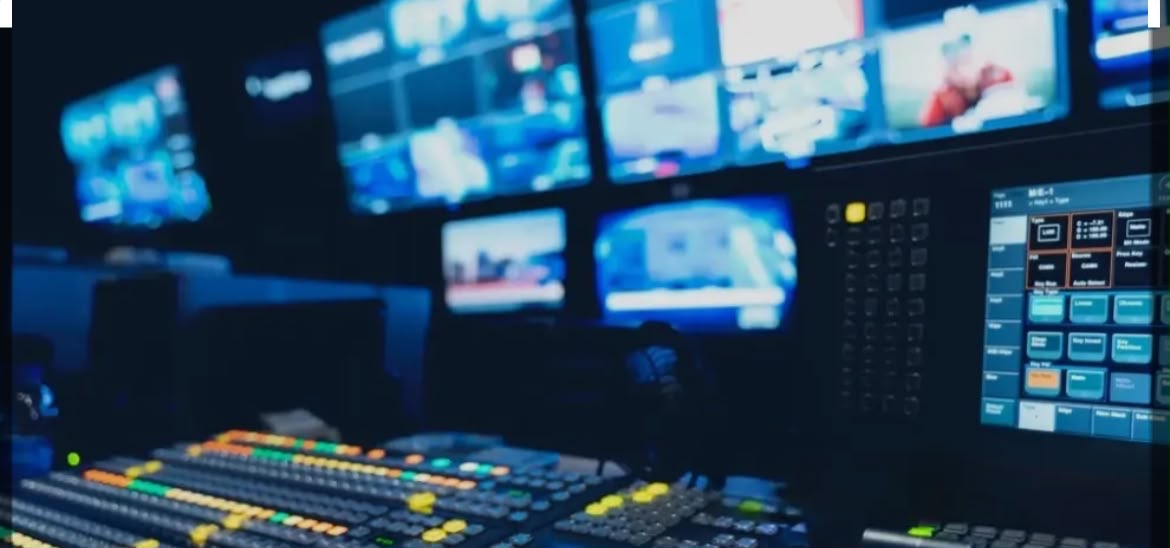
Monitors display different camera feeds. Audio levels are monitored. Recorded materials may be played. Graphics can be introduced, while the production team decides what the audience should see at a particular moment.
The work requires concentration because broadcasting is often a matter of timing.
A camera may need to change at exactly the right moment. A report may have to play immediately after a presenter introduces it. The audio must remain clear while pictures change.
When everything works, viewers rarely think about the people making those decisions.
That invisibility is almost part of the job.
When Things Go Wrong
Live broadcasting can be unforgiving.
A microphone can fail. A video may refuse to play. A camera can develop a problem. A presenter may lose their place. Technical difficulties can appear suddenly, leaving the production team with little time to respond.
The audience may see only a frozen picture, silence or an unexpected transition.
Behind that brief disruption, however, several people may be trying to identify and correct the problem.
This is why broadcasting depends heavily on teamwork. The presenter cannot work alone. Neither can the camera operator, editor, sound technician or producer.
Every person contributes a piece of the final product.
The Editor Who Shapes the Story
The work also continues after the camera stops recording.
Editors take raw footage and turn it into a coherent report or programme. They select useful material, arrange sequences, remove unnecessary portions and ensure that the finished production communicates its intended message.
Editing is therefore not simply about cutting video.
It is about deciding what stays, what goes and how the audience encounters the story.
In journalism, this responsibility becomes particularly important because pictures and sound can influence how viewers understand an event.
A Profession Changing With Technology
The media industry is not standing still.
Digital cameras, computer-based editing, online publishing and other technological developments have changed how media organisations produce and distribute content. Workers who once depended heavily on traditional equipment now increasingly need digital skills.
The regulatory environment is also important. In Nigeria, the National Broadcasting Commission regulates and licenses radio and television broadcasting and monitors broadcasters’ compliance with the Nigeria Broadcasting Code.
For local media organisations, technological change can create both opportunities and pressure. New tools can make production faster and distribution wider, but they also require workers to continually develop new skills.
The modern media worker is therefore expected to be more than a specialist in one piece of equipment.
Adaptability has become part of the job.
The People Audiences Rarely Notice
The public often remembers the person holding the microphone.
The presenter whose face appears every morning.
The reporter standing at the scene of an event.
The guest whose opinion becomes the subject of discussion.
But the programme they appear on is the product of many other people.
Someone adjusted the camera.
Someone checked the microphone.
Someone prepared the video.
Someone monitored the sound.
Someone selected the picture that appeared on the screen.
Someone ensured that the programme moved from one segment to another.
These workers may never become household names, but their contribution is visible every time a broadcast runs smoothly.
Why Their Work Matters
Local media does more than entertain.
Radio and television stations connect communities with information, provide platforms for discussion and help preserve stories and experiences that might otherwise receive little attention.
For that reason, the quality of local broadcasting depends not only on the people who speak into microphones or appear before cameras but also on the people who make the production possible.
Their work requires technical knowledge, creativity, patience and teamwork.
And sometimes, it requires working under pressure without receiving any recognition from the people watching.
When the Lights Go Off
Eventually, the programme ends.
The presenter says goodbye. The cameras stop rolling. The studio becomes quiet.
But for the production team, the work may not be finished. Equipment still has to be handled, recordings stored, materials prepared and plans made for the next programme.
Then the cycle begins again.
The next day, another camera will be switched on. Another microphone will be tested. Another story will be edited. Another presenter will sit before the lens.
And once again, millions of viewers may see the finished product without ever seeing the people who made it possible.
Perhaps that is the strange beauty of working behind the camera: when the audience does not notice everything you did, it may mean you did your job well.
The next time a television programme appears perfectly polished on the screen, remember that the picture is only the final layer.
Behind it is a team.
Behind the team are people.
And behind every broadcast are stories that begin long before the camera starts rolling.