By Abubakar M Kareto
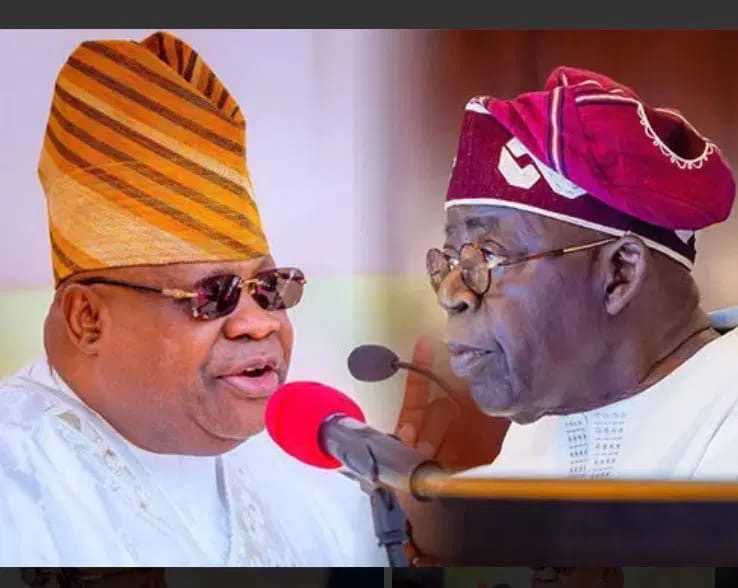
When the Independent National Electoral Commission officially declared Ademola Adeleke the winner of the 2026 Osun State governorship election with 511,067 votes against the All Progressives Congress candidate Bola Oyebamiji’s 444,815 votes, public commentary immediately followed a predictable script. Pundits praised the neutrality of the electoral umpire, civil society welcomed the apparent restraint of federal power, and headlines framed the result as proof that Nigeria’s electoral democracy remains self-correcting.
Interpreting the outcome in Osun as a guarantee that the 2027 presidential election will be transparent mistakes a single-state test run for a national operation. Strategic concessions and hands-off posturing in an off-cycle contest provide valuable political cover while leaving the core structural vulnerabilities of the national electoral machinery untouched.
The Strategic Value of a Controlled Loss
Political machines operate on calculated leverage rather than democratic sentiment. Allowing an opposition victory in a critical South-West state delivers tangible advantages to the ruling party in the buildup to 2027. By presiding over a competitive defeat in the president’s home geopolitical zone, the administration secures diplomatic credibility with Western allies, the Commonwealth, and international election observers, establishing an official record of institutional non-interference.
Total electoral dominance often invites intense scrutiny, triggers domestic unrest, and forces opposition factions into defensive alliances. Strategic losses act as an effective pressure valve, reinforcing the perception of an impartial umpire while keeping opposition parties focused on fragmented state contests instead of building a unified national coalition. When systemic irregularities arise during a nationwide general election, ruling party defenders routinely point back to off-cycle outcomes as empirical proof that federal power does not tamper with ballot tallies.
State Deployments, Infiltration Allegations, and Ground Resistance
While post-election narratives praise institutional neutrality, the days leading up to the poll exposed how power is contested on the ground. The buildup to the Osun election witnessed a massive mobilization of ruling party state governors, extensive campaign war chests, and an overwhelming deployment of federal security personnel.
Public concern spiked across social platforms and local communities following widespread reports and circulating video footage alleging the cross-border movement of political enforcers and armed non-state actors into the state under the tacit cover of security convoys. Rather than suppressing turnout, the visibility of cash inducements and imported muscle galvanized local resistance. Grassroots networks, community groups, and determined voters actively patrolled neighborhoods, challenging vote buyers and confronting unauthorized actors. The APC encountered an environment where coercive force could not be easily exercised without triggering widespread public unrest.
The Problem of Scale
The central flaw in using an off-cycle governorship race to forecast general election integrity lies in the difference in operational scale. In Osun, tens of thousands of security personnel secured a single state across 3,763 polling units. During a presidential election, that same security apparatus and civil society oversight are stretched thin across thirty-six states and the Federal Capital Territory, covering over 176,846 polling units.
While technological systems like the Bimodal Voter Accreditation System and the Result Viewing portal perform reliably when backend infrastructure manages traffic from a single state, national general elections place unprecedented load on network bandwidth and collation servers. This creates severe logistical bottlenecks and collation vulnerabilities that do not manifest in localized exercises.
The Verdict
Osun was an off-cycle contest where the political cost of heavy-handed interference far outweighed any potential gain. A presidential election operates under entirely different existential stakes. When executive survival, state patronage, and national authority are on the line, the restraint observed in isolated state races disappears.
Nigeria’s democratic strength cannot be measured by the state elections a ruling party allows itself to lose. It will be determined in 2027 by whether the system can deliver a transparent national contest where power cannot afford defeat.
Author Bio
Abubakar M. Kareto is a public affairs analyst, communications strategist, and political commentator specializing in governance, public policy, and socio-economic developments in Nigeria and beyond. He can be reached via amkareto@gmail.com or on X @amkareto.