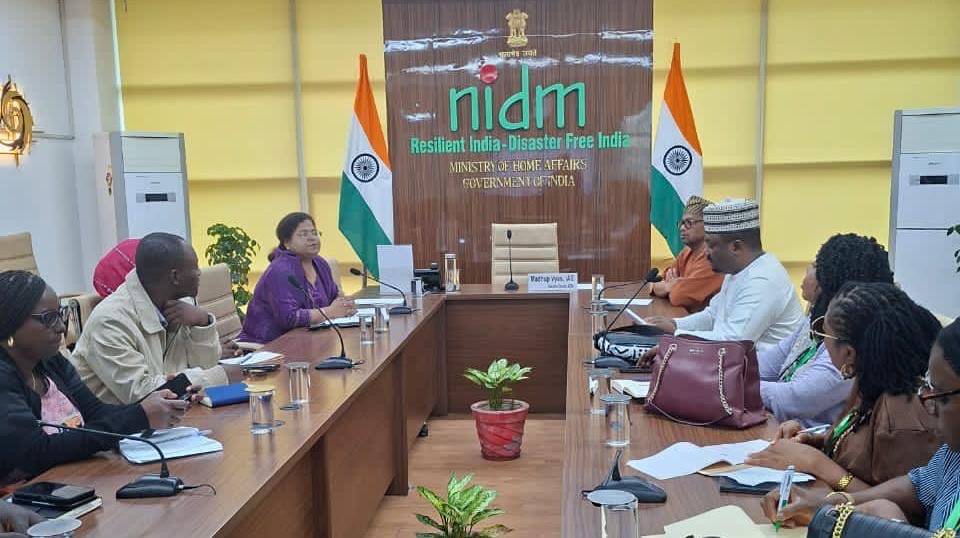
Nigeria is strengthening its social protection system through an international study tour in India, focusing on poverty reduction and household resilience.
The study tour, organised by the National Cash Transfer Office (NCTO), is taking place from Nov. 16 to Nov. 26, 2026, to enable Nigerian representatives to learn from India’s experience in implementing large-scale social protection programmes.
The Nigerian delegation is led by the Permanent Secretary, Federal Ministry of Humanitarian Affairs and Poverty Reduction, Mr Bunmi Olusanya.
Other members include the National Programme Manager, NCTO, Abdullahi Imam, and the National Programme Manager, Government Enterprise and Empowerment Programme (GEEP), Hon. Hamza Ibrahim Baba.
The programme provides opportunities for institutional collaboration and knowledge exchange on poverty reduction, digital payment systems, beneficiary identification and sustainable livelihood interventions.
In his address, Olusanya appreciated the Government and people of India for hosting the delegation.
He also acknowledged Supreme Management Training and Consultancy Services Ltd. and the National Institute of Rural Development and Panchayati Raj (NIRDPR) for facilitating the study tour.
The discussions focused on strengthening Nigeria’s social protection framework, particularly the National Social Register, integration with the National Identification Number (NIN), National Cash Transfer Programme and Nigeria Community Action for Resilience and Economic Stimulus (NG-CARES).
The delegation also examined challenges affecting social protection delivery in Nigeria, including inadequate financing, fragmented programmes, weak institutional coordination, data integration and responses to climate-related and economic shocks.
A major area of discussion was the Household Prosperity and Economic Social Protection Project (HOPE-SP), a 1 billion-dollar initiative aimed at strengthening Nigeria’s social protection system and improving pathways out of poverty.
The presentation also highlighted the One Humanitarian, One Poverty Response System (OHOPRS), designed to improve coordination among humanitarian agencies and institutions implementing poverty reduction programmes.
Olusanya said Nigeria’s objective was to move beyond temporary financial assistance towards a comprehensive system that connects vulnerable households with essential services, skills acquisition, entrepreneurship, agricultural support and sustainable economic opportunities.
The study tour is expected to provide useful lessons for ongoing reforms and strengthen Nigeria’s capacity to address poverty, economic hardship and other vulnerabilities. The programme will end on Nov. 26