By Abubakar M. Kareto
Nigeria stands at a dangerous crossroads ahead of the 2027 general elections. Instead of serving as a contest of ideas, the campaign season is already stained by gunfire, intimidation, and blood. Between July and November 2026 alone, the Kimpact Development Initiative documented 124 incidents of pre-election violence and 22 fatalities across 35 states and the Federal Capital Territory, prompting the Independent National Electoral Commission (INEC) Chairman, Prof. Joash Amupitan, to warn that unchecked thuggery could derail the polls. From attacks on campaign convoys in Katsina State to assaults on opposition supporters in Sokoto and Ado-Ekiti, the message to ordinary Nigerians is chilling. Election day is fast becoming an exercise in physical survival rather than civic choice.
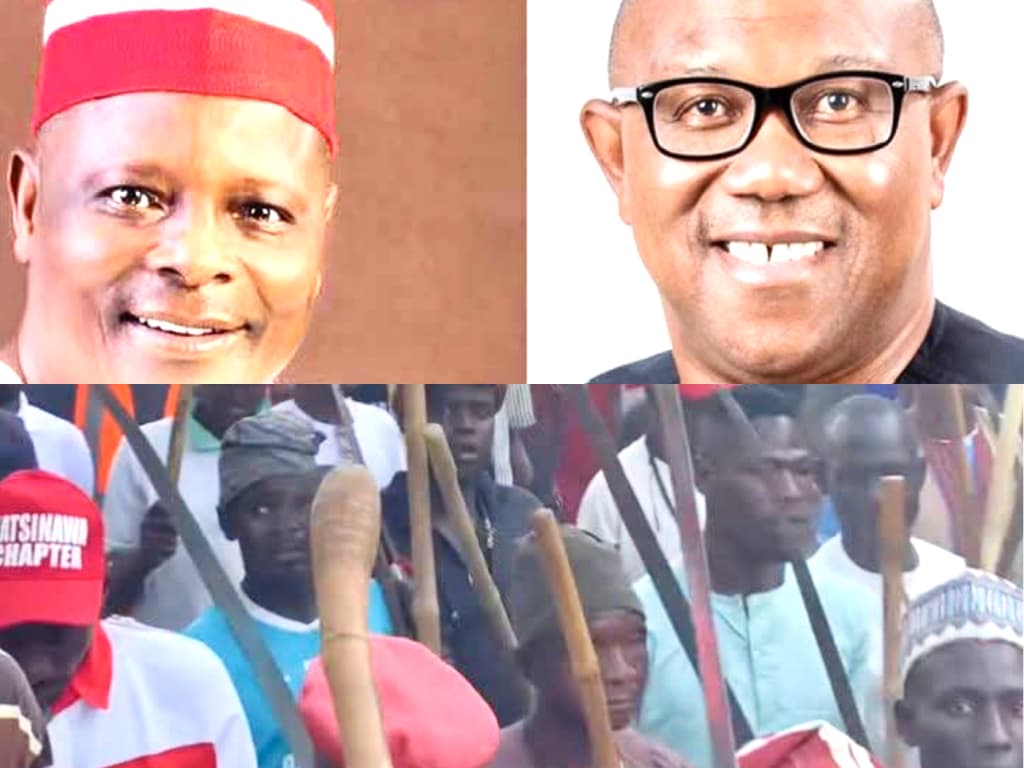
When political rallies turn into battlegrounds, democracy suffers a systemic failure. Yet beneath the immediate horror of these clashes lies a deeper constitutional crisis: the normalization of armed partisan mobilization. Under the excuse that state security agencies cannot be trusted to protect their campaigns or safeguard their ballots, certain political camps increasingly justify bringing armed enforcers and vigilante appendages to political gatherings. No one holds the right to attack citizens campaigning for their preferred candidates, and no party should carry weapons to a rally. In a society where economic hardship and gaps in civic literacy leave large portions of the electorate vulnerable, introducing weapons into politics is like dropping a lit match into dry grass.
This trend exposes a fundamental legal and logical contradiction. Section 227 of the 1999 Constitution explicitly forbids any political party from organizing or equipping groups to display physical force or coercion. In any constitutional republic, a contestant in a competitive match cannot wear the boots of a player while holding the whistle of the referee. If a political movement amasses enough weaponry and muscle to act as its own police force on election day, what stops that same armed faction from turning its guns on electoral officials, rival agents, and unarmed voters? Political parties are vehicles built to capture state power, not congregations of saints. Allowing an interested party to police an election under the pretext of institutional distrust creates a far greater absurdity than the problem it claims to solve.
In truth, slogans built around self-defense and vote protection often serve as a convenient cover for preemptive rigging. By framing their own militarization as a righteous shield against state bias, political actors launder street thuggery into patriotism. This is the classic posture of the villain playing the victim. Armed mobilization achieves two goals long before ballots are printed: it manufactures voter apathy by convincing citizens that a ballot is not worth a bullet, and it establishes territorial control so that polling units become hostile zones for rival supporters.
Intellectual honesty requires applying this standard across the entire political spectrum without favoritism. Electoral rigging is not limited to midnight ballot snatching or altering result sheets at collation centers. Preventing citizens from reaching polling units or intimidating them out of voting for their chosen candidates is rigging in its purest, most violent form. During the 2023 general elections, while opposition movements loudly condemned state-backed suppression in several states, video evidence and observer reports revealed that coercion cut both ways.
Across parts of the South-East during the 2023 cycle, viral footage showed organized groups chasing perceived rival voters away from polling units and enforcing strict political conformity. The statistical footprint of that cycle remains striking. Official INEC figures showed Labour Party candidate Peter Obi sweeping the South-East with margins exceeding 90 percent in states like Anambra and Enugu, while Centre for Democracy and Development data highlighted by StatiSense recorded voter intimidation at 9.8 percent of polling units in the South-East during the subsequent state elections, the highest rate in Nigeria and nearly five times the rate in the North-Central zone. When supporters of any movement, including segments of the Obidient base, resort to driving dissenting neighbors from voting centers, they forfeit every claim to moral superiority.
A tainted atmosphere produces a tainted mandate, regardless of which party logo sits atop the ballot. No movement can claim to rescue Nigerian democracy while importing the very tactics of intimidation and exclusion that have crippled it for decades. Whether suppression is carried out by state-allied thugs in commercial centers or by street enforcers in regional strongholds, the outcome is identical: the silencing of the Nigerian voter.
Reversing this slide before 2027 demands both the ruthless enforcement of electoral law against armed enforcers and visible neutrality from INEC and the police so that no party has an excuse for self-help. Democracy cannot survive in an environment where ballot boxes are surrounded by partisan militias. If Nigeria’s political class insists on arming contestants to act as umpires, 2027 will not be an election; it will be a coronation of force over law.
Abubakar M. Kareto is a Public Affairs Analyst and Strategic Communications Specialist focusing on governance, political economy, and public policy across Nigeria and Africa. He can be reached via X (@amkareto) or email (amkareto@gmail.com).