By Abubakar M Kareto
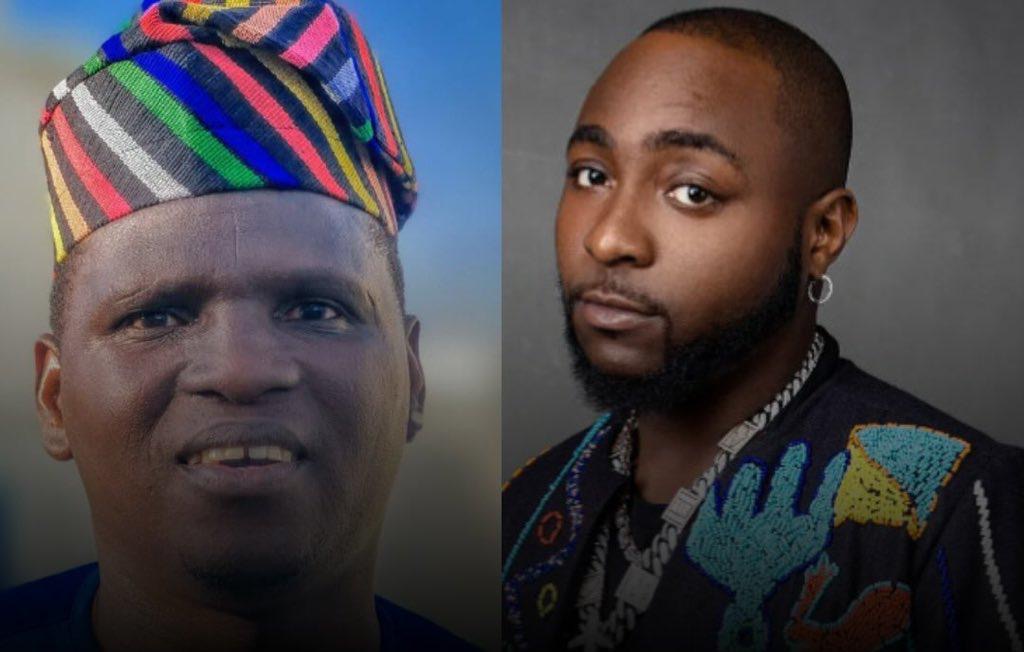
The intersecting worlds of Nigerian entertainment and political commentary have recently sparked an intense debate over the true definition of artistry, financial independence, and freedom of expression. At the center of this discourse is a sharp contrast between two monumental figures: the global Afrobeat icon, David Adeleke (Davido), and the influential Hausa political singer, Dauda Kahutu Rarara. While casual observers might view both simply as powerful voices with massive fanbases, a deeper look into their funding structures, operational models, and systemic dependencies reveals two entirely different worlds. One operates as a global commercial enterprise; the other exists as an extension of the political establishment. Spotting this difference is essential to understanding the structural dynamics of modern African media and power.
The primary divergence between a professional musician and a political panegyrist lies in the diversity, independence, and tracking of their cash flows. A global artist’s wealth is built on documented, audited commercial frameworks, whereas a political praise singer relies heavily on unbudgeted political goodwill and direct elite financing. To understand Davido’s operational model is to look at a classic, highly successful multinational corporate structure. As a professional musician, his revenue generation is entirely decentralized and tied directly to the global market economy through clear, transactional pillars.
Digital streaming platforms pay fixed rates per stream, and with Spotify averaging approximately $0.003 to $0.004 per play, Davido’s album Timeless alone surpassed 500 million streams on that platform, translating into a multi-million-dollar digital asset catalog. His global YouTube footprint exceeds 1.7 billion views, ensuring a steady, passive corporate revenue stream.
Furthermore, his revenue is backed by legally binding corporate partnerships, including documented multi-million dollar global ambassadorial contracts with brands like Puma, Martell, Infinix Mobile, and Pepsi. These agreements are driven strictly by return on investment metrics and consumer conversion rates, completely detached from state funding. This global demand is further proven by international arena bookings, where selling out premier venues like the 20,000-capacity O2 Arena in London nets hundreds of thousands of dollars per performance.
This sharp economic contrast highlights a deeper, systemic gap within the regional entertainment landscape: the global, market-driven musical model remains largely absent in Northern Nigeria. The region rarely produces economically independent, commercially scalable singers who can cross over into global corporate equity and mainstream consumer markets. Instead, the northern music industry has historically been dominated by praise singers, political panegyrists, and localized artists whose financial baseline relies on elite patronage rather than global corporate investment.
By failing to foster a decentralized, streaming-heavy, and corporate-backed entertainment sector, the region misses out on a powerful vehicle for independent wealth creation, youth employment, and cultural export that operates completely outside the corridors of political power.
This regional reliance on patronage does more than just limit artistic freedom; it caps the economic mobility of Northern youth. In a market-driven ecosystem like Davido’s, a single hit song creates a value chain that employs sound engineers, digital marketers, talent managers, and content creators, building a decentralized industry where talent equals wealth. Conversely, a political patronage model is non-transferable and structurally exclusive. It relies entirely on a singer’s personal access to power.
When wealth in the creative arts is tied to a politician’s tenure rather than consumer data and corporate investment, it leaves the next generation of Northern creatives without a sustainable industry to inherit, forcing them to queue for political validation rather than building economic independence.
In stark contrast, Dauda Kahutu Rarara operates within the ancient, deeply entrenched tradition of the Maroki (the traditional praise singer), modernized for contemporary northern Nigerian politics. Rarara does not depend on album streams, corporate brand endorsements, or international tours to sustain his empire. Instead, his entire machinery is funded directly by the political class.
Rather than commercial music sales, his funding mechanism relies on personal political proximity. From local government chairmen to governors and presidency-level actors, his art is a targeted political tool used for image laundering, mobilization, and elite validation. Following the 2023 elections, his close proximity to power was highlighted by reports of his direct input on regional administrative and ministerial suggestions.
This patronage-reliant structure is fundamentally different from a market economy. In a telling display of his funding model in September 2020, Rarara requested everyday citizens and political supporters to donate ₦1,000 each to fund a praise video for former President Muhammadu Buhari.
The exercise generated ₦57 million in less than 48 hours, illustrating a crowd-funding model built entirely on partisan ideology rather than commercial art consumption. Structurally, his tracks, such as “Jagaba Shine Gaba” and “Omo Ologo”, are designed as cultural toolkits for political campaigns, funded upfront via campaign budgets or direct grants from political actors looking to secure grassroots mobilization in Northern Nigeria.
When evaluating their profiles side by side, the line between institutional autonomy and systemic dependence becomes incredibly clear. As a professional musician, Davido’s primary financial sources remain global consumers, multinational brands, independent streaming platforms, and international ticket sales. His accountability hub is anchored by corporate boards, international compliance teams, brand managers, and a global fan base. Consequently, his systemic risk exposure is limited to shifting consumer music tastes, global macroeconomic trends, and brand safety violations. This grants him high autonomy, allowing the artist to critique state actors, align with public social movements, or remain neutral without the threat of immediate financial collapse.
Rarara’s profile, however, reflects a position of profound vulnerability. His primary financial sources are ruling political elites, party campaign funds, state actors, and targeted partisan grants. His accountability hub begins and ends with political benefactors, state patrons, and partisan party hierarchies. This leaves him heavily exposed to systemic risks like electoral transitions, policy failures, shifts in ruling party dynamics, and severe public backlash against state policies.
Therefore, his freedom of expression is exceptionally low, as his voice is legally and financially tied permanently to the defensive narrative of the paying benefactor.
While the patronage system has made Rarara exceptionally wealthy and highly influential within the political ecosystem, it comes at a steep structural cost: the absolute surrender of personal and artistic independence. A political panegyrist cannot speak his mind. The moment a political singer attempts to exercise independent conscience or critique a sitting benefactor, the financial pipeline is severed, and political protection is withdrawn. His voice is powerful, but it is entirely captive to the hand that feeds it.
A stark example of this systemic vulnerability occurred when Rarara released a track praising economic policies amid widespread inflation and severe regional hardship. The public backlash was immediate; mass reporting by angry citizens led to his verified Facebook page of over 1 million followers being completely taken down by the platform. This highlights the foundational flaw of the Maroki model: when you are fully funded by the political class, your narrative must defend the state, even when doing so completely alienates the broader public market.
Ultimately, the empirical data confirms a fundamental truth: the difference between these two figures lies in the nature of their accountability and the source of their power. Davido operates as an independent contractor of the global entertainment industry. His financial security is diversified across millions of everyday listeners and global corporate boards, granting him the liberty to navigate public life on his own terms. Rarara, alternatively, is an institutional asset of the political elite. His relevance and wealth are tied directly to state power, meaning his loyalty is non-negotiable and his public stances are predetermined by partisan agendas.
Confounding the two ignores the structural realities of the Nigerian creative economy. Recognizing Davido as a professional market-driven artist and Rarara as a politically funded praise singer brings absolute clarity to public discourse. One sings for the market; the other sings for the state. Spotting that difference is the key to understanding where true artistic freedom lies.
Abubakar M. Kareto is a Public Affairs Analyst. He can be reached via email at amkareto@gmail.com.