By Abubakar M Kareto
In the delicate art of statecraft, a transition of power is never merely a change of personnel. It is the ultimate test of institutional resilience. For a state like Borno, which has spent the last decade emerging from the ashes of insurgency, transition is not a time for speculative experimentation. It is a moment that demands absolute continuity, strategic precision, and an unyielding commitment to the development trajectory established by Governor Babagana Umara Zulum.
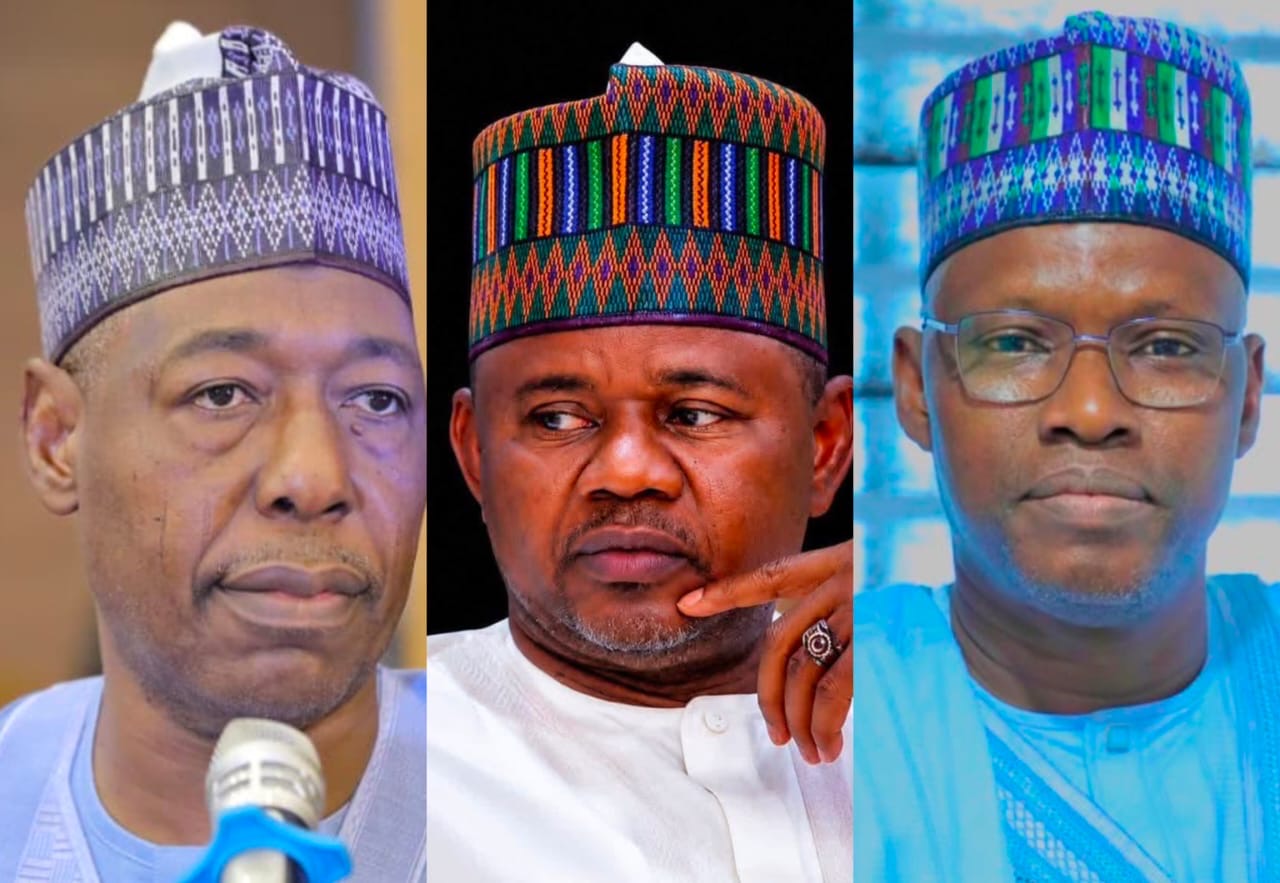
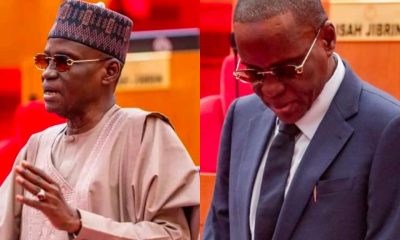
Notably, Engineer Mustapha Gubio as the All Progressives Congress (APC) gubernatorial candidate, he is expected to lead Borno State into its next developmental epoch, the question of his running mate becomes a matter of strategic urgency. In the quest to preserve and expand the Zulum legacy, one name presents itself as the definitive administrative and humanitarian counterpart: Ali Isa Abdullahi, popularly known as Ali SEMA.
The potential partnership of Mustapha Gubio and Ali Isa Abdullahi is not a product of political convenience. It represents a highly synchronized administrative pairing designed to ensure that Borno’s recovery does not lose momentum for a single day.
The Zulum Template: Why Continuity is Borno’s Only Option
To appreciate the necessity of a Gubio-Abdullahi leadership, one must first understand the unique governance standards set by Professor Babagana Umara Zulum.
The Zulum administration did not win the hearts of Borno citizens through distant, boardroom policies. It achieved success through an aggressive, hands-on, and deeply empathetic approach to leadership.
Under Zulum, governance became synonymous with rapid infrastructural restoration, systematic resettlement of displaced populations, active civil service reforms, and direct, transparent humanitarian intervention.
This standard was built on the back of rigorous field operations, often in highly volatile terrains, and a zero-tolerance policy for administrative lethargy or financial indiscipline.
To sustain these hard-won gains, Borno’s next leadership must possess two non-negotiable qualities: first, the unflinching physical courage to operate on the frontlines of recovery; second, an impeccable administrative integrity to manage recovery resources transparently.
This is precisely where the synergy between Engr. Mustapha Gubio and Ali Isa Abdullahi becomes invaluable.
Engr. Mustapha Gubio: The Architect of Physical Reconstruction
Governor Zulum’s endorsement of Engr. Mustapha Gubio was a deliberate nod to a man who, like Zulum himself, rose through the ranks of the critical Ministry of Reconstruction, Rehabilitation, and Resettlement (RRR).
As Commissioner for RRR, and later as Commissioner for Works and Housing, Gubio became the physical architect of Borno’s post-conflict renaissance. He did not lead from the comfort of an office in Maiduguri.
He spearheaded the physical rebuilding of schools, clinics, and residential quarters in frontline local government areas such as Bama, Konduga, Chibok, Mobbar, Gwoza, Mafa and others. He was tasked with translating policy into bricks, mortar, and accessible roads. He understood how to execute complex, high-impact projects under tight budgets and challenging security conditions.
Through these campaigns, Gubio mastered the physical geography of Borno’s challenges. He identified which bridges needed to be rebuilt to reconnect rural economies and which settlements required urgent infrastructural frameworks to receive returning communities.
Ali Isa Abdullahi: The Custodian of Human Recovery
While Gubio spent years rebuilding the physical structures of Borno, Ali Isa Abdullahi was on the ground preserving the human lives meant to occupy them.
Abdullahi’s public service trajectory is a masterclass in quiet, disciplined competence. Beginning his career as an Audit Assistant in 1991, he spent decades mastering the internal machinery of state administration. He rose through the ranks to become Chief Administrative Officer (Audit), later serving as Assistant Director of Administration at Government House.
However, his defining contribution to Borno’s survival occurred during his tenure as Director of Research and Statistics, and subsequently as the Acting Director-General of the Borno State Emergency Management Agency (SEMA). In this role, Abdullahi became the human face of Borno’s resilience.
Under his stewardship, SEMA managed the monumental task of distributing critical relief materials to hundreds of thousands of displaced persons, coordinating assistance for rescued individuals, and assessing communities devastated by climate emergencies and flash floods.
Like Gubio, Abdullahi’s office was the open field. He traversed the difficult terrains of Gwoza, Kukawa, Chibok, and Marte, not as a visitor, but as a responder documenting losses, managing camp dynamics, and restoring dignity to survivors.
The Perfect Confluence: Infrastructure Meets Humanity
The combination of Engr. Mustapha Gubio and Ali Isa Abdullahi represents a seamless partnership of two highly specialized halves. Gubio acts as the physical builder focusing on infrastructure and reconstruction, while Abdullahi serves as the human custodian managing aid, statistics, and recovery.
When a governor and a deputy governor share this level of aligned field experience, the administrative learning curve is completely eliminated.
First, this pairing ensures instant operational readiness. Borno cannot afford a transition period marked by orientation tours and theoretical briefings. Gubio knows exactly where the infrastructure is lacking, and Abdullahi knows the precise human demographics waiting for those facilities. Together, they can execute the state’s master plan from their very first hour in office.
Second, the combination guarantees rigorous financial and statistical discipline. With a background rooted in public audit and research statistics, Abdullahi brings a crucial analytical lens to the deputy governor’s office. A post-conflict economy requires strict budgetary discipline and data-driven resource allocation. Abdullahi’s professional training ensures that every kobo allocated for human development is tracked, accounted for, and directed to the areas of maximum impact.
Third, this partnership facilitates a seamless transition from immediate humanitarian aid to long-term development. Because Gubio understands the mechanics of resettlement and Abdullahi understands the immediate needs of the displaced, their leadership guarantees that aid is not just a temporary survival mechanism, but a direct stepping stone toward permanent socio-economic independence.
Securing Borno’s Future
Governor Babagana Umara Zulum has built a magnificent foundation of hope, resilience, and tangible progress for Borno State. To let this momentum falter would be a disservice to the sacrifices of the last decade.
The task of consolidating these gains requires a leadership team that is battle-tested, cohesive, and deeply connected to the grassroots. In Engr. Mustapha Gubio, Borno has a visionary builder prepared to lead. In Ali Isa Abdullahi, the state has the ideal administrative and humanitarian anchor to stand by his side. Together, they represent the most credible, competent, and reliable partnership to secure Borno’s future of lasting peace and prosperity.
Abubakar M. Kareto is a Public Affairs Analyst, Commentator, and Communication Strategist. He focuses on governance, economy, security, and development within Nigeria and Africa. He can be reached via amkareto@gmail.com or on X (formerly Twitter) @amkareto.