By Abubakar M. Kareto
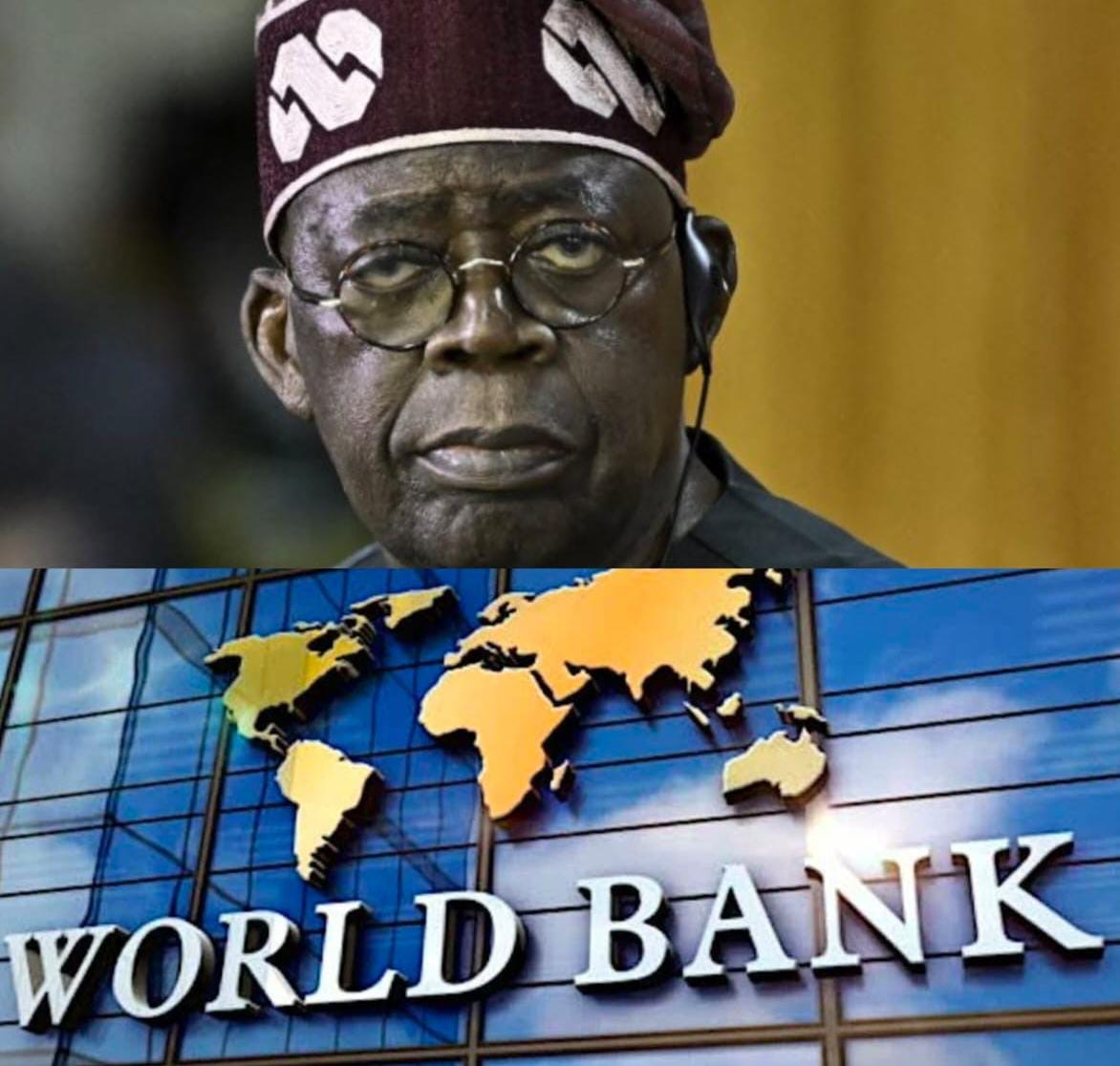
Despite nearly three years of sweeping economic reforms introduced by the administration of President Bola Tinubu, the fundamental structure of Nigerian poverty remains stubbornly entrenched. In its newly approved Country Partnership Framework and Streamlined Country Diagnostic, the World Bank made a staggering disclosure: 79 percent of Nigerians remain poor or vulnerable to falling into poverty.
The breakdown of this figure is sobering. About 33 percent of the population are classified as ultra-poor, meaning they are actively food insecure by age-weighted caloric intake. Another 61 percent live completely below the national poverty line, while 18 percent hover precariously just above that line, ready to be tipped back into poverty by the slightest economic shock.
This diagnostic poses a critical paradox. On one hand, government officials point to positive indicators: real economic growth reached 3.9 percent in the first half of 2025, foreign reserves surged past 42 billion dollars, fiscal deficits are narrowing, and external accounts show historic resilience. Yet, on the other hand, over 139 million Nigerians cannot afford basic sustenance, and an additional 7 million were estimated to have plunged below the poverty line in 2025 alone.
Why do citizens get poorer while the state boasts of successful reforms? Are we running an Enclave Economy? And when, if ever, will there be light at the end of this tunnel?
Why Citizens Get Poorer Despite Positive Reform Claims
The fundamental disconnect between improving macroeconomic indicators and deepening household misery lies in the anatomy of the reforms themselves. Macro-stabilization policies like subsidy removal, exchange rate liberalization, and monetary tightening are blunt, transactional instruments. They repair the state’s balance sheet, but they do so by transferring the adjustment costs directly onto the balance sheets of households.
1. The Lag and Friction of Trickle-Down Economics
Stabilization is a prerequisite for growth, but it is not growth itself. While the government celebrates narrowed fiscal deficits and stabilized foreign exchange, the immediate transmission mechanism to the average citizen is high inflation. Food inflation, in particular, forces poor households, who spend up to 70 percent of their income on food, to systematically cut back on nutrition and health. The macro-economy is turning the corner, but the micro-economy is suffocating.
2. The Slow and Uneven Rollout of Social Safety Nets
When structural adjustments are made, they require immediate, targeted, and expansive social safety cushions. In Nigeria, the scale-up of the national cash transfer program has been slow and uneven. Integrating the national social register with biometric data has faced major administrative bottlenecks. Historically, Nigeria’s public spending on social protection has hovered at a negligible 0.14 percent of GDP, covering less than 9 percent of the poor. Without a robust, functional safety net, macroeconomic reforms act as a regressive tax on the poorest segments of the population.
Are We Practicing an Enclave Economy?
The answer is a resounding yes.
An enclave economy is an economic system where export-oriented, highly capitalized sectors, typically oil, gas, or mining, operate almost entirely independently of the rest of the domestic economy. These sectors import their technology, employ highly specialized, often foreign, labor, and export raw commodities, generating massive revenues for the state but creating virtually no forward or backward linkages to local manufacturing, agriculture, or services.
In a typical enclave economy trap, the extractive sector operates with high capital, low domestic labor, and direct exports. This captures the vast majority of foreign exchange, but the revenue flows directly to the state coffers and rarely filters down to boost productivity. Meanwhile, the domestic economy, encompassing agriculture, small businesses, and retail, is characterized by high informal labor, low capital and credit, and poor infrastructure, leaving it to bear the brunt of price shocks.
Nigeria’s oil and gas industry has historically functioned as the textbook definition of an enclave. For decades, it has accounted for the vast majority of export earnings and government revenue, yet it employs less than 1 percent of the national workforce. Because the local value chain was never properly integrated, the petrodollars generated by this sector were used to fund import-dependent lifestyles and defend an artificially overvalued Naira, systematically destroying domestic agriculture and local manufacturing. This is a classic manifestation of the Dutch Disease.
Even with the current reforms, our growth remains non-inclusive because the sectors driving GDP, such as financial services, telecommunications, and oil, are capital-intensive rather than labor-intensive.
Comparative Lessons from Across Africa
To understand how to break this cycle, we must look at how other African nations have managed the transition from enclave extraction to inclusive development.
1. The Success Story: Botswana
Following its independence, Botswana discovered massive diamond reserves. Rather than allowing the mining sector to operate as an isolated enclave, the government established strong institutional frameworks prior to the peak of the resource boom. Through the Debswana joint venture, diamond revenues were aggressively channeled into a sovereign wealth fund, national infrastructure, free universal education, and primary healthcare. Consequently, Botswana avoided the resource curse, transformed its human capital index, and maintained one of the highest sustained growth rates in the world.
2. The Cautionary Tale: Angola
Angola is Africa’s second-largest oil producer, yet its economy remains a highly volatile, textbook enclave. Decades of oil production concentrated immense wealth within a small political elite in Luanda, while the rural interior remained severely impoverished. Angola’s agricultural sector, which once fed the nation, was utterly neglected. When global oil prices collapsed, the state suffered severe fiscal crises, and poverty rates spiked. The Angolan model proves that extracting billions of dollars of national wealth yields nothing for the populace if the state fails to foster domestic industrial linkages.
When Will There Be Light at the End of the Tunnel?
The World Bank’s diagnostic is clear: reforms alone will not lift millions out of poverty unless they generate jobs on a large scale.
Only about 14 percent of employed Nigerians currently work in regular, wage-paying jobs. The remaining 86 percent are trapped in low-productivity, informal trade or subsistence agriculture. With nearly 3 to 4 million young people entering the Nigerian labor force every single year, job creation is not just an economic target, it is a national security imperative.
For the poor to finally enjoy the benefits of these painful reforms, the federal and sub-national governments must immediately pivot from macroeconomic stabilization to aggressive, structural transformation:
Dismantle the Enclave via Agriculture and MSMEs: The fiscal space gained from subsidy removal and improved tax collection must be directly reinvested into labor-intensive sectors. Agriculture and Micro, Small, and Medium Enterprises (MSMEs) are the true engines of Nigerian employment.
Bridge the Infrastructure Deficit: No economy can industrialize in the dark. More than 86 million Nigerians still lack access to electricity. Public-private partnerships must prioritize regional off-grid power, rural-to-urban transport corridor logistics, and digital infrastructure to integrate domestic markets.
Invest in Human Capital: Household poverty is the single greatest driver keeping children out of school, fueling insecurity, and limiting future productivity. Sub-national budgets must aggressively scale up investments in maternal nutrition, childhood stunting reduction, and vocational skills matching.
Strengthening the Social Contract
Finally, the path to prosperity requires a fundamental shift in the social contract. Macroeconomic reform cannot succeed in a vacuum of accountability. The federal and sub-national governments must adopt transparent reporting mechanisms for every naira saved from the removal of subsidies or generated through new tax protocols. Citizens are more likely to endure temporary economic hardship when they can clearly see the tangible output of their sacrifice in the form of functional public schools, reliable health insurance coverage, and secure trade routes.
True reform is measured not by the health of the national balance sheet alone, but by the measurable improvement in the quality of life of the average citizen. Without an explicit, verifiable accountability framework, even the most technically sound policies risk being viewed by the public as mere tools for elite enrichment rather than engines of national development.
Macroeconomic indicators are valuable maps, but they are not the destination. Until the fiscal gains of our reforms are systematically translated into stable electric power, quality public classrooms, accessible clinics, and productive, secure farmlands, the light at the end of the tunnel will remain a distant illusion for 79 percent of our compatriots. It is time for the government’s policies to move from stabilizing the state’s balance sheet to restoring the dignity of the Nigerian household.
About the Author:
Abubakar M. Kareto is a Public Affairs Analyst and Strategic Communication Strategist tracking governance transitions, national and sub-national policy reforms, and political dynamics across Nigeria and Africa. He can be reached via email at amkareto@gmail.com or on X (formerly Twitter) @amkareto.