By Abubakar M Kareto
An old African proverb reminds us that when a journey is long, wisdom demands an early start. In public administration and electoral strategy, early preparation reflects foresight and respect for the electorate rather than mere political ambition.
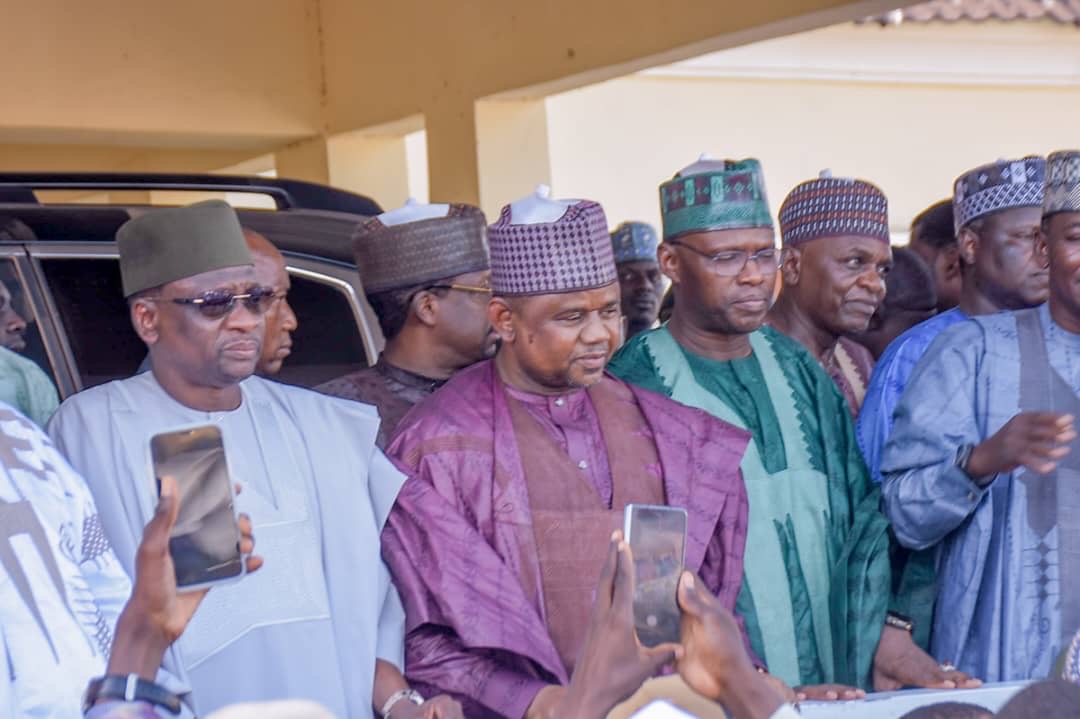
As Borno State gradually fixes its attention on the 2027 gubernatorial election, the political landscape is already taking shape around key figures who recognize the weight of the task ahead. At the center of this momentum is Engineer Mustapha Gubio, the All Progressives Congress governorship candidate, whose early mobilization is setting the tone for the upcoming contest.
Despite holding a comfortable position backed by party consensus and institutional support, Gubio accompanied by his deputy have consistently chosen active engagement over political complacency.
His technical background as a Fellow of the Nigerian Society of Engineers and his experience in state administration give him a grounded understanding of governance.
During his tenure leading the Ministry for Reconstruction, Rehabilitation and Resettlement, and subsequently the Ministry of Works and Housing, he oversaw critical physical interventions across the state. His supervision of landmark urban engineering projects, such as the Gamboru Junction underpass, alongside extensive post-conflict housing restorations, demonstrated a strong capacity for executive execution.
These sustained developmental efforts built his reputation across both rural and urban communities in Borno State. By delivering on high-impact infrastructure like the Bakassi GRA housing completion and key road corridors, he earned the functional trust of top political leaders, most notably Governor Babagana Umara Zulum and Vice President Kashim Shettima.
Consequently, his political standing today rests on three distinct strengths: solid technical competence proven through civil engineering projects, governance continuity supported by key state actors, and ongoing grassroots outreach.
What makes Engr. Mustapha Gubio’s proactive engagement truly remarkable is that official campaigns have not even commenced. Rather than waiting for the formal election timetable to begin, his early consultations, strategic networking, and continuous grassroots outreach reflect the authentic drive of a leader who is genuinely ready and willing to serve. This pre-campaign dedication demonstrates that for him, leadership is not a seasonal event triggered by political calendars, but an unyielding, proactive commitment to the people of Borno State.
This early ground-level activity stands in clear contrast to the persistent quietness within opposition ranks. Across Borno State, opposition parties have yet to show a comparable level of organization, policy outreach, or strategic preparation. This noticeable gap highlights a major difference in political commitment as the election timeline draws closer.
While the candidate of the governing party treats the election as a serious duty requiring sustained preparation, the opposition remains mostly inactive. Gubio’s ongoing effort sends an unmistakable message about his overall readiness to lead. Ultimately, this early proactive work builds deep momentum that will prove challenging for late-entering contenders to match as 2027 approaches.
Author Bio
Abubakar M. Kareto is a public affairs analyst, communications strategist, and political commentator specializing in governance, public policy, and socio-economic developments in Nigeria and beyond. He can be reached via amkareto@gmail.com or on X @amkareto.