By Abubakar M. Kareto
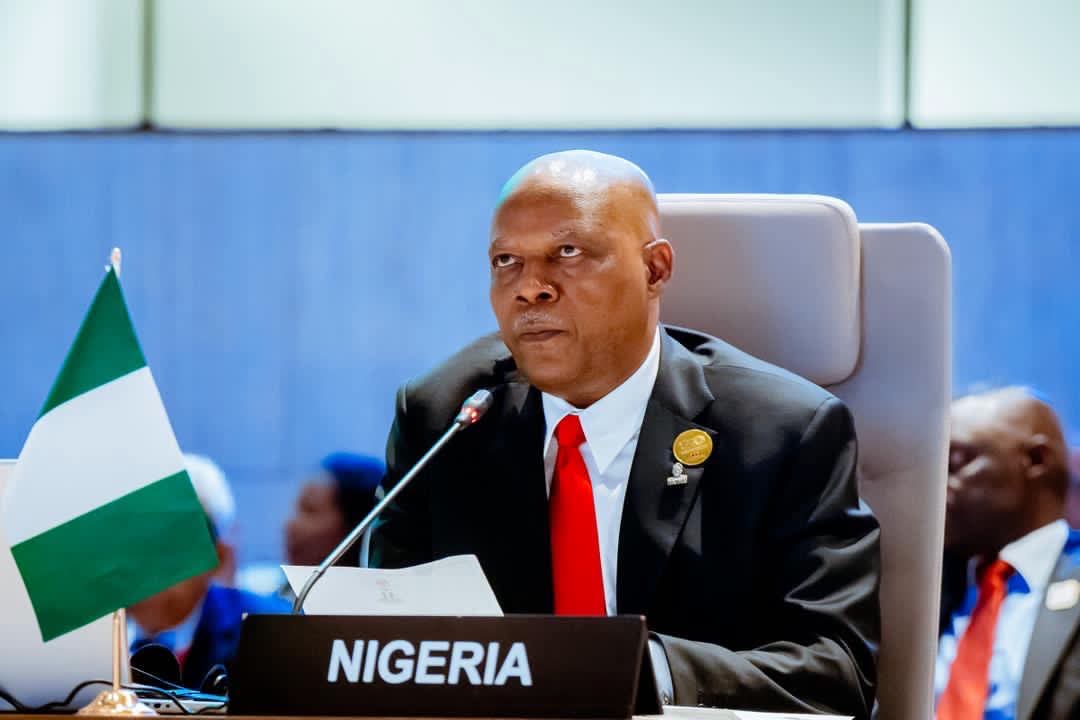
When Vice President Kashim Shettima took the floor at the 21st Extraordinary Session of the Assembly of the African Union in Luanda, Angola, he executed a deliberate and long-overdue shift in Nigeria’s continental advocacy. Representing President Bola Ahmed Tinubu, Shettima moved beyond standard diplomatic courtesies to address a recurring crisis that threatens the core of African integration: xenophobic and Afrophobic violence.
For decades, attacks on foreign nationals across the continent, most visibly in South Africa, have followed an exhausting, predictable cycle. Violence flares, diplomatic tempers rise, special envoys are dispatched, and tensions temporarily subside without resolving the underlying institutional failures. While well-intentioned, this bilateral framework has failed to secure lasting protection for the diaspora or safeguard Pan-African unity.
In Luanda, Shettima broke that mold by demanding collective institutional accountability, formally requesting the AU Assembly to place xenophobic and Afrophobic hostility on the official agenda of its 40th Ordinary Session in January 2027.
This strategic escalation is grounded in hard, current realities. Populist movements frequently scapegoat foreign nationals for domestic economic hardship, yet official 2025 and 2026 data from Statistics South Africa (Stats SA) reveals that international migrants constitute less than 4% of the country’s 63.1 million population. In sharp contrast, the 2026 Quarterly Labour Force Survey (QLFS) by Stats SA shows that South Africa’s youth unemployment sits at 45.8%, with expanded measures of youth joblessness exceeding 60%. Blaming a small migrant minority for deep-seated domestic structural unemployment aligns directly with former South African President Thabo Mbeki’s May 2026 observation that anti-immigrant agitation is nothing more than “chasing ghosts” to divert attention from internal governance shortcomings.
Shettima’s intervention was particularly sophisticated in its diplomatic nuance. He reaffirmed South Africa’s sovereign right to enforce domestic immigration laws, while underscoring that mob violence directly undermines the African Union’s founding vision. This reality is especially painful given Nigeria’s historic sacrifices: an estimated $61 billion committed to dismantling apartheid, the establishment of the 1976 Southern Africa Relief Fund through voluntary civil service salary deductions, and the issuance of hundreds of Nigerian passports to exiled freedom fighters.
Furthermore, Shettima situated citizen protection within the broader architecture of continental security and economic progress. At a time when the continent is striving to elevate intra-African trade beyond 15% through the African Continental Free Trade Area (AfCFTA), tolerated hostility against fellow Africans sabotages economic integration. South African conglomerates have long thrived in Nigeria’s vast market; reciprocity and basic safety for African nationals across all member states are non-negotiable foundations for genuine free trade.
By backing the Luanda Action Plan to prioritize cost-effective conflict prevention and advocating the operationalization of UN Security Council Resolution 2719 for predictable peace financing, Shettima linked diaspora safety to structural self-reliance. His stern warning against foreign military contractors, mercenaries, and diverted arms reaffirmed a coherent foreign policy doctrine: African problems require accountable, home-grown solutions.
By elevating citizen protection into a formal multilateral agenda item while championing broader security reforms, Vice President Shettima delivered a strong defense of modern African statecraft. The Luanda address demonstrates that Nigeria’s foreign policy is actively defending the welfare of its citizens abroad, while serving as the continent’s essential voice for solidarity, mutual respect, and shared progress.
Abubakar M. Kareto is a Public Affairs Analyst and commentator on governance, policy, and media dynamics. He can be reached via email at amkareto@gmail.com and on X (formerly Twitter) @amkareto.