By Deborah Adeen Dooember
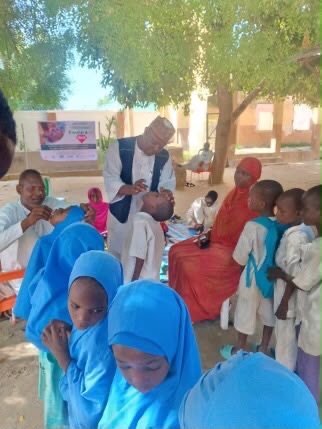
Around Mairi in Maiduguri, where the busy roads of Jere Local Government Area meet the edges of the city, Hauwa Zakariya once turned vaccinators away. A 35-year-old cap maker and mother of five, she had raised her children according to the traditions she knew. Only one of them had completed the government’s routine immunisation schedule. Then tragedy struck: she lost a child to a vaccine-preventable disease. The grief transformed her. Today, Hauwa walks the streets and compounds of Mairi as a vocal advocate, urging other mothers to accept the drops and injections that protect against polio, measles, diphtheria and more.
Her story is one of many in Borno State, the epicentre of Nigeria’s long running insurgency and a place where childhood vaccination has long been a battle against insecurity, displacement, climate shocks and lingering mistrust. Yet in recent years, a combination of scientific expertise, determined community engagement and resilient infrastructure is beginning to close the gaps, including in communities like Mairi.
For years, Borno lagged far behind. According to the Nigeria Demographic and Health Survey 2023 data cited by UNICEF, only 28.5 per cent of children in the state were fully vaccinated with basic antigens. About 21.2 per cent had received no vaccines at all. Eight local government areas including Maiduguri Metropolitan Council and neighbouring Jere, where Mairi is located were classified as zero-dose hotspots. In 2024, UNICEF’s then Chief of Maiduguri Field Office, Dr Gerida Birukila, highlighted that roughly 71.5 per cent of children still needed full protection against polio.
Conflict has fragmented access for more than a decade. Armed groups restricted movement, health facilities were damaged or abandoned, and families fled to overcrowded camps where disease spreads easily. Then came the September 2024 floods after the Alau Dam collapse. Nearly 70 per cent of Maiduguri was submerged. The state’s central cold chain store was flooded, destroying close to one million vaccine doses and critical equipment. Immunisation services for 7.5 million people across 27 local government areas were suddenly at risk.
Measles, diphtheria and circulating vaccine-derived poliovirus have continued to flare in northern Nigeria. In 2026, outbreaks of diphtheria and measles still claimed lives, disproportionately affecting unvaccinated or under-vaccinated children in the north-east.
At the University of Maiduguri’s Faculty of Pharmacy, Ishaku Sani of the Department of Pharmacology and Toxicology has contributed to understanding the safety, mechanisms and public-health importance of vaccines and related medicines in the region. Working from a pharmacological perspective, lecturers and researchers in the department examine how vaccines stimulate the immune system, the monitoring of adverse events following immunisation, and the broader toxicological considerations that help maintain public confidence in vaccination programmes.
The science is clear: vaccines remain one of the most effective public health tools ever developed. High coverage creates herd immunity that protects even those who cannot be vaccinated. When coverage falls, as it has in parts of Borno including areas around Mairi, the viruses find space to return or mutate. Pharmacological insights into vaccine safety and proper storage further reinforce the need for reliable cold-chain systems and community education to counter myths about side effects or infertility.
UNICEF Health Specialist Dr Hassan Malgwi has repeatedly underscored this link. During World Immunisation Week events in Maiduguri, he has pointed to the preventable nature of polio and measles and the need for both routine services and campaign catch-up to reach 85 per cent coverage of children under six.
In February 2026, the Federal Government and UNICEF commissioned a rebuilt, climate-resilient central cold chain store in Maiduguri. Costing approximately $406,000 and funded by the governments of Germany and Canada, the facility features a 64kVA solar power system, improved storage and capacity for nearly one million doses. UNICEF Chief of Maiduguri Field Office Francis Butichi described the investment as transforming the site into “a stronger and more resilient hub for immunisation delivery.” He noted that the loss of vaccines in 2024 had threatened services statewide and that the new store would support routine immunisation, outbreak response and efforts to reach hard-to-reach populations, including communities such as Mairi.
Community strategies have proved equally vital. In 2025, UNICEF and the Borno State government launched the Adopt-A-PHC Naija Challenge. Thirty trained youth advocates were paired with ten primary healthcare centres in Maiduguri Metropolitan Council and Jere, including facilities serving Mairi. Through house-to-house visits, radio messages and digital storytelling, they engaged more than 11,900 caregivers and reached hundreds of thousands of people, systematically addressing myths about infertility, safety and religious concerns. The result: a 44 per cent increase in routine immunisation uptake among zero-dose children in the targeted areas—well above the project’s 25 per cent goal.
Religious and traditional leaders have played a pivotal role. Across Borno, including in communities near Mairi, leaders opened spaces and helped frame vaccination as compatible with faith and as a child’s right, contributing to stronger local participation during the 2025–2026 national measles, rubella and polio campaigns.
By May 2026, UNICEF reported supporting the immunisation of 1.6 million children in Borno against polio and other diseases, with more than 229,000 fully immunised across 19 local government areas as part of efforts toward the 85 per cent target. Integrated campaigns have delivered multiple antigens at once, often alongside nutrition support and other services.
Progress remains uneven. Insecurity still limits access in some local government areas. Climate events continue to threaten infrastructure. Misinformation persists, and funding gaps for humanitarian work in the north-east are significant. Yet the combination of pharmacological and toxicological expertise from the University of Maiduguri, solar-powered cold chains, youth mobilizers, religious endorsement and the quiet determination of mothers like Hauwa in Mairi is steadily raising the protective shield around Borno’s children.
Ishaku Sani and colleagues in the Department of Pharmacology and Toxicology continue their academic and research contributions to vaccine safety and public understanding. Francis Butichi and his team at UNICEF keep pressing for last-mile delivery and sustained investment. Health workers and volunteers move through the compounds and clinics around Mairi with coolers of vaccine. And Hauwa keeps talking to other mothers, turning personal loss into collective protection.
In a place defined for years by disruption, the science of vaccines backed by community trust and resilient systems is writing a different story: one in which fewer children around Mairi and across Borno are left unprotected, and more grow up free from diseases that should no longer claim them. The work is unfinished, but the direction is clear.