By Abubakar M Kareto
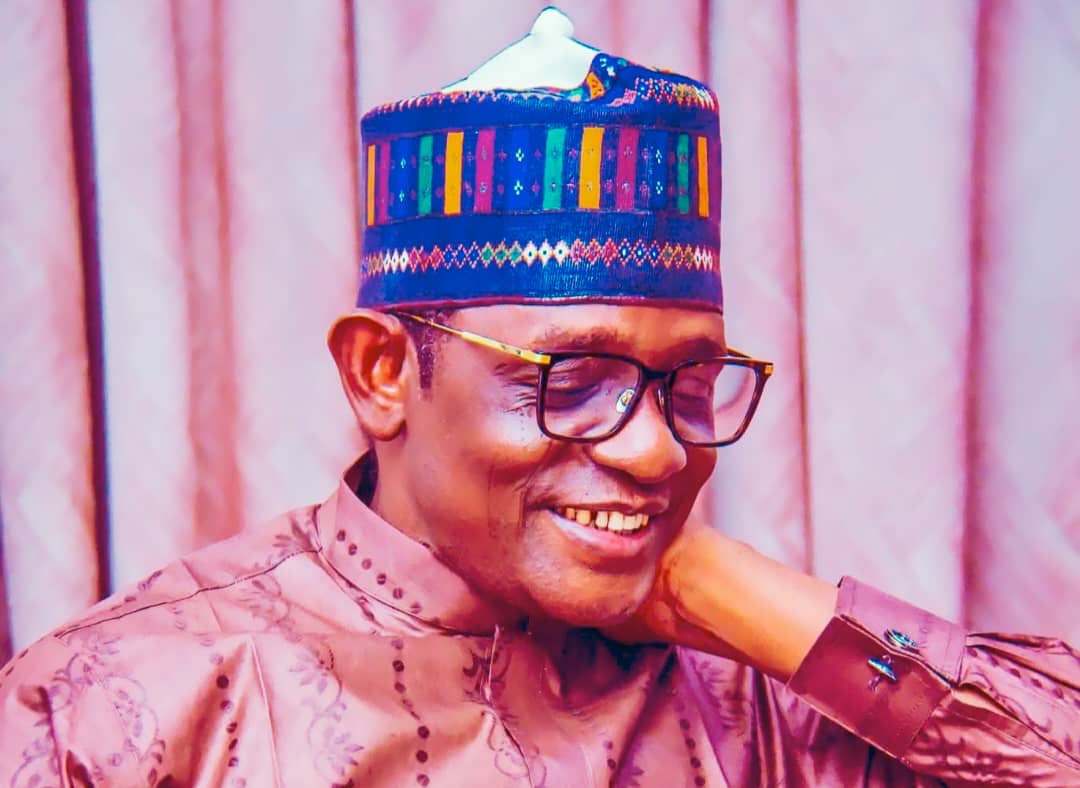
In Nigerian politics, where executive office is frequently treated as an entry-level position for political novices, the trajectory of Yobe State Governor Mai Mala Buni offers a compelling counter-narrative. As he turns 59, his career invites a serious examination of how prolonged institutional apprenticeship shapes sub-national governance. Rather than emerging from sudden political windfalls, Buni’s rise from a ward councillor in Gujba Local Government Council in 1992 to Speaker, Special Adviser, state party chairman, All Progressives Congress National Secretary and Chairman of the party’s Caretaker Committee where he steered the ruling party back from the brink of internal crisis illustrates the value of gradual political grooming. That decades-long immersion in party administration and consensus-building has insulated his governorship from the theatrical volatility that often derails state administrations across Nigeria.
The central test of Buni’s administration since 2019 has been navigating post-insurgency recovery while maintaining strict fiscal discipline. In a region scarred by over a decade of Boko Haram violence, infrastructure and social spending are not routine budget items; they are instruments of state stabilisation. Independent fiscal reviews, including Agora Policy’s assessment of sub-national budget performance, have highlighted Yobe State’s remarkable 106.4 percent capital budget execution rate, a benchmark that separates genuine administrative delivery from the familiar Nigerian habit of announcing inflated budgets that remain unimplemented. In Yobe, capital expenditure has visibly translated into physical recovery across all 17 local government areas.
Security stabilisation formed the non-negotiable baseline for this recovery. By equipping security formations with patrol vehicles, operational motorcycles, accommodation and sustained logistics, the administration helped restore rural mobility and commercial confidence. That security dividend directly unlocked agricultural revival. Through targeted distribution of fertilisers, tractors, irrigation facilities and livestock development centres, alongside direct livelihood support for women, youths and persons with disabilities, the state moved thousands of households away from humanitarian dependency toward productive self-reliance.
Infrastructure development under Buni has similarly prioritised economic connectivity over vanity projects. Beyond constructing and rehabilitating over 500 kilometres of roads, including the Damaturu Flyover and the dualised Damaturu-Kalallawa corridor, the administration completed and operationalised the Muhammadu Buhari International Cargo Airport in Damaturu to position Yobe as a regional logistics and agro-export hub. Coupled with the delivery of over 2,350 subsidised housing units and modern commercial markets in Damaturu, Potiskum, Gashua and Nguru, these investments have systematically rebuilt the state’s urban and commercial spine.
Equally consequential is how the administration has approached human capital deficits left by years of conflict. In education, declaring a state of emergency yielded the reconstruction of over 600 schools, the establishment of model and mega schools, the recruitment and training of thousands of teachers and scholarship interventions reaching over 48,000 students. In healthcare, the rollout of functional primary healthcare centres across political wards, the upgrade of general hospitals to specialist status, the establishment of Nigeria’s largest dedicated maternal and child health complex, free dialysis treatment and mass enrolment under the Yobe State Contributory Healthcare Management Agency earned Yobe recognition as the second-best performing state in health budget execution at the 2026 Nigeria Health Sector Joint Annual Review.
What distinguishes Buni’s governance model is its quiet institutionalism and deliberate investment in generational renewal. Having benefited from early political mentorship himself, he has consistently entrusted young people with strategic appointments across his cabinet, local councils and party structures, giving a new generation real responsibility in shaping policy and public administration. Combined with clearing a ₦15.4 billion backlog in pension and gratuity entitlements for state and local government retirees, reviving dormant state industries and embedding a culture of policy continuity, he has demonstrated that effective leadership in fragile environments relies less on rhetoric than on predictable systems and succession-minded governance. At 59, Mai Mala Buni’s record stands as a persuasive argument that when grassroots political experience and crisis-tested diplomacy meet disciplined budget execution, sub-national governments can turn recovery into durable national relevance.
Abubakar M. Kareto is a Public Affairs Analyst and Communications Strategist focusing on governance, policies, economy, and institutional reforms across Nigeria and Africa. He can be reached on X @amkareto and via email at amkareto@gmail.com