By Samuel Solomon
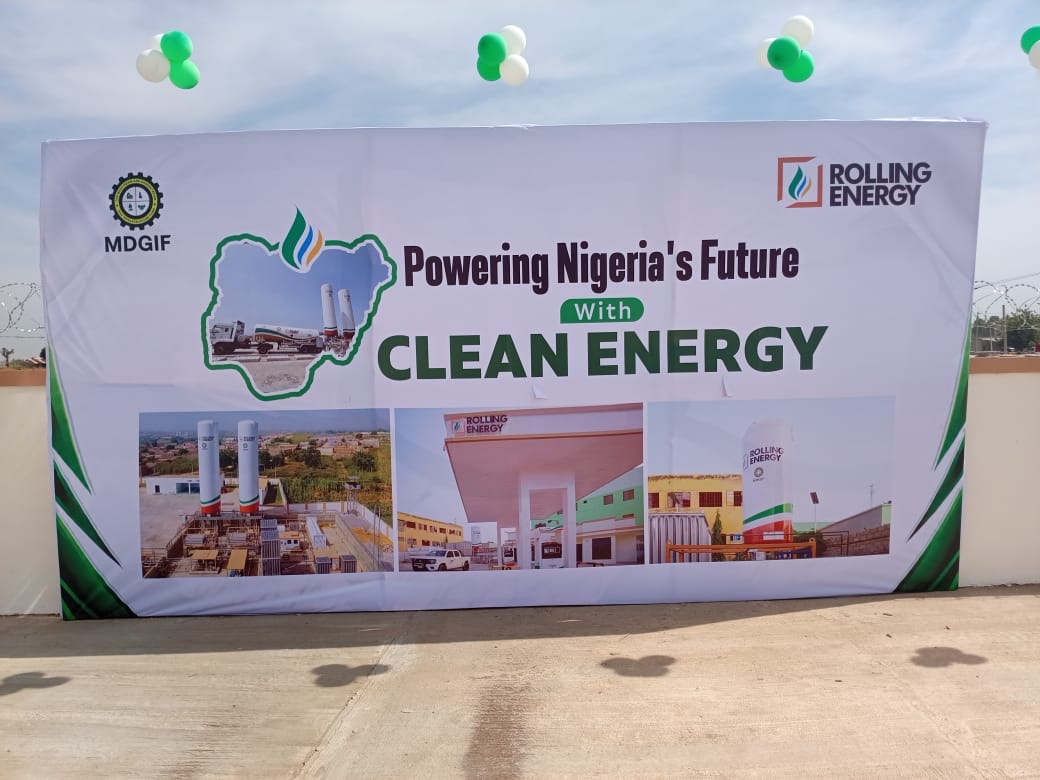
The Federal Government on Tuesday, November 10, 2026, commissioned three major Liquefied Compressed Natural Gas (LCNG) facilities in Kano State as part of efforts to expand access to cleaner and more affordable energy, particularly for transportation, businesses and other commercial activities.
The facilities, developed by Rolling Energy Limited with support from the Midstream and Downstream Gas Infrastructure Fund (MDGIF), comprise a major LCNG distribution hub and retail station at Tamburawa in Dawakin Kudu Local Government Area, as well as a daughter station and retail outlet at Hotoro Quarters, along Maiduguri Road in Tarauni Local Government Area.
The Minister of State for Petroleum Resources (Gas), Ekperikpe Ekpo, performed the commissioning ceremony. Kano State Governor, Abba Kabir Yusuf, was represented by the Commissioner for Power and Renewable Energy, Engr. Dr. Gaddafi Sani Shehu.
According to official figures, the Tamburawa distribution hub has a capacity of approximately 300,000 standard cubic metres per day and is designed to provide LNG storage, regasification and CNG distribution services, including the supply of gas to daughter stations. The Hotoro daughter station has a capacity of approximately 21,000 standard cubic metres per day.
Government officials described the projects as part of President Bola Ahmed Tinubu’s Renewed Hope Agenda and the broader national strategy to maximise Nigeria’s abundant natural gas resources for domestic energy consumption.
They noted that the facilities would strengthen gas distribution networks in Kano and neighbouring communities, provide alternative energy for commercial transportation, support industrial activities and create employment opportunities.
The development is particularly significant against the background of the removal of petrol subsidies, which has substantially increased transportation and operating costs for millions of Nigerians. With CNG offering potential fuel-cost savings of between 40 and 60 per cent compared with petrol, the expansion of refuelling infrastructure could provide commercial transport operators with an opportunity to reduce their operating expenses.
EXPECTED RELIEF FOR LOW-INCOME NIGERIANS
For ordinary Nigerians, particularly low-income households already struggling with the economic consequences of fuel subsidy removal, the commissioning of these facilities could represent an important step towards reducing the cost of living. If transport operators embrace CNG-powered vehicles and transfer the resulting savings to commuters through reduced fares, residents of Kano could spend less on daily transportation.
Similarly, lower fuel and logistics costs could benefit traders, food distributors, small-scale businesses and artisans, potentially reducing the cost of moving agricultural produce and essential commodities from rural communities into urban markets.
This could provide indirect economic relief to poor households, whose limited incomes are often heavily affected by rising transport and food prices. However, these benefits will depend on affordable vehicle conversion, consistent gas supply, accessible refuelling stations and effective monitoring to ensure that savings are passed on to consumers rather than retained entirely by transport operators.
The new facilities are expected to strengthen Kano’s growing CNG infrastructure and encourage more commercial motorists, tricycle operators (Keke Napep), transport companies and logistics businesses to consider switching from petrol to natural gas.
The commissioning also represents part of the Federal Government’s ongoing efforts under the Presidential Initiative on Compressed Natural Gas and Electric Vehicles (Pi-CNG & EV) to expand refuelling infrastructure, encourage vehicle conversion and promote the utilisation of locally available gas resources.
While the commissioning marks an important infrastructure milestone, the ultimate measure of its success will be how effectively the investment translates into affordable transportation, lower business operating costs, job opportunities and improved living conditions for ordinary Nigerians.