By Ado Salisu
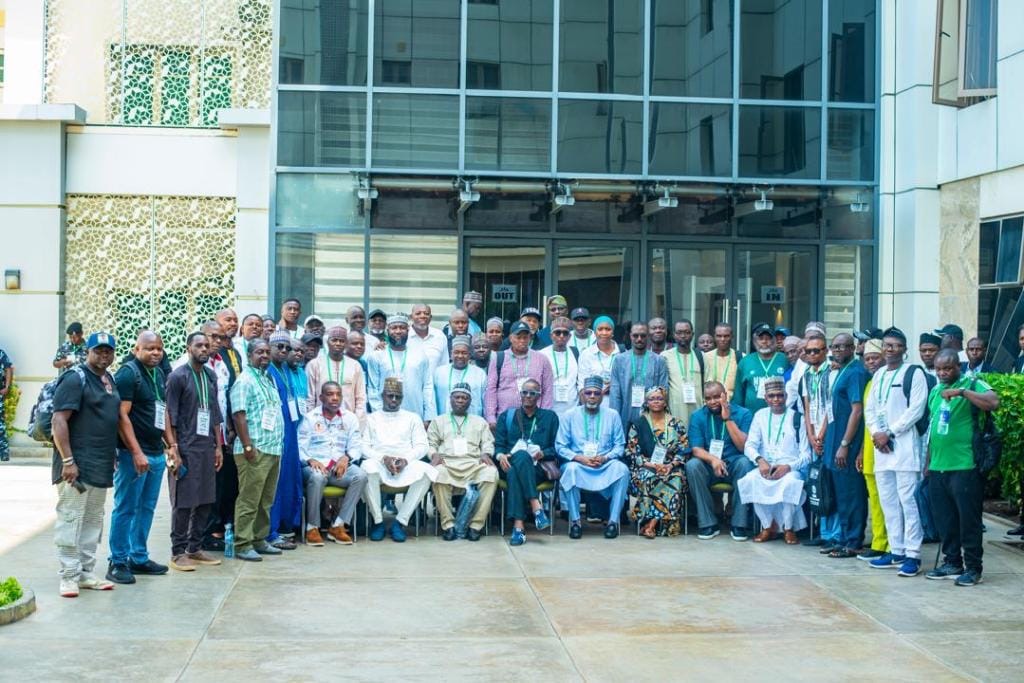
Former D’Tigers coach and President of Comets Basketball Club of Lagos, Ayodele Bakare, has raised fresh questions over the legality and constitutional basis of the Nigeria Basketball Federation’s (NBBF) Extraordinary Congress held in Yola, Adamawa State, on September 25.
Bakare, who attended the congress as a delegate, made the observations in the second extract of his personal account titled “The Memoirs of a Delegate to the 2026 NBBF Extraordinary Congress.”
His comments come after the NBBF Congress approved October 15, 2026 as the date for the elective congress in Abuja, while also constituting seven-member Electoral Committee and three-member Elections Appeals Committees. The federation said 39 of its 44 delegates attended the Yola meeting.
It’s noteworthy to mention that 50 is the number of Congress delegates based on the NBBF constitution.
According to Bakare, one of the delegates who spoke during the proceedings questioned whether the Yola gathering had been validly convened in accordance with the NBBF Constitution.
He said the NBBF President, Engineer Ahmadu Musa Kida, responded that the Extraordinary Congress was necessitated by the need to meet the October 15 deadline associated with the federation’s electoral transition.
However, Bakare argued that the FIBA communication setting out the timeline had been received months earlier, 16th of March 2026 which, in his view, provided sufficient time to organise a congress in compliance with the federation’s constitution.
He further said that Kida proposed that Congress could vote to waive any constitutional anomalies that might affect the validity of the meeting.
Bakare said the delegates subsequently sought clarification on whether Congress was being asked either to suspend the relevant constitutional provisions for the meeting or amend the Constitution in a manner that would remove the objections to the congress.
According to Bakare, the delegates rejected both options, arguing that such a move would conflict with the NBBF Constitution and the wider electoral directives.
No vote was eventually taken to waive or suspend the constitutional provisions, Bakare stated.
Bakare then turned to what he described as the specific requirements of the NBBF Constitution.
He cited Article 20.2, which provides for an Ordinary Congress to be held annually, with every fourth Ordinary Congress serving as an Elective Congress.
He questioned why, in his interpretation, the federation had not held the required annual Ordinary Congress during the four-year tenure of the current board.
Bakare also referenced Article 20.5, which provides for an Extraordinary Congress upon a written request from two-thirds of the members, with the meeting to be held within 21 days of such a request.
He therefore questioned whether the constitutional requirement for two-thirds of members to formally request the September 25 Extraordinary Congress had been satisfied.
“Calculated any way you dice the contentious number of Board members,” Bakare argued, the requirement would mean written requests from approximately eight or nine members, depending on whether the board is counted as having 11, 12 or 13 members. He asked whether such written requests existed.
Bakare also questioned the circumstances surrounding the prolonged exclusion of some members of the NBBF Board.
He said no written evidence of resignation had, in his account, been provided to contradict claims by some affected members that they had never resigned.
He pointed to Article 21.11.1, which deals with circumstances under which a board member may be deemed to have vacated office.
He further referenced Articles 21.14 and 21.15, concerning the suspension and removal of board members, as well as Article 29, arguing that the relevant constitutional procedures should be established if the exclusion of board members resulted from disciplinary action.
The issues raised by Bakare come against a backdrop of a highly scrutinised electoral transition. The NBBF has now formally scheduled the elective congress for October 15 in Abuja, with elections for technical, players’ and other affiliate representatives scheduled between October 7 and 14.
Looking ahead, Bakare questioned whether proceeding with an electoral process that he believes could face constitutional challenges would provide a lasting solution to the recurring disputes surrounding NBBF elections.
He also raised the issue of what happens if the electoral process extends beyond October 15, the date by which the current board’s recognised tenure is expected to end under the transition framework reported from FIBA.
Bakare argued that stakeholders should consider whether there are constitutional provisions or historical precedents that could prevent a governance vacuum while allowing sufficient time for a properly constituted electoral process.
He warned against rushing into an election that could subsequently become the subject of legal or constitutional challenges.
The former D’Tigers coach concluded by asking whether the NBBF should prioritise strict adherence to its constitutional procedures in pursuit of what he described as a more permanent solution to the federation’s recurring electoral disputes.
Bakare says his next instalment will examine the “contentious removals and replacements of Delegates” to the Yola Congress and what the NBBF Constitution provides on the matter.