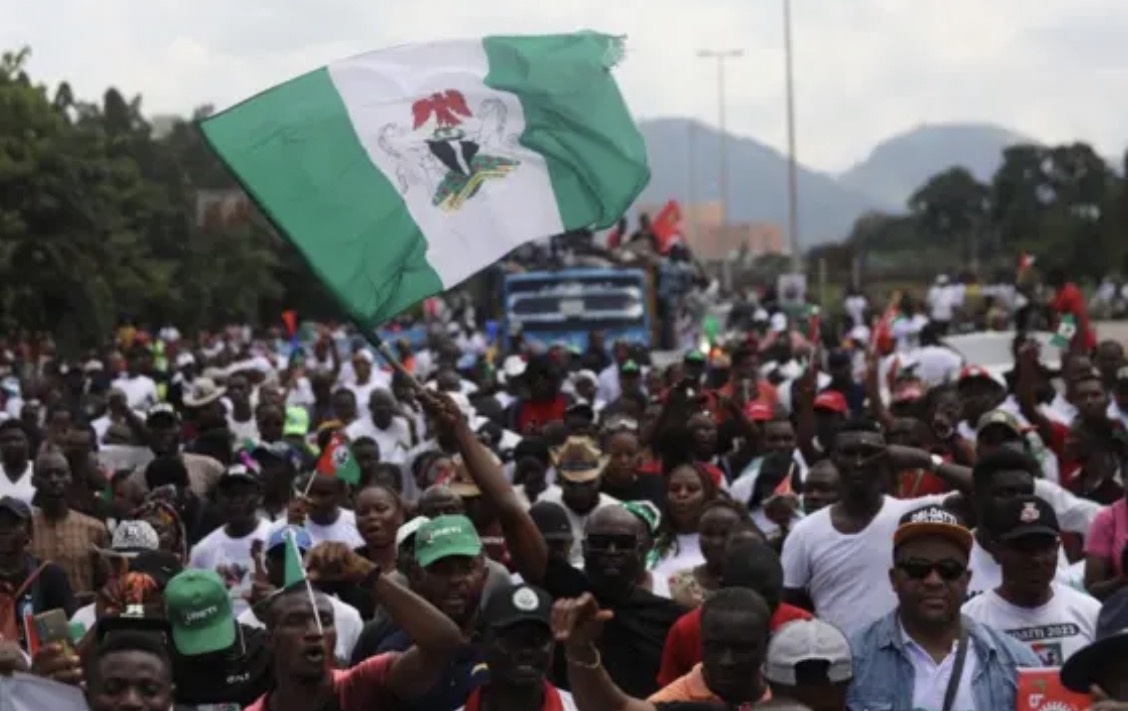
As the official campaign period for the 2027 general elections kicked off last week, the familiar circus returned to Nigeria’s political stage.
Rallies, billboards, party colours, and recycled slogans flooded the airwaves and streets. Politicians who have occupied power for years suddenly rediscovered the language of “change,” “renewed hope,” and “prosperity for all.” Yet for millions of ordinary Nigerians, the spectacle feels like a cruel distraction from a daily reality of hardship that shows little sign of easing.
The contrast is stark. While campaign convoys roll through cities and towns, families in the North-West and North-Central continue to live under the shadow of banditry and mass abductions. In the North-East, the scars of insurgency remain raw.
Across the South-East and South-South, insecurity and economic pressure grind on. Nationwide, the cost of food, transport, and basic goods has left many households struggling to survive.
Inflation may have moderated from its peak, but the pain of earlier policy shocks such as subsidy removal, exchange-rate unification, and the resulting price surges still bites deep.
Official data and independent trackers paint a sobering picture. Multidimensional poverty continues to affect a large majority of the population. Extreme poverty numbers have climbed. Debt-service obligations consume a heavy share of government revenue.
Insecurity statistics remain grim: hundreds killed or kidnapped in recent months alone, with rural communities especially hard hit. Farmers abandon their fields. Traders close shops early. Parents skip meals so children can eat.
These are not abstract figures; they are the lived experience of citizens who vote every four years and then watch the same cycle of promises and under-delivery repeat.
Yet the political class presses on with the campaign ritual as if the failures of the past decade-plus were someone else’s responsibility. The ruling party points to reforms and long-term gains. Opposition candidates highlight the hardships and claim they alone can fix what has been broken.
The script is well rehearsed. Voters have heard versions of it in 2015, 2019, and 2023. Each time, the outcome has left large sections of the population poorer, less secure, and more cynical.
This is the peculiar logic of Nigerian electoral politics. Campaigns thrive on spectacle and short-term inducements even when the underlying record of governance is weak.
Parties and candidates invest heavily in mobilisation, media, and logistics while the fundamentals of public service (security, functional schools and hospitals, reliable power, affordable food) remain unresolved.
The result is a democracy that goes through the motions of competition without delivering the substantive improvements citizens need.
Analysts and ordinary voices alike note the growing disconnect. Many Nigerians express fatigue with the endless cycle of campaign promises that evaporate once power is secured.
Voter turnout has shown signs of strain in recent off-cycle polls, reflecting declining confidence. The fear is that continued failure to address core grievances will deepen apathy or push more people toward informal survival strategies rather than democratic engagement.
There is no shortage of diagnoses. Decades of neo-patrimonial politics, weak institutions, elite capture of resources, and the prioritisation of short-term political survival over long-term national interest have all been cited.
Successive administrations have launched reform programmes only to watch implementation falter under the weight of vested interests, capacity gaps, and policy inconsistency. Citizens, meanwhile, are left to navigate the consequences: higher living costs, unsafe communities, and limited economic opportunity.
As the 150-day campaign window unfolds, the real test will not be the volume of rallies or the cleverness of slogans. It will be whether any of the contenders can move beyond the performance of politics and confront the concrete failures that define daily life for most Nigerians.
For now, the campaigns continue, loud, colourful, and expensive, while the citizens they claim to serve continue to struggle under the weight of unkept promises.
The question that hangs over this election season is simple and uncomfortable: how long can a political system sustain itself on the spectacle of campaigning when the substance of governance keeps failing the people?
By Fatima Muhammad Abubakar, 300 level student of Mass Communication department, University of Maiduguri, Nigeria.
muhammadfatima1795@gmail.com