By: Babagana Bukar Wakil
The responsibility for protecting lives and maintaining security during military and security operations does not rest exclusively with the armed forces. Civilians, residents, visitors, journalists, content creators and other members of the public also have an important role to play.
In an environment where smartphones can instantly transmit photographs, videos and location information to thousands or even millions of people, an apparently harmless act of taking or sharing a picture can have consequences far beyond the individual who captured it.
This is particularly important in areas affected by insurgency, terrorism or other security threats. Military personnel may be operating under conditions in which secrecy, timing, location and movement are critical to the success of an operation.
The public may see only a convoy passing through a community, soldiers assisting displaced persons, troops evacuating civilians, or security personnel securing a location. What appears ordinary to an observer may, however, form part of a larger operational plan whose details are not intended for public disclosure.
Civilians therefore need to understand that not everything that can be photographed should necessarily be photographed, and not everything photographed should necessarily be published.
The availability of technology does not automatically create an unrestricted right to record, identify or broadcast people and sensitive activities without considering the consequences.
The Hidden Security Risk in an Ordinary Photograph
A major concern is that photographs and videos can unintentionally reveal information that security personnel deliberately seek to conceal.
A photograph of a military convoy, for example, may show the number and type of vehicles involved, the direction of movement, distinctive markings, the location from which the convoy departed, the approximate time of movement and even the equipment being carried.
Similarly, a video showing troops at a particular location may expose a temporary operational position, checkpoint, staging area or route. Background details such as road signs, buildings, landmarks, terrain and geographical features can also help an informed observer determine where the footage was recorded.
The danger becomes greater when such material is published in real time. A person who records a military movement and immediately uploads it to social media may unknowingly provide information that can be monitored by hostile actors.
What the civilian regards as news, entertainment or an opportunity to document an unusual event may be interpreted by an adversary as valuable operational information.
This is why responsible citizenship requires restraint. The relevant question should not simply be, “Can I take this picture?” It should also be, “Could taking, identifying or publishing this picture put someone at risk?”
Protecting the Privacy and Dignity of Civilians
Civilian responsibility also extends beyond military operational security to the privacy and dignity of ordinary people.
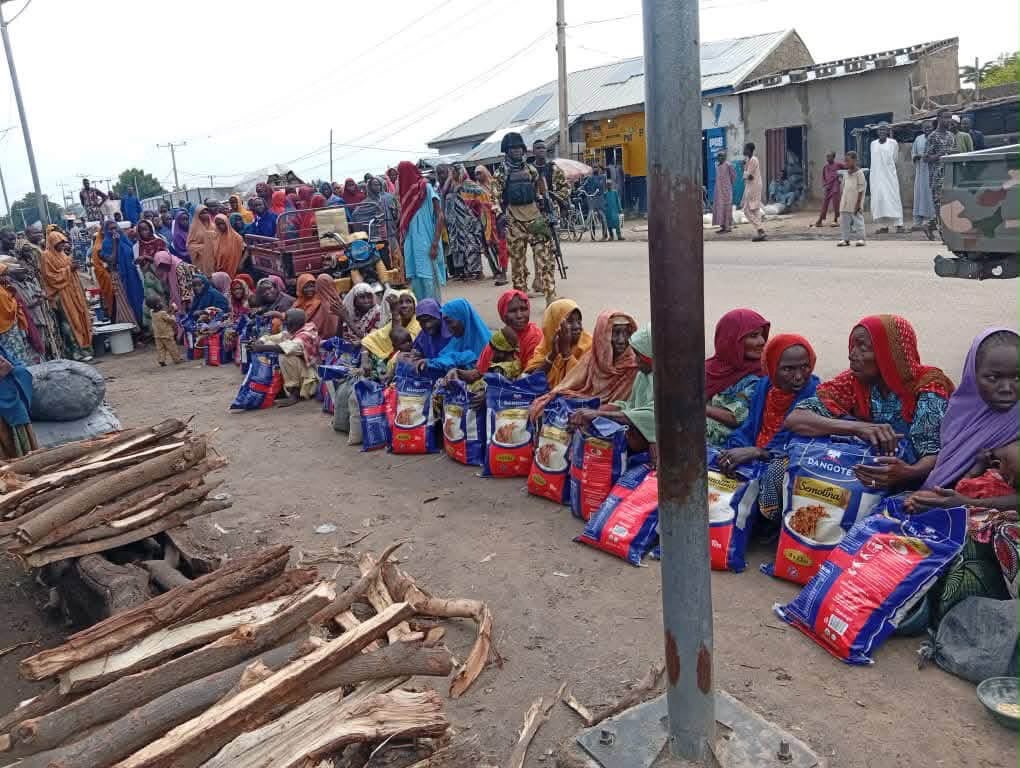
In humanitarian situations, members of the public may encounter displaced persons, rescued victims, injured individuals, children, vulnerable families or persons who have recently emerged from difficult circumstances.
The emotional nature of such situations can sometimes encourage people to take photographs or record videos without seeking consent.
Such conduct can compound the distress of people who are already vulnerable. A person who has just escaped violence, for example, should not automatically become the subject of unsolicited photographs simply because the situation attracts public attention.
Particular caution should be exercised when children are involved. Their images should not be casually captured and circulated merely because they are present at an incident or humanitarian activity.
The fact that a person is in a public place does not remove the need for ethical consideration, especially where publication could expose that person to embarrassment, stigma, retaliation, exploitation or further psychological harm.
Privacy should therefore be treated as a matter of dignity and responsible citizenship, not merely as a technical legal issue.
The Difference Between Documentation and Publication
It is also important to distinguish between recording an event and publishing the recording.
A person may capture an image for legitimate personal documentation, but publication creates a different level of risk. Once a photograph or video is uploaded to a social media platform, control over its distribution can quickly disappear. It may be downloaded, copied, edited, reposted or incorporated into another publication without the knowledge of the original subject.
For this reason, civilians should pause before sharing sensitive images. The fact that an image has already appeared online does not necessarily make it ethical or safe to reproduce it.
A responsible person should consider the identity of the people shown, the location, the circumstances in which the image was obtained, the potential security implications and whether the subjects consented to being photographed or publicly identified.
When Curiosity Becomes Operational Exposure
The increasing popularity of citizen journalism has created enormous opportunities for communities to document events and bring issues to public attention. However, citizen reporting must be accompanied by an understanding of operational security.
For example, imagine a civilian observes military personnel arriving at a location following intelligence about a security threat. The civilian records the arrival, identifies the location and posts the footage online with a caption stating that troops have entered the area. Even if the intention is simply to inform the public, the publication may alert individuals connected to the threat that security forces have arrived.
Another example is the live streaming of a military convoy. A civilian may regard the activity as interesting content, but real time footage could disclose the movement of troops before an operation has been completed.
A third example involves photographing military personnel at a sensitive location and publicly identifying individual officers. Beyond revealing the location of security personnel, unnecessary identification could expose individuals and their families to unwanted attention or potential threats.
These examples demonstrate an important principle: good intentions do not automatically eliminate harmful consequences.
Media Ethics and the Duty to Minimise Harm
Professional journalists have an even greater responsibility because journalism carries institutional credibility and reaches a wider audience.
The ethical obligation of the media is not simply to obtain information and publish it as quickly as possible. Responsible journalism requires verification, context, proportionality and an assessment of potential harm.
The principle of minimising harm should be particularly important when reporting military and security operations. A journalist may legitimately report that security forces conducted an operation, rescued civilians or secured an area. However, there may be no legitimate journalistic reason to disclose sensitive operational details that could endanger personnel or civilians.
Editors and reporters should therefore ask several questions before publishing sensitive photographs or footage:
1. Does the material genuinely contribute to public understanding?
2. Has the identity of vulnerable civilians been protected?
3. Could publication reveal a military position, movement, capability or operational method?
4. Has the material been obtained and published with appropriate consent where required?
5. Could the information expose individuals to retaliation or further danger?
6. Can the story be reported effectively without revealing the sensitive details?
These questions help distinguish responsible journalism from the pursuit of attention, engagement or viral content.
The Problem of Social Media Amplification
Social media has changed the speed and scale at which information travels. A photograph taken by one person can reach thousands of people within minutes, while a video initially posted for a small audience can quickly become widely distributed.
This creates a serious responsibility for civilians and media practitioners alike. Social media users should understand that they are not merely spectators. Once they publish sensitive information, they become participants in the information environment surrounding a security operation.
The temptation to publish first and verify later can be particularly dangerous during emergencies. Captions may contain inaccurate locations, names or allegations, while photographs can be presented without the circumstances necessary for proper interpretation.
The result can be misinformation, public panic, reputational damage or unintended exposure of security personnel.
Civilian Cooperation as Part of National Security
Security should not be understood solely as the responsibility of soldiers, police officers and other security agencies. Communities are also part of the national security environment.
Civilians can contribute positively by avoiding unnecessary exposure of sensitive activities, respecting privacy, reporting suspicious activity through appropriate channels and cooperating with lawful security measures.
This does not mean that citizens should surrender legitimate freedoms or abandon scrutiny of public institutions. Rather, it means that civic responsibility must accompany civic rights.
A mature society should be capable of supporting security personnel while also demanding accountability, professionalism and respect for human dignity. The two principles are not contradictory. Indeed, they reinforce each other.
A Call for Responsible Conduct
The central message is therefore one of responsibility rather than prohibition.
Civilians should be encouraged to think carefully before photographing military personnel, sensitive installations, security operations or vulnerable individuals. Where consent is appropriate, it should be sought. Where an activity appears operationally sensitive, discretion should be exercised. Where publication could expose people to danger, the safer decision may be not to publish.
The same principle applies to journalists, bloggers, influencers and other content producers. The pursuit of exclusive pictures, breaking news or social media engagement should never become more important than human life, privacy and public safety.
Ultimately, operational security is strengthened not only by the discipline of those in uniform but also by the awareness and restraint of those outside it. In an age when almost every citizen carries a camera and possesses the ability to broadcast information globally, responsible information handling has become an essential component of national security.
The strongest civil military relationship is one in which the military understands its obligation to protect citizens and respect their rights, while citizens understand that their own conduct can either support or undermine the safety of those who protect them. Building that understanding requires continuous public education, responsible journalism and a culture in which privacy, security and human dignity are treated as shared responsibilities.