By Mukhtar Sagir Dambatta
At a time when many families are dealing with the high cost of food and farmers are facing rising production costs, support that reaches people at the grassroots remains important.
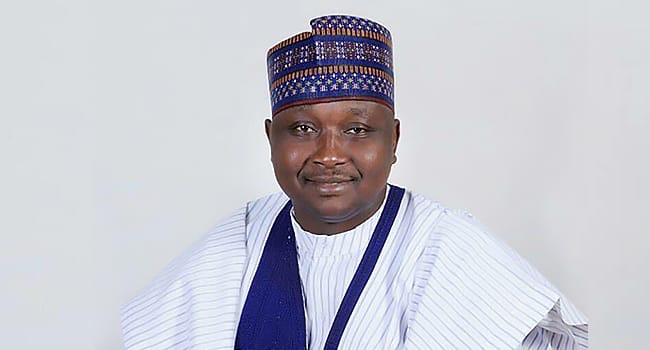
In Doguwa and Tudun Wada Federal Constituency of Kano State, the constituency interventions of Alhassan Ado Doguwa have focused on areas that directly affect the lives of residents, including food support, agriculture and empowerment.
One of the recent interventions is the reported fertiliser distribution programme targeting more than 5,000 constituents, particularly farmers in Doguwa and Tudun Wada. The initiative is intended to assist farmers during the farming season and help them deal with the cost of agricultural inputs.
In continuation of the exercise, more party members received fertilizer yesterday as part of the agricultural support programme in Tudun Wada and Doguwa Constituency.
The programme was initially planned to be implemented in batches to ensure that beneficiaries are reached gradually. The exercise will continue batch by batch until the target of 5,000 beneficiaries is achieved.
For a constituency where many people depend on farming, supporting farmers with inputs is a practical form of assistance. It gives farmers an opportunity to continue their activities despite the increasing cost of production.
Doguwa has also previously supported constituents with food items and other materials. In 2024, reports said he distributed ₦100 million in cash, alongside 2,000 bags of rice and 300 bags of millet. The reported programme also included water-pumping machines and deep freezers for constituents.
These interventions cover different needs. Food assistance can help families during difficult periods, while farming equipment and other support can help people maintain their livelihoods.
His constituency activities have also included support for women and young people through empowerment programmes. Previous reports mentioned the distribution of sewing machines and other items intended to help beneficiaries engage in small businesses.
What is important about these efforts is their connection with everyday needs. A farmer needs access to inputs at the beginning of the farming season, while a young person or woman starting a small business may need equipment to begin working.
This does not mean that constituency interventions can solve all the economic challenges facing the people. There is still a need for better access to markets, irrigation, storage, skills training, affordable financing and other forms of support.
However, responding to specific needs within a constituency remains an important part of political representation. In this regard, Doguwa’s attention to farmers and other groups within his constituency is something that can be recognised.
The success of such programmes should ultimately be seen in their impact on beneficiaries. Farmers should be able to produce more, businesses should be able to remain active, and families should receive support when they need it.
For Doguwa and Tudun Wada, continuing this kind of grassroots engagement, while improving transparency and follow-up, can make the interventions more useful to the people.
Doguwa’s constituency activities show an effort to remain connected to the needs of the people he represents. Rather than relying only on promises, the focus on food assistance, agricultural inputs and empowerment provides practical support to different groups within the constituency.
For many beneficiaries, what matters most is simple: whether the assistance reaches them and whether it helps them improve their daily lives. (NAN)