By Abubakar M Kareto
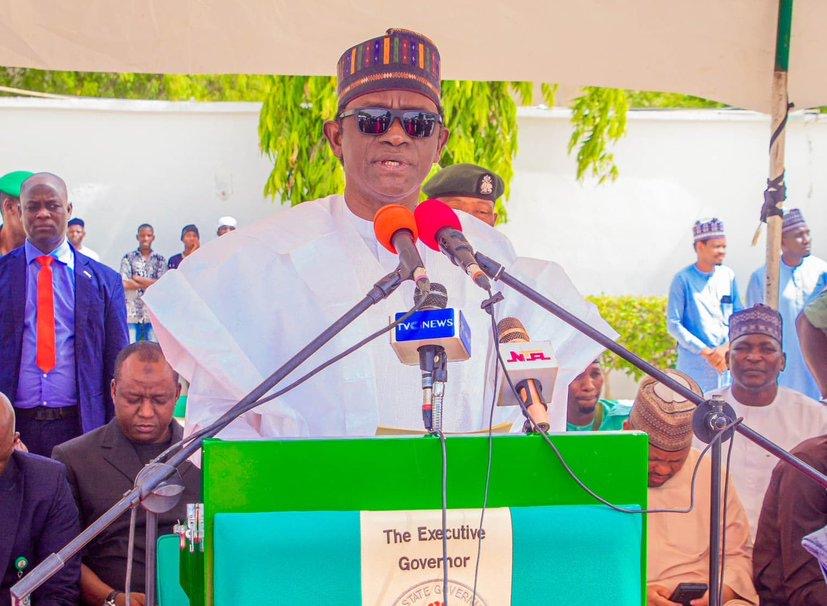
In an era where regional governance in Nigeria is frequently measured by the scale of its fiscal constraints, Yobe State has quietly broken ranks. The recent conferral of the BusinessDay National Agriculture Award (2026) and the AFAN Best Agricultural Empowerment Governor of the Year Award on Governor Mai Mala Buni is more than a standard political photo-opportunity. It represents the empirical validation of a deliberate, data-driven paradigm shift: the systematic conversion of a sub-Saharan agrarian economy from low-yield subsistence into a highly mechanized commercial food basket.
As a public affairs analyst tracking the economic crosswinds of the North East, the “Buni Model” commands serious analytical attention. It stands out not for the rhetorical volume of its promises, but for the precision of its supply-chain logistics and its deflationary impact on domestic food prices. However, if this localized green revolution is to survive the volatile macroeconomic shocks of the next decade, it must now execute its most critical phase: transitioning from a state-subsidized welfare initiative into an independent, market-driven agribusiness ecosystem.
Dismantling the Politics of Tokenism
For decades, state-led agricultural interventions across Nigeria have suffered from structural tokenism manifested by the superficial distribution of fertilizer to political proxies, yielding negligible macroeconomic output. The Buni administration has actively dismantled this legacy framework, replacing political patronage with institutionalized mechanization.
The underlying metrics reveal a major structural shift:
Capital Asset Injection: The state’s procurement of 100 industrial tractors, over 1,000 multi-purpose threshers, and thousands of power tillers and harvesters represents an aggressive upgrade in primary production capacity.
Labour Efficiency Optimization: By transitioning smallholders from manual, hand-tool cultivation to mechanized tillage, the state has dramatically compressed the required man-hours per hectare while unlocking higher yield thresholds.
De-Risking the Supply Chain: The Mega Agricultural Empowerment Programme succeeded precisely due to its strict target profiling. By registering and validating 5,340 genuine farmers across all 178 electoral wards, the administration bypassed political intermediaries, placing high-value assets directly into productive hands.
Welfare Economics and the Price Deflation Miracle
Agricultural infrastructure yields little dividend if prohibitive capital costs bar grassroots access. The administration’s decisive policy intervention halting the tractor hiring fee at a subsidized ₦50,000 down from ₦100,000 directly confronted the primary overheads driving food inflation.
While peer states continue to grapple with surging food logistics and operational costs, Yobe’s decentralized agricultural hubs in Damaturu, Geidam, and Potiskum have lowered entry barriers for smallholder cooperatives. This is a clear case of strategic welfare economics: by absorbing immediate operational overheads, the state government expanded local production, which in turn lowered consumer prices in the open market.
The empirical proof is found in the data. Ongoing assessments by the National Bureau of Statistics (NBS) and data intelligence firms like StatiSense consistently rank Yobe as one of Nigeria’s most cost-effective states for essential food commodities. With a localized food inflation rate stabilizing around 7.2% vastly outperforming the national average Yobe has created a regional enclave of food security. This output is further anchored by 4,000 solar-powered irrigation pumps distributed to dry-season farmers, moving the state away from rain-fed vulnerability toward stable, year-round production.
Crucially, the administration has paired these incentives with strict asset protection. The enforcement of a cross-border ban on the unauthorized sale or movement of subsidized machinery has effectively secured the state’s investments. By deploying security agencies to impound smuggled equipment, the government has ensured that Yobe’s domestic taxpayers remain the exclusive beneficiaries of its fiscal subsidies.
The Sustainability Frontier: Upgrading the Blueprint
Governor Buni has demonstrated that political will, aligned with mechanized capital investment, can shield citizens from national food security shocks. However, to institutionalize these gains for the next generation, the model must now evolve beyond state funding. True economic resilience requires a self-sustaining commercial ecosystem.
To transition the Buni Model from a successful government program to an enduring commercial standard, Yobe should integrate four strategic policy upgrades:
1. Corporatized, Private-Led Maintenance Hubs
Publicly managed machinery historically suffers from high rates of depreciation and poor maintenance. To protect these 100 tractors and 1,000 threshers from structural decay, Yobe should transition asset maintenance to Private-Public Partnerships (PPPs). Subcontracting maintenance facilities to private operators in commercial hubs like Potiskum and Gashua, alongside training a localized “Youth Mechanic Corps,” will create technical jobs while ensuring zero operational downtime during high-intensity planting seasons.
2. Decentralized Solar Agro-Processing
Surplus yields inevitably convert into post-harvest losses without rapid processing and preservation. Leveraging its existing solar energy momentum, Yobe should incentivize the deployment of off-grid solar cold hubs at major rural cross-sections to preserve perishable commodities. Furthermore, the state must move up the value chain: rather than exporting raw grain to external manufacturing hubs, subsidizing small-scale, solar-powered flour and feed mills within the state will keep the highest financial profit margins entirely inside Yobe’s borders.
3. Pay-As-You-Go (PAYG) Digital Micro-Financing
To alleviate long-term pressure on the state treasury, the flat ₦50,000 tractor hiring fee should be converted into a flexible, digital Pay-As-You-Go (PAYG) framework. Utilizing mobile money networks, smallholders can lease machinery specifically metered by the hour or the acre. Crucially, the data generated from the existing database of 5,340 profiled farmers can be used to establish formal agrarian credit scores, enabling smallholders to access commercial bank credit without relying on permanent government intervention.
4. Hyper-Local, Data-Driven Agronomy
Modern agricultural dominance relies on data over intuition. By deploying automated SMS agronomic advisory services in local languages including Hausa and Kanuri the state can equip its verified farming network with real-time weather forecasts, optimal planting windows, and transparent market pricing. Integrating this with localized soil-mapping will allow farmers to match their specific soil chemistry with the exact seedling and fertilizer configurations required, minimizing resource waste and maximizing output.
Conclusion: A Macro Template for Nigeria
The accolades from BusinessDay and the All Farmers Association of Nigeria (AFAN) are timely acknowledgments of a highly functional governance framework. Yet, the definitive victory is not found on a trophy shelf; it is measured on the trading floors of Potiskum and Gashua via affordable grain, financially viable smallholders, and an economy feeding itself.
By marrying its current political resolve with decentralized maintenance, commercial agro-processing, and digital financial inclusion, Yobe State will not only sustain its current surplus but will establish an definitive, scalable blueprint for agricultural revolution across Nigeria.
Abubakar M Kareto is a Public Affairs Analyst and Strategic Communications Strategist based in Nigeria. He can be reached via amkareto@gmail.com