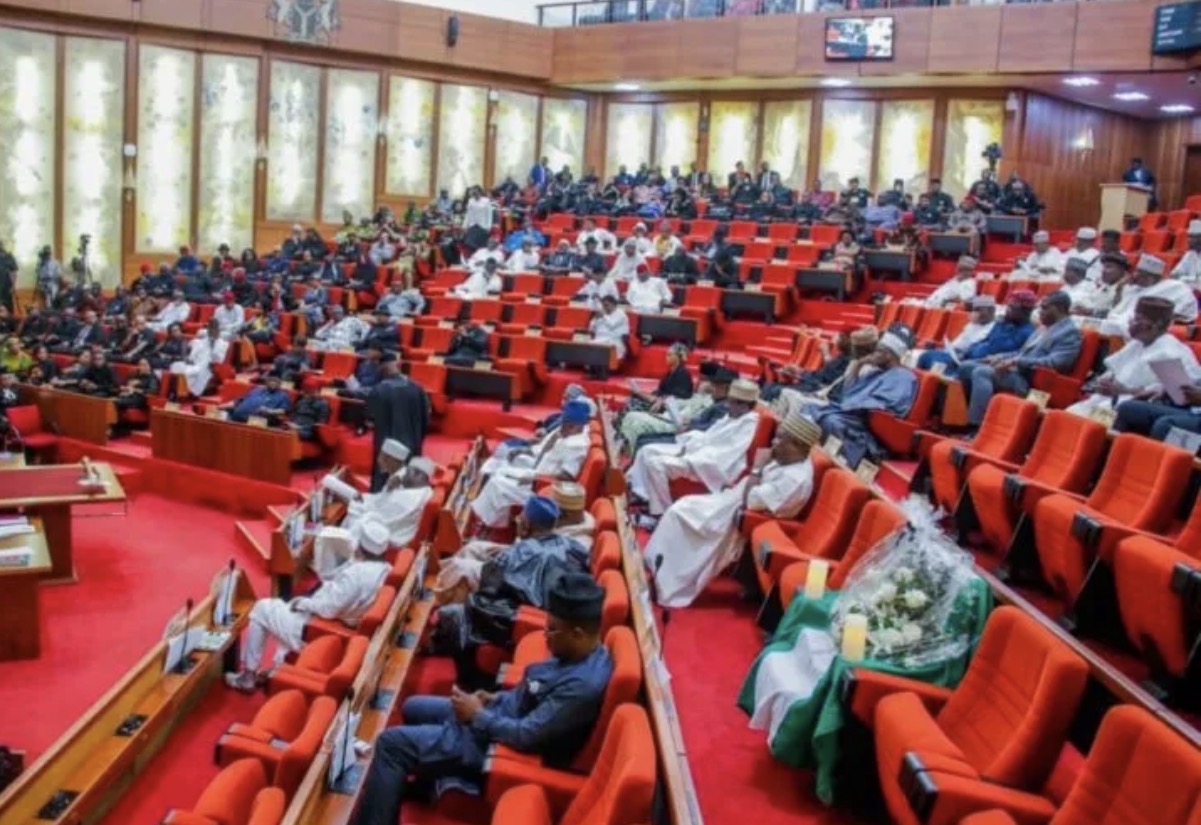
The Senate Wednesday directed its Clerk to transmit the State Police Bill, otherwise known as the Sixth Alteration Bill, 2026, to President Bola Ahmed Tinubu for assent following its approval by the National Assembly and all 36 State Houses of Assembly.
The resolution followed deliberations and contributions by several senators, who described the development as a historic turning point in Nigeria’s efforts to address insecurity, kidnapping, banditry and other security challenges confronting the country.
Leading the debate, the Senate Leader, Opeyemi Bamidele, (APC Ekiti Centra), informed lawmakers that both chambers of the National Assembly had passed the constitutional amendment in June and July 2026, respectively, with the constitutionally required two-thirds majority.
He further disclosed that all 36 State Houses of Assembly had subsequently approved the amendment, thereby satisfying the requirements of Section 9 of the 1999 Constitution, which governs the alteration of the nation’s Constitution.
Following the confirmation of the constitutional requirements, the Senate resolved to mandate the Clerk to the National Assembly to transmit the bill to President Tinubu for assent.
The lawmakers also commended the President for his support and commitment to the establishment of state police, describing his position as instrumental to the advancement of the long-standing proposal.
Contributing to the debate, senators across party lines expressed support for the establishment of state police, arguing that the centralised policing structure had become increasingly inadequate to address the security realities of a country as vast and diverse as Nigeria.
They maintained that decentralising the police structure would bring security operations closer to the people, strengthen intelligence gathering and enable state governments to respond more effectively to security threats within their respective jurisdictions.
The Deputy Senate President, who chairs the Senate Committee on Constitution Review, expressed appreciation to members of the committee, the National Assembly and the State Houses of Assembly for their contributions towards achieving the landmark constitutional amendment.
He particularly acknowledged President Tinubu’s support, noting that successive administrations had made attempts to establish state police but failed to achieve the necessary political and constitutional consensus.
He described the passage of the amendment as a significant achievement, stressing that the new policing arrangement would complement rather than replace existing federal security institutions.
Also contributing, Senator Adamu Aliero commended the National Assembly and the 36 State Houses of Assembly for their collective efforts in amending the 1999 Constitution to accommodate state police.
Senator Aliero described the establishment of state police as the most appropriate approach to restructuring Nigeria’s security architecture, arguing that the country needed a policing system capable of responding to local security challenges with greater efficiency.
According to him, the constitutional amendment represents an important institutional reform that would strengthen the country’s capacity to tackle insecurity.
Similarly, Senator Ekong Samson, representing Akwa Ibom South, described the development as a good moment for Nigeria and a bold step towards strengthening democratic institutions.
Samson acknowledged the concerns expressed by Nigerians over the possibility that state governors might abuse the powers associated with controlling state police.
However, he argued that such concerns should not overshadow the urgent need to reform the country’s security architecture.
He emphasised that the success of state police would depend significantly on the strength and independence of the judiciary.
According to him, Nigeria needs a courageous and independent judiciary capable of checking abuses of power, protecting citizens’ rights and ensuring that state police authorities operate within the confines of the law.
Following the contributions, the Senate President, Godswill Akpabio, put two prayers before the lawmakers for consideration.
The first prayer sought the approval of the Senate to mandate the Clerk to the National Assembly to transmit the Sixth Alteration Bill, 2026, providing for the establishment of state police, to President Tinubu for assent, which was unanimously approved.
The second prayer called on the Senate to formally appreciate President Tinubu for supporting the constitutional amendment and urge him to forward the proposed National Policing Bill to the National Assembly to provide the necessary operational framework for the implementation of sub-national policing.
The Senate President clarified that the constitutional amendment had already made provision for an Act of the National Assembly to establish the modalities for the operation of state police and regulate their relationship with the federal police.
He explained that the proposed legislation would address concerns about jurisdictional conflicts, operational procedures and coordination between the different levels of policing.