By Muhammad Abdulsalam
In the beginning, opinion pages served as a marketplace of ideas. Today, in parts of Kano’s media landscape, they have increasingly been reduced to a marketplace of influence.
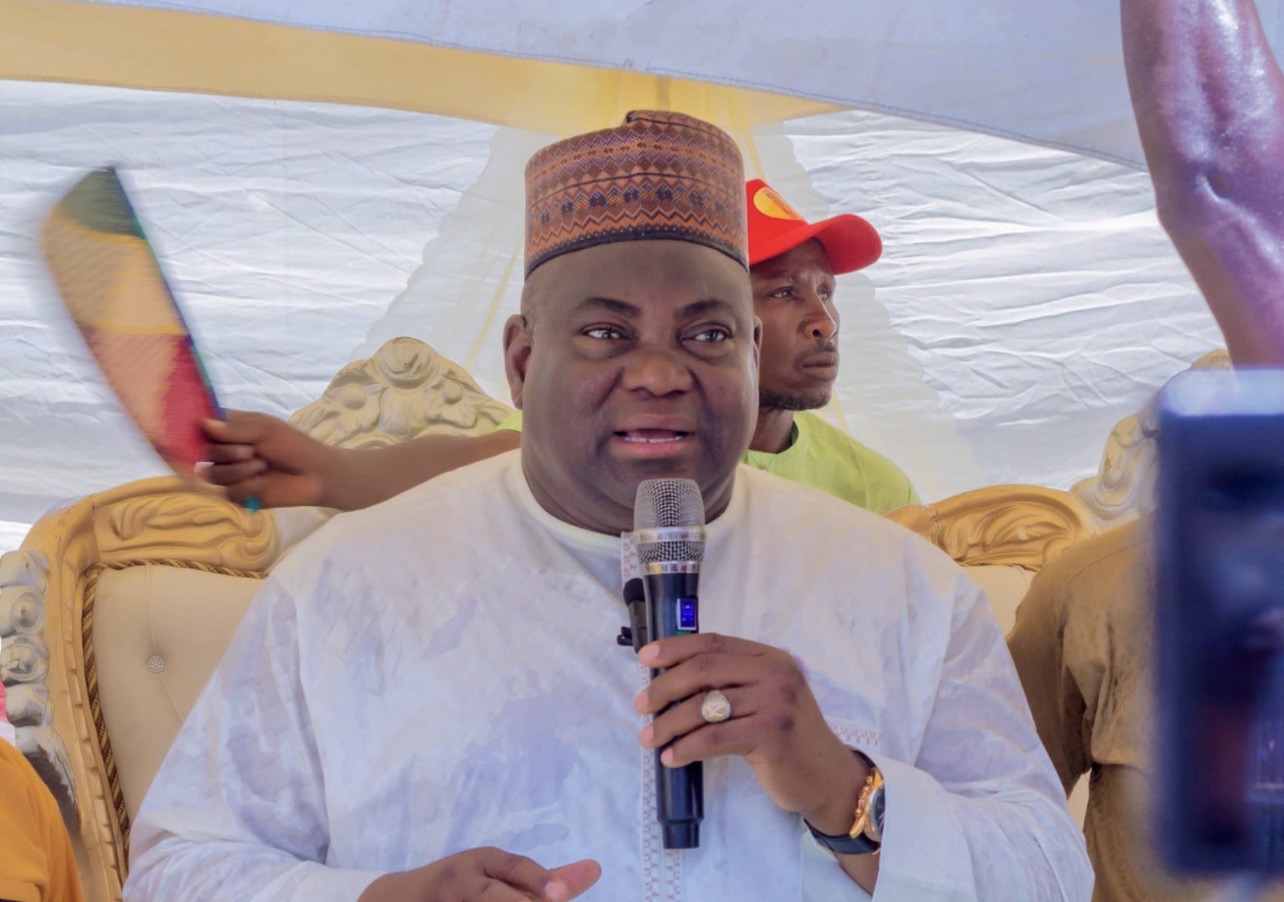
Over the past few days, readers have witnessed a curious phenomenon. A flood of articles praising the Commissioner for Information and Internal Affairs, Comrade Ibrahim Abdullahi Waiya, has appeared across multiple online newspapers. Different bylines. Different headlines. Yet remarkably similar themes.
While one article celebrates his accessibility, another hails his leadership. A third portrays him as indispensable. A fourth suggests that removing him from office would somehow imperil the administration of Governor Abba Kabir Yusuf.
By the time one finishes reading these pieces, the impression created is unmistakable: Kano State has apparently produced a commissioner so exceptional that governance itself depends on his continued presence in office.
The absurdity of such a proposition should be obvious. As you and I know, no commissioner is bigger than government. Put simply, no appointee is indispensable. Democracy should not be held hostage by the mythology surrounding any public official.
The more troubling question, however, is not about Waiya. It is about journalism. How did so many publications arrive at the same destination at the same time? Why has critical scrutiny suddenly given way to coordinated admiration? And why do editors appear increasingly comfortable publishing promotional material dressed up as independent opinion?
The answer may lie in a growing crisis that many journalists privately acknowledge but few publicly confront. The commercialization of opinion journalism has become one of the profession’s worst-kept secrets.
For some platforms, editorial judgment appears to have been replaced by a far simpler principle: if it arrives with sufficient incentive, it gets published. This perhaps explains why opinion pages are gradually losing their identity.
Instead of hosting rigorous analysis, they are becoming repositories for political marketing. Instead of challenging power, they are amplifying it. Instead of questioning official narratives, they are reproducing them.
This troubling shift has given birth to a form of journalism that resembles advertising but lacks the honesty to identify itself as such.
In a desperate attempt to keep the milk flowing from the master’s table, readers are presented with glowing tributes masquerading as objective commentary.
In other words, public relations is repackaged as public discourse, while political branding is sold as political analysis, and the audience is expected not to notice the difference.
Perhaps the most embarrassing aspect of the Waiya narrative is the predictability of its arguments. The articles rarely present measurable evidence. They seldom contain independent verification, and they almost never feature dissenting views.
Of course, their principal function appears not to be informing readers but persuading decision-makers. They read less like newspaper commentary and more like open letters to the governor. The message is subtle but unmistakable: Waiya must not be removed.
Such advocacy would be less problematic if it were openly acknowledged. Instead, it arrives wrapped in the language of journalism.
Editorial pages that should be protected by rigorous standards are becoming available to whoever can generate sufficient praise for a political figure. In such an environment, ethics become negotiable and professional standards optional.
While there is no publicly available evidence linking Waiya to the sponsorship of these articles, his continued silence has become part of the conversation. Public officials who benefit from excessive praise campaigns have an obligation to discourage the impression that journalism is being used as a political shield.
Silence may not prove complicity. But silence can create suspicion. At a minimum, it allows speculation to flourish. A clear public statement distancing himself from any orchestrated praise campaign would help protect both his reputation and the integrity of the profession he oversees.
The larger issue, however, extends far beyond one commissioner.
The discussion surrounding Waiya’s competence and the media campaign built around it is merely a symptom of a deeper illness. It reveals a media culture increasingly comfortable with personality worship; a culture where excessive praise attracts more attention than serious scrutiny; a culture where editorial judgment is too often subordinated to pecuniary interests; and a culture where some publications appear willing to publish almost anything, provided it flatters the right people.
It is a sad commentary on journalism that when readers encounter dozens of near-identical articles praising the same official, questions naturally arise. Those questions are not created by critics. They are created by the publications themselves.
Ultimately, the greatest threat posed by the Waiya narrative is not to any politician. It is to journalism itself.
When opinion pages become billboards for political image management, journalism ceases to be a public service. It becomes a commodity. And once journalism is reduced to a commodity, truth itself becomes negotiable.
The commissioner cannot entirely escape responsibility for the perception created by these articles.
Kano deserves better. Its journalists deserve better. And its readers certainly deserve better than a media environment where praise is plentiful, scrutiny is scarce, and ethics appear increasingly available to the highest bidder.
Muhammad Abdulsalam is a Daily Independent reporter in Kano.