By Abubakar M. Kareto
Every September, the global political elite converges upon Midtown Manhattan for the opening of the United Nations General Assembly. Motorcades paralyze the avenues, bespoke suits fill the delegates’ lounge, and heads of state take turns mounting the iconic green marble rostrum to deliver addresses crafted for domestic television and posterity. Yet beneath the diplomatic pomp lies a glaring structural contradiction. The ritual suggests an egalitarian forum of sovereign peers, but the reality reflects an antiquated theater where developing nations perform moral indignation while great powers quietly steer the global engine.
President Yoweri Museveni laid this hypocrisy bare when he refused to attend the General Assembly, dismissing the journey through his foreign ministry as an expensive, pointless exercise to speak for a mere fifteen minutes. His critique stripped the gathering of its romantic veneer. Flying dozens of aides across the Atlantic to address a largely vacant assembly hall is not statecraft; it is fiscal negligence. Museveni recognized what many leaders privately acknowledge: the speeches delivered at the rostrum rarely register beyond the sound bites broadcast back to the capital cities of the global South.
The fundamental trap lies in the institutional design of the post-1945 order. The General Assembly is heralded as the world’s town hall, but its resolutions carry only hortatory weight. Enforcement authority remains locked inside the UN Security Council, where the five permanent members wield absolute vetoes over global affairs. African states comprise over a quarter of the United Nations’ total membership, and continental security crises account for the lion’s share of peacekeeping mandates, yet the continent holds zero permanent seats. Two decades after the Ezulwini Consensus demanded an end to this disenfranchisement, the structural architecture remains obstinately frozen. Recognizing this institutional paralysis, forward-looking African states are abandoning the futile role of perpetual petitioners, turning instead toward strategic hedging through expanded multilateral alliances like BRICS and regional economic blocs where sovereignty is negotiated rather than begged.
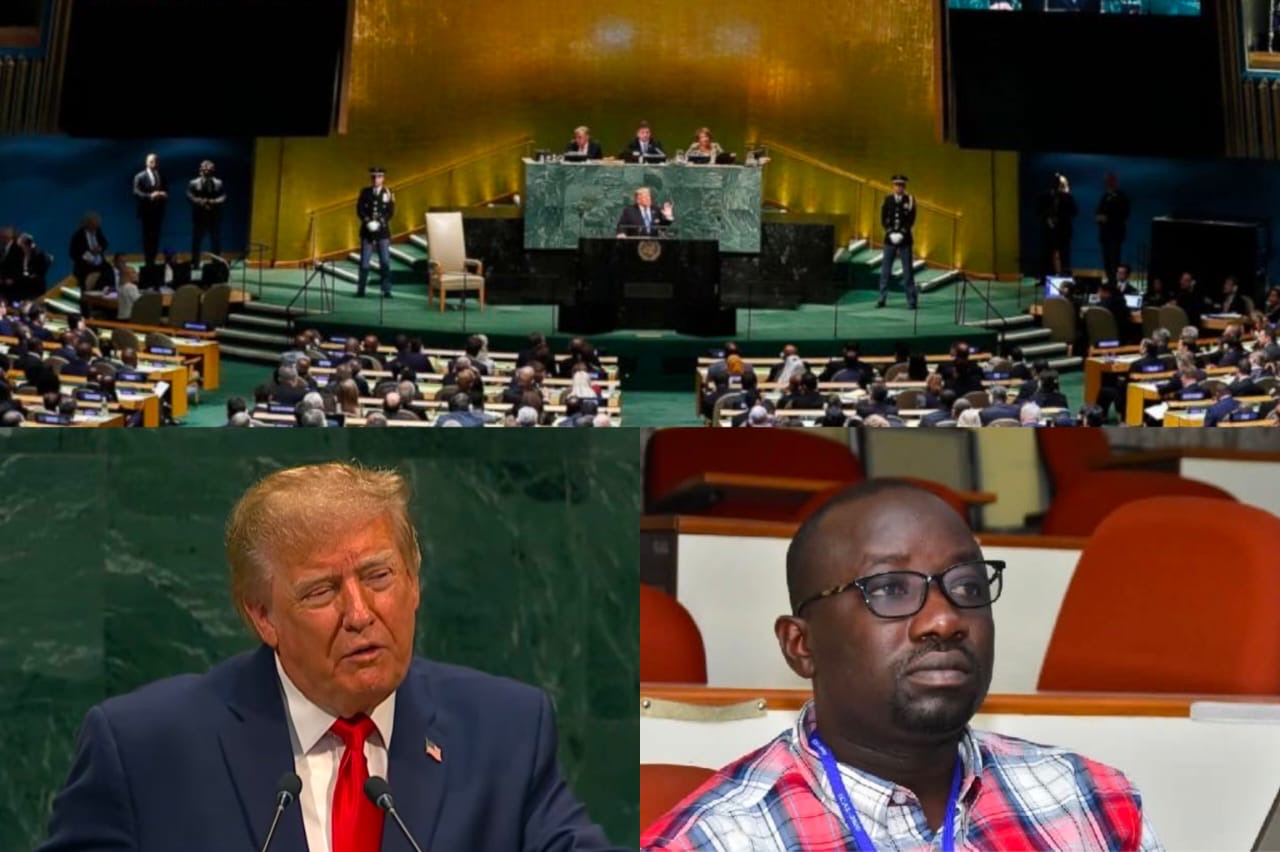
To compound this structural imbalance, the assembly hall has increasingly reduced developing nations to an optical backdrop, an involuntary audience assembled to provide procedural legitimacy to raw imperial power. The degradation reached an apex as Donald Trump mounted the green marble rostrum to brazenly shred the foundational tenets of the United Nations Charter. Openly pondering whether to “annihilate” the Islamic Republic of Iran, declaring the imminent fall of sovereign governments, and boasting of military incursions into foreign capitals to seize natural resources under the banner of “to the victor belong the spoils,” the presentation was a direct assault on Articles 1 and 2 prohibiting the threat of force and affirming sovereign equality. For African delegates seated in the hall, the spectacle laid bare the core illusion: small nations are summoned to New York to recite rules while superpowers flaunt their violation without consequence.
Yet dismissing the annual pilgrimage altogether misreads the contemporary mechanics of international statecraft. The mistake lies in treating the podium as the destination rather than the lobby. Experienced diplomats understand that the assembly debate is simply the public packaging for a relentless, high-density marketplace of bilateral transactions. For an African head of state, shuttling between Beijing, Riyadh, Washington, and Paris consumes immense state resources, diplomatic capital, and protocol preparation. In Manhattan, that entire strategic apparatus is compressed within walking distance, offering an unprecedented concentration of access that no formal state visit can match.
Within seventy-two hours, a disciplined presidency can execute a dozen high-stakes bilateral engagements on neutral terrain. In the quiet suites of Midtown hotels, away from television cameras and imperial protocol, sovereign leaders can negotiate debt reprofiling, counter-terrorism pacts, critical mineral agreements, and cross-border infrastructure corridors. Crucially, Manhattan concentrates the world’s largest sovereign wealth funds, private equity syndicates, and development finance institutions. The corridors offer direct access to commercial capital for agricultural processing zones, power generation, and industrial parks, bypassing the glacial bureaucracy of international aid agencies.
The sidelines also provide African governments the indispensable space to harmonize foreign policy and construct South-South alliances on purely transactional terms. In an era marked by the resurgence of multi-alignment, the margins of the General Assembly allow continental leaders to coordinate positions on trade, cross-border energy grids, and common regulatory standards. Here, diplomacy is transformed from ceremonial appeals into hard economic positioning. Leaders who sit in the assembly hall listening to superpower grievances squander leverage; those who treat the corridors as a competitive floor build it.
If an African delegation views New York purely as a public platform to recite scripted grievances to indifferent delegates, staying home is an act of admirable fiscal restraint. But if a nation approaches the gathering with ruthless pragmatism, the value of the corridors is undeniable. The task of African statecraft is to abandon sentimental attachments to multilateral equality and embrace the reality of contemporary power dynamics. Let the superpowers posture at the rostrum and feed their egos before the cameras. Africa’s real business lies in the corridors, extracting investments, defending sovereign autonomy, and securing the deals that determine our collective future.
Abubakar M. Kareto is a Public Affairs Analyst, Commentator, and Communications Strategist. His focus includes governance, policy, politics, economy, and media dynamics in Nigeria and Africa. He can be reached via email at amkareto@gmail.com and on X @amkareto.