By Abubakar M. Kareto
In modern democratic governance, effective legislative representation relies heavily on institutional memory, procedural mastery, and ranking status.
In mature democracies like the United States Congress, the UK Parliament, and the Japanese Diet, legislative seniority is far more than a ceremonial badge; it is a vital instrument of statecraft and strategic leverage. Senior lawmakers command key principal officer positions, chair powerful committees, shape fiscal allocations, and possess the institutional weight necessary to divert critical federal investments directly to their home constituencies.
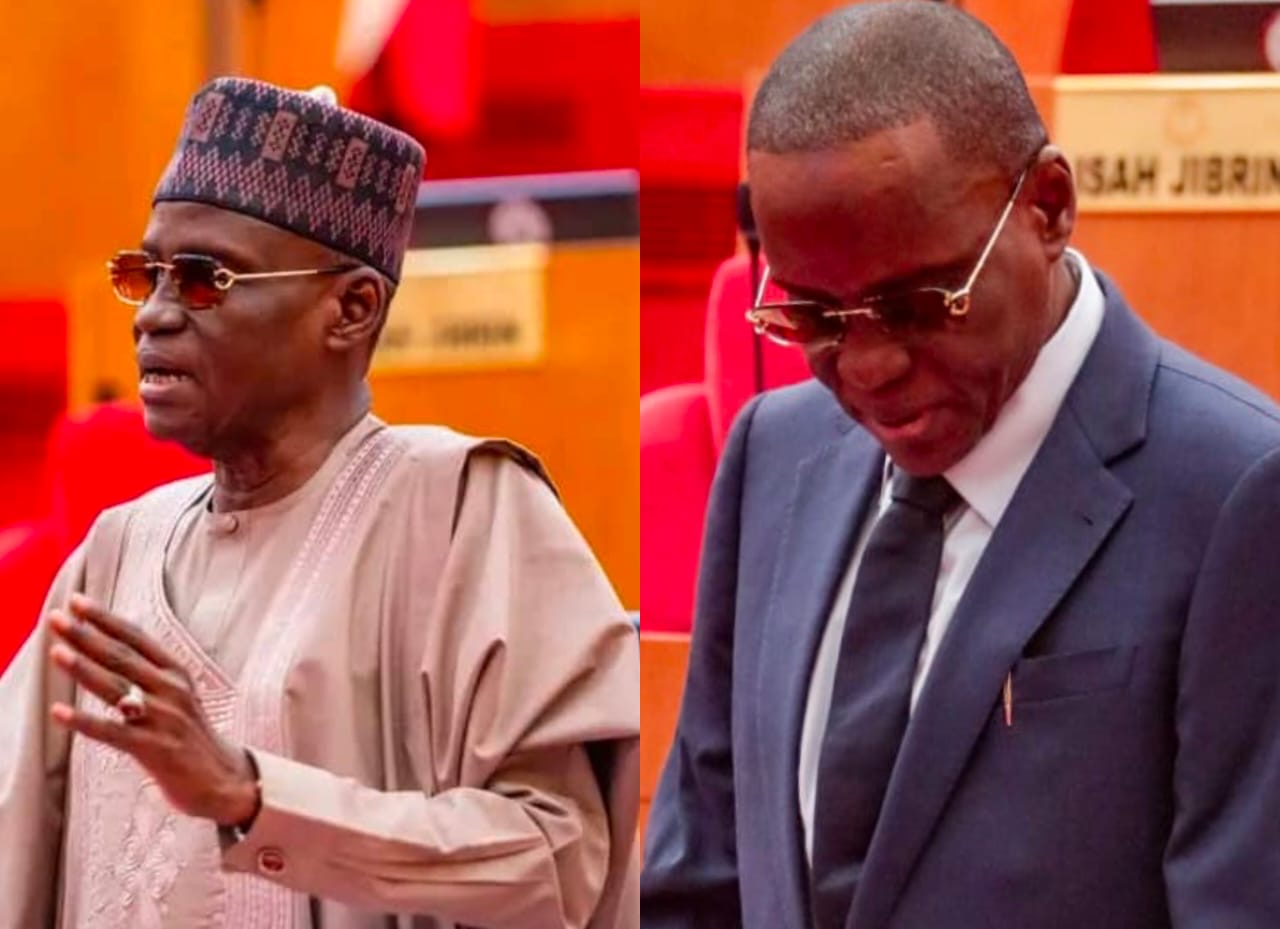
For the Borno North Senatorial District, this strategic imperative is personified in Senator Mohammed Tahir Monguno. Currently serving as the Chief Whip of the 10th Senate, Senator Monguno’s trajectory in public life reflects a level of legislative continuity rarely seen in Nigeria’s Fourth Republic. His parliamentary service dates back to 1992 during the Third Republic, when he was elected to the House of Representatives at just 26 years old. Following the democratic restoration, he returned to the National Assembly in 2007, serving four consecutive terms in the 6th, 7th, 8th, and 9th House of Representatives, culminating in his role as Majority Chief Whip before transitioning to the Senate.
What sets Senator Monguno apart is the seamless convergence of high-level legislative experience with past state executive governance. Having served as Borno State’s Attorney-General and Commissioner for Justice, alongside holding executive portfolios in Education and Water Resources, he brings a grounded understanding of administrative processes to the Senate. This dual background enables him to navigate the policy pipeline with surgical precision, bridging the gap between legislative intent and executive execution.
In terms of legislative productivity, Monguno’s record remains among the highest in the National Assembly, having sponsored over 50 bills. His legislative career is defined by high-impact structural reform; most notably, as Chairman of the Ad-hoc Committee on the Petroleum Industry Bill (PIB) in the 9th Assembly, he spearheaded the passage of the landmark Petroleum Industry Act (PIA) resolving a two-decade legislative deadlock that had stifled investment in Nigeria’s energy sector. Today, as Chief Whip of the 10th Senate and Vice Chairman of the Senate Committee on Appropriations, his ranking position directly influences parliamentary business, federal recruitment, committee assignments, and the national budget architecture.
Crucially, this national stature translates into concrete, multi-billion-naira developmental capital across the ten Local Government Areas of Borno North: Abadam, Guzamala, Marte, Monguno, Nganzai, Kukawa, Mobbar, Gubio, Magumeri, and Kaga.
Major Federal Projects and Constituency Deliverables
Senator Monguno’s ranking leverage has attracted landmark Federal Government interventions directly to Northern Borno:
Strategic Road Networks & Commercial Arteries: Chief among his federal achievements is attracting and maintaining high-priority federal road projects connecting Northern Borno to the state capital. Most notably, he facilitated federal commitment and expanded funding (revised to over N28 billion) for the full reconstruction of the Maiduguri–Monguno Road, a vital 105km commercial artery that serves as the economic lifeline for the Lake Chad region. Together with Senator representing Borno Central, Senator Kaka Shehu Lawan he has also championed the reconstruction of the Dikwa–Marte Road corridor and critical interventions along the Kaga–Gubio Road, restoring safe transit and agricultural trade flow across rural farming communities.
N16 Billion Multi-Sectoral Infrastructure Package: Beyond major highways, Senator Monguno secured federal budget allocations totaling nearly N16 billion for specialized institutional projects. Key deliverables include the construction and furnishing of a 1,000-seater capacity lecture hall at Borno State University (BOSU), a Digital Literacy Centre at Ramat Polytechnic, and the completion of an ICT Centre alongside a 500-cubic steel elevated water tank at the Federal Polytechnic, Monguno.
Human Capital Development & Foreign Scholarships: Through the M.T. Monguno Foreign Scholarship Programme, he has fully funded outstanding STEM graduates with First Class and Second Class Upper degrees from Northern Borno to pursue fully paid Master’s degrees abroad covering full tuition, airfare, living stipends, and research equipment. Furthermore, he regularly secures permanent pensionable federal employment appointments for qualified constituent youths.
Direct Economic Empowerment & Commercial Mobility: To cushion economic pressures, Senator Monguno launched at N250 Million Direct Financial Empowerment Scheme disbursing cash grants to 2,500 constituents. In collaboration with Governor Babagana Umara Zulum, he facilitated the distribution of 13 heavy-duty All-Terrain vehicles for Sahara transport, 60 mini pickup vans, and 30 commercial tricycles to reinvigorate local transport and trade.
Rural Utilities & Post-Conflict Infrastructure: He has facilitated dozens of deep-well motorized boreholes, solar-powered street lighting networks across townships, modern vocational skill acquisition centers, and the completion of the Monguno Town Hall to accelerate community rehabilitation.
These are few of his numerous projects Borno State got leveraging on his networking and legislative experiences, his projects are found across the state not only Northern Borno, his immediate constituency.
Parliamentary Oversight, Fiscal Vigilance, and Legislative Leadership
Beyond bringing physical infrastructure home, Senator Monguno’s ranking stature is routinely displayed through proactive oversight, constitutional advocacy, and robust policy interventions in the 10th Senate.
Demanding Fiscal Accountability: During recent engagements between the Senate Committee on Finance and executive economic officials, Senator Monguno exemplified true legislative vigilance. Interrogating the Minister of Finance, he raised pointed questions regarding the slow pace of capital budget execution. Highlighting that revenue-generating agencies had consistently exceeded their revenue targets, he demanded transparency on why capital project releases were lagging, reminding the executive that non-implementation of an approved Appropriation Act constitutes a breach of constitutional law. In the same engagement, he zeroed in on security funding, forcefully advocating for immediate capital releases to security agencies tasked with stabilizing frontline regions like Borno North.
Targeted Institutional Legislation: In the 10th Assembly, Senator Monguno continues to drive critical legislative frameworks aimed at structural reform, economic revitalization, and humanitarian response. His sponsored bills include the African Union Convention for the Protection and Assistance of Internally Displaced Persons Bill (addressing long-term resettlement dynamics in post-conflict zones), the Export Prohibition Act (Repeal) Bill (designed to boost regional trade and agricultural commerce), and institutional strengthening bills such as the Veterinary Teaching Hospitals Bill and the National Library of Nigeria (Establishment) Bill.
In parliamentary systems, political capital is cumulative. Swapping a seasoned, high-ranking principal officer for a freshman lawmaker effectively resets a constituency’s legislative influence to zero, stripping it of committee seniority and budget-negotiating power. As Borno North accelerates its economic rebirth, retaining Senator Mohammed Tahir Monguno is not merely a matter of political continuity, it is a calculated strategic necessity to ensure the region maintains its seat at the highest decision-making tables of the Nigerian federation.
Author’s Bio:
Abubakar M. Kareto is a Public Affairs Analyst and Communication Strategist, with extensive experience evaluating governance, public policy, security, and economic development in Nigeria and Africa. He can be reached at amkareto@gmail.com | X (Twitter): @amkareto