By Abubakar M. Kareto
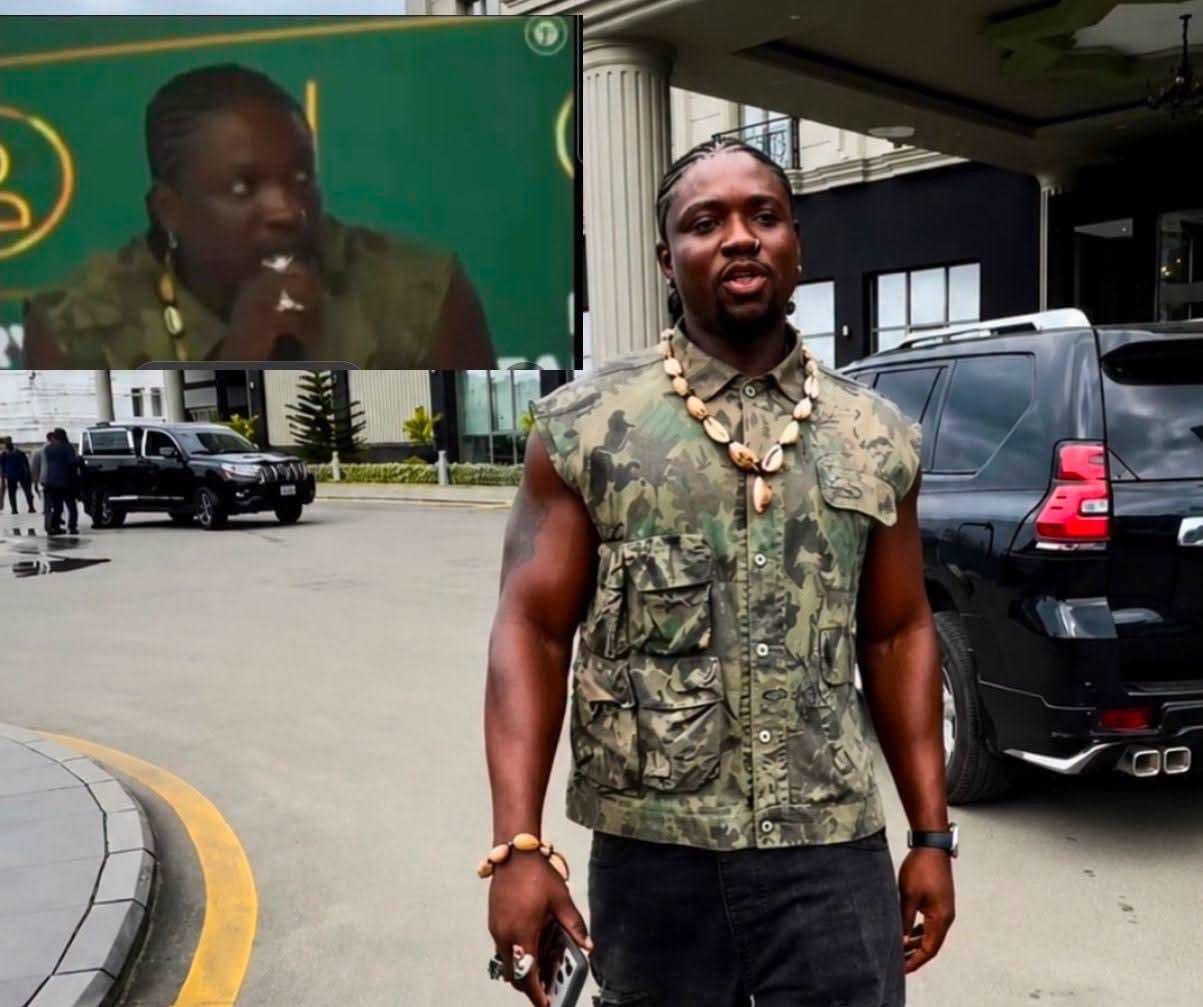
In contemporary Nigeria, the public square has migrated from town halls, statutory chambers, and courtrooms to the volatile digital arena of social media. At the epicenter of this shift is Martins Vincent Otse, popularly known as VeryDarkMan. To a devoted following, he represents a fearless crusader cutting through bureaucracy to extract street justice. To institutionalists, legal scholars, and discerning observers, however, his ascendancy reveals an alarming symptom of societal decay: the normalization of populist vigilantism, digital trial by mob, and the commercialization of outrage built upon functional ignorance.
Understanding this phenomenon requires looking past the shirtless bravado, the aggressive street diction, and the viral videos. This brand of activism thrives in the vacuum left by eroded institutional trust, slow regulatory delivery, and systemic deficiencies in civic literacy. When formal systems appear distant or compromised, an aggressive figure with a smartphone promises immediate emotional gratification. The danger, however, is that grassroots whistleblowing rapidly mutates into performative trial by media. Justice requires verifiable proof, respect for civil liberties, adherence to statutory jurisdiction, and an uncompromising presumption of innocence. Populist vigilantism rejects these foundational safeguards as tedious technicalities, substituting raw decibels for evidence and viral traction for truth.
The critical defect in this digital crusade is the routine conflation of righteous indignation with substantive knowledge. Time and again, sweeping public declarations have unraveled upon contact with basic statutory law, empirical economics, and administrative procedure.
Consider the public confusion surrounding transnational human trafficking and government agency mandates. In a highly publicized confrontation regarding Nigerian citizens stranded or trafficked to Côte d’Ivoire, public ultimatums were directed at the leadership of the Nigerians in Diaspora Commission. This revealed a glaring failure to grasp the architecture of the Nigerian state. The Nigerians in Diaspora Commission is a policy, engagement, and diaspora welfare body. It has no policing mandate, investigative arm, or statutory enforcement apparatus to dismantle human trafficking syndicates. That specific legal mandate belongs strictly to the National Agency for the Prohibition of Trafficking in Persons, working in tandem with the Nigeria Immigration Service and consular missions. Demanding enforcement outcomes from an advocacy agency misdirected public outrage, confused the populace, and turned a delicate rescue operation into performative theater.
A similar lack of empirical grounding is evident in reckless commentaries on national political economy and pastoral dynamics. Sweeping assertions claiming that the vast majority of cattle reared by pastoralists across Nigeria belong exclusively to politicians demonstrate a total detachment from agrarian history and pastoral economics. While political elites and urban investors participate in commercial livestock rearing through contract arrangements, reducing an entire generational livestock industry to a political laundering scheme is baseless oversimplification. It erases centuries of traditional pastoral livelihoods, intricate kinship livestock ownership, and cross-border trade networks that sustain millions of citizens outside the political class.
These analytical blunders are not mere isolated errors; they are part of a broader pattern of unverified sensationalism. In the aftermath of the tragic passing of music star Mohbad, what required solemn, forensic police investigation was overtaken by social media inquisitions, unsubstantiated allegations against individuals, and reckless commentary that ultimately compromised public clarity. Furthermore, the casual dissemination of unverified recordings and sweeping allegations against public figures and legal practitioners underlines a dangerous disregard for the laws of defamation and civil liability.
Perhaps the most troubling dimension of this phenomenon is how established professional and constitutional bodies have begun validating this circus. It was fundamentally embarrassing to witness a prestigious platform like the Annual General Conference of the Nigerian Bar Association, a gathering traditionally graced by justices, Senior Advocates, top policymakers, and international dignitaries, open its doors to an avatar of digital vigilantism. When the premier body of legal professionals accords institutional legitimacy to someone whose brand is built on bypassing due process and disparaging the legal profession, it signals an unpardonable surrender to online hype. It blurs the vital distinction between serious jurisprudential discourse and sensationalist digital theatrics.
The institutional damage deepens when formal organs of state begin to dance to the tunes of online agitators. When legislative committees and statutory investigative bodies scramble to convene public hearings based solely on unauthenticated social media audio clips, parliament abandons proactive, structured oversight in favor of reactive, viral-driven theatrics.
Equally concerning is the transformation of digital outrage into an unregulated personal enterprise. What begins as street-level agitation inevitably transitions into a messianic brand, where massive public donations and crowd-funded loyalty are accumulated without the institutional governance frameworks required of legitimate non-governmental organizations. This creates a stark contrast with genuine civic advocacy organizations that utilize verifiable public expenditure tracking, legal instruments, and empirical data to demand institutional reform.
An agitator, however, cannot function without a receptive audience. The rapid spread of performative vigilantism reflects a severe vulnerability in the public domain. Decades of educational decline, combined with acute socio-economic stress, have produced an audience primed for sensationalism. In the digital echo chamber, algorithmic confirmation bias rewards outrage and binary simplicity while penalizing nuance. To a public frustrated by institutional inertia, aggressive posturing is easily mistaken for courage, and abrasive volume is confused with intellect. When an influencer speaks with absolute certainty, the untrained mind rarely pauses to ask fundamental questions: What is the verifiable evidence? What does the statute actually state? What are the jurisdictional boundaries?
The long-term consequence of this trend is catastrophic for democratic governance. It normalizes digital mob action, leaving innocent individuals and legitimate enterprises defenseless against manufactured outrage. More critically, it discourages the arduous work of genuine institutional reform. Screaming into a camera does not strengthen forensic policing, improve judicial speed, or sanitize regulatory frameworks. It merely produces short-term viral spectacles while leaving the underlying structural problems intact.
Holding the powerful accountable is a sacred civic duty, but it cannot be built upon the fragile foundation of misinformation, legal illiteracy, and emotional manipulation. Nigeria cannot shout its way into progress. The path forward demands an awakened public that values rigor over theater, respects due process, and understands that the true measure of justice is determined by the dispassionate rule of law, not the roar of a digital mob.
Abubakar M. Kareto is a Public Affairs Analyst and commentator on governance, policy, and media dynamics. He can be reached via email at amkareto@gmail.com and on X (formerly Twitter) @amkareto.