By Abubakar M. Kareto
A popular talking point within official circles presents the dramatic growth in Federation Account Allocation Committee disbursements as one of the defining achievements of current fiscal administration. Proponents often argue that state governors now receive unprecedented financial windfalls to drive grassroots development. Yet this narrative presents an incomplete picture of Nigeria’s public finances. It conceals two fundamental realities: the Federal Government itself takes the lion’s share of these multi-trillion Naira pools, and the entire expansion is largely an optical illusion generated by currency devaluation rather than real economic productivity.
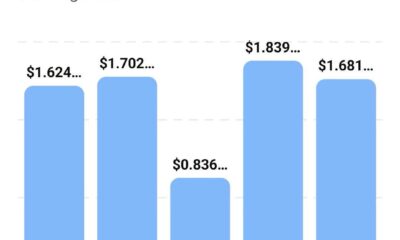
Between 2021 and 2025, total revenue shared among the three tiers of government climbed from 9.23 trillion Naira to 35.81 trillion Naira. This represents a nearly fourfold jump in local currency terms. When measured against prevailing exchange rates and global purchasing power, however, the federation earned less in foreign currency in 2025 than it did three years earlier. In 2021, the federation distributed 9.23 trillion Naira, which amounted to 23.13 billion dollars at an average exchange rate of roughly 399 Naira per dollar. Allocations peaked in real terms in 2022 at 12.36 trillion Naira or 29.22 billion dollars at 423 Naira per dollar. By 2023, nominal allocations rose to 16.28 trillion Naira while the dollar value slipped to 25.20 billion dollars. The sharpest divide occurred in 2024, when allocations leaped to 28.74 trillion Naira but sank to a five-year trough of 19.42 billion dollars as the exchange rate averaged 1,480 Naira per dollar. Even with 2025 disbursements reaching 35.81 trillion Naira, the dollar equivalent of 23.19 billion dollars simply returned Nigeria to its 2021 baseline.
While political commentaries focus on what state houses receive, the statutory sharing formula ensures that the Federal Government remains the primary beneficiary of the federation pool, taking over fifty-two percent of statutory revenue while all thirty-six states combined split less than twenty-seven percent. As petrodollars, oil royalties, and petroleum profit taxes were converted at weaker exchange rates, the resulting exchange gains expanded federal receipts just as much as state coffers.
The budget figures for the Federal Government underline this point clearly. In 2025, the Federal Government’s retained share of net federation revenue stood at 27.49 trillion Naira, anchored by a 26.48 trillion Naira share from the Main Pool. By 2026, as the initial shock of exchange rate adjustments normalized, the Federal Government’s Main Pool share dropped eighteen point four percent to 21.62 trillion Naira, pulling total net federal federation revenue down sixteen point four percent to 22.98 trillion Naira. Even though domestic non-oil contributions grew, with federal Value Added Tax receipts expanding thirty-two point six percent to 1.29 trillion Naira and Electronic Money Transfer Levy collections doubling to 63.84 billion Naira, the statutory windfall has begun to flatten.
Celebrating these massive Naira figures without acknowledging the erosion of their purchasing power misleads the public. The same devaluation that produced multi-trillion Naira allocation meetings also triggered severe domestic inflation, escalated debt servicing requirements, and multiplied the cost of infrastructure inputs such as steel, bitumen, heavy machinery, and medical technology. In real terms, twenty-two trillion Naira in 2026 does not command the developmental purchasing power that nine trillion Naira commanded in 2021. Both the federal leadership and state administrations are handling larger piles of cash with significantly reduced buying power.
True fiscal progress cannot be engineered through the printing press or exchange rate depreciation. Until revenue growth is driven by verifiable increases in crude output, industrial manufacturing, agro-processing, and non-oil exports, multi-trillion Naira FAAC announcements remain an accounting metric rather than proof of economic prosperity. Both federal and state authorities must look past the optical comfort of inflated Naira allocations and focus on genuine structural productivity.
Abubakar M. Kareto is a public affairs analyst, communications strategist, and political commentator specializing in governance, public policy, and socio-economic developments in Nigeria and beyond. He can be reached via amkareto@gmail.com or on X @amkareto.