By Abubakar M. Kareto
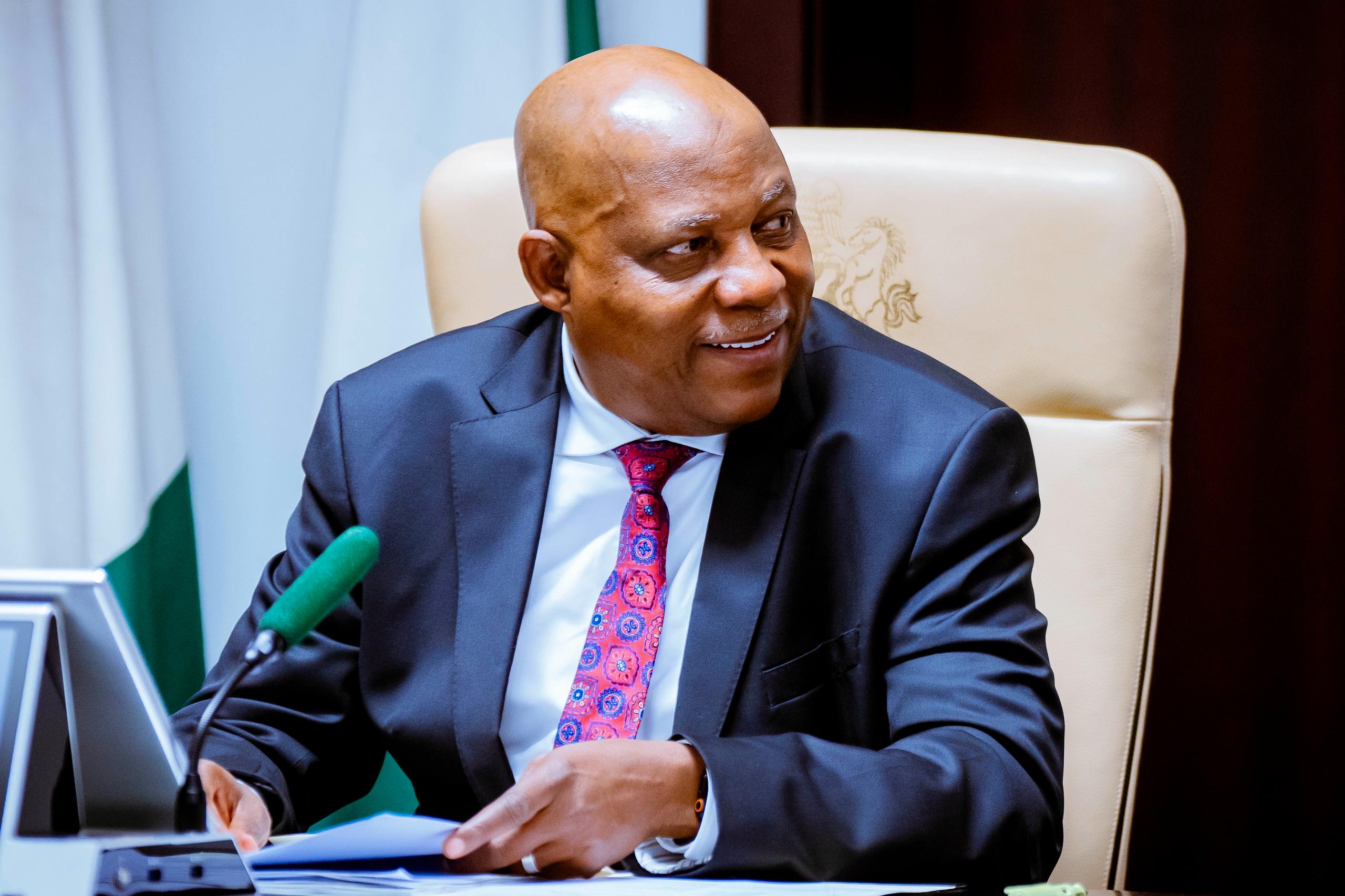
True statecraft rarely announces itself with fanfare. In a political culture often seduced by theatrical grandstanding and self-congratulatory excess, Vice President Kashim Shettima remains a distinct, sober counterweight. As he marks his 60th birthday, his appeal to discard media advertorials and lavish gatherings in favor of national prayer and sober reflection is not a calculated posture. It is the natural instinct of a leader whose political philosophy was forged in the fire of crisis, where delivery carried the weight of life and death, far beyond the vanity of personal praise.
His journey from executive boardrooms to the epicentre of Borno’s existential crisis, through the red chambers of the Senate, and ultimately into the presidency as Nigeria’s number two citizen, offers an instructive study in administrative grit, intellectual depth, and silent execution.
Before public service summoned him, Shettima spent decades mastering the language of figures, capital efficiency, and institutional risk. Rising to lead the Maiduguri branch and regional operations of Zenith Bank, he acquired a technocrat’s disdain for waste and an analyst’s eye for structural viability. When he transitioned into public service as Borno State Commissioner, successively managing portfolios across Finance, Local Government, Education, and Agriculture, he brought that corporate rigor into governance. This private-sector pedigree ensured that by the time he took the reins of state power, he viewed public finance not as a tool for patronage, but as a strategic lever for human survival.
That resolve faced an unprecedented trial in May 2011, when Shettima assumed the governorship of Borno State at the bloodiest peak of the Boko Haram insurgency. With local government secretariats bombed, highways cut off, and Maiduguri effectively under siege, conventional wisdom suggested a retreat into emergency management. Instead, Shettima chose an audacious path of aggressive structural renewal.
Understanding that the insurgency fed on ignorance and economic decay, he countered violence with institutional development. He conceived and built dozens of state-of-the-art mega-schools, modern educational complexes equipped with digital classrooms and boarding facilities designed to take over 50,000 displaced orphans off the streets. To institutionalize recovery, he pioneered the Ministry of Reconstruction, Rehabilitation and Resettlement, spearheading the rebuilding of decimated towns like Bama, Gwoza, and Askira Uba long before federal agencies mobilized fully. In agriculture, he invested heavily in industrial-scale farm machinery and irrigation infrastructure across the Chad Basin, refusing to let food production halt under gunfire. Crucially, when his two terms concluded, he shattered the common Nigerian archetype of self-perpetuating godfathers by actively backing a technocratic successor in Professor Babagana Umara Zulum, establishing an unbroken template of performance and continuity.
Following a productive tenure in the 9th Senate representing Borno Central, where he contributed to vital legislative frameworks on security and regional development, Shettima brought that cumulative executive and legislative experience to the presidency in 2023.
On the national and global stage as Vice President, Shettima has brought this same intellectual gravitas to the administration. As Chairman of the National Economic Council, he has presided over critical policy alignments between the federal government and state governors, navigating volatile fiscal transitions, subsidy realignments, and currency adjustments with data-driven pragmatism. Beyond domestic policy, he has become the nation’s most articulate diplomatic envoy. From addressing the United Nations General Assembly in New York to leading Nigeria’s delegation at the BRICS Summit in Johannesburg and the World Economic Forum in Davos, Shettima consistently delivers speeches laden with classical history, economic theory, and hard facts, presenting an authentic case for foreign direct investment.
At 60, Kashim Shettima’s preference for silence over spectacle speaks volumes about his understanding of leadership. By redirecting the national spotlight away from himself and toward collective prayer for economic recovery and peace, he reaffirms a fundamental truth: enduring legacies are not built on newspaper pages or self-serving accolades, but in the enduring institutions built to serve generations yet unborn.
As he marks this milestone, one can only join millions of Nigerians in offering a heartfelt prayer: may the years ahead bring him greater wisdom, renewed strength, sound health, and enduring peace. May his leadership continue to inspire, and may his life remain a profound source of blessing to his family, friends, colleagues, and the wider society as he enjoys the lasting rewards of the good he has done and the countless lives he has touched.
Abubakar M. Kareto is a Public Affairs Analyst and commentator on governance, policy, and media dynamics. He can be reached via email at amkareto@gmail.com and on X (formerly Twitter) @amkareto.