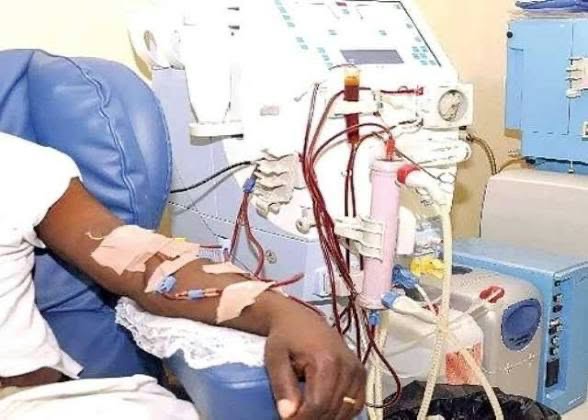
A kidney disease patient and former Kano State Judiciary staff member, Salisu Abdul, has appealed to the Kano State Government and wealthy individuals to support patients battling the disease.
Abdul, who made the appeal in an interview with the News Agency of Nigeria (NAN) on Wednesday in Kano, also highlighted the financial, emotional and family challenges faced by patients.
“Patients undergoing dialysis twice a week spend about N70,000, while those requiring three sessions weekly pay N90,000,” he said.
According to him, the cost varies depending on patients’ circumstances, while additional expenses include drugs, medical tests, blood transfusions and transportation.
“The illness consumes money and causes a lot of worry. Anyone who has not experienced it or has no close relative suffering from it may not understand the challenges,” he said.
Abdul said patients also faced the burden of purchasing expensive medications even when they were not undergoing dialysis.
He called on the government, politicians and wealthy individuals to assist patients, noting that the number of people seeking treatment continued to increase.
“If you go to Aminu Kano Teaching Hospital (AKTH), you will see hundreds of people suffering from the disease and undergoing dialysis,” he said.
He added that some patients from rural communities were forced to sell their farms and other properties to pay for treatment.
Abdul said patients living in Kano city also spent between N5,000 and N6,000 on transportation, further increasing their financial burden.
He explained that managing the disease was particularly challenging for married patients with families, as the special dietary requirements of kidney patients differed from the meals consumed by other family members.
The patient urged the Kano State Government to establish a support centre where kidney disease patients could register and access medications at subsidised rates.
He also appealed to the government to subsidise dialysis and the insertion of central lines, which he said, could cost patients close to N35,000.
The patient said purchasing at least two units of blood could cost about N20,000, adding to the financial difficulties faced by patients requiring transfusion.
Abdul also called for sustained public awareness campaigns to educate people about the causes, risk factors and prevention of kidney disease.
According to him, awareness campaigns should be conducted regularly rather than being limited to the annual commemoration of World Kidney Day.
“It is important to educate people about the causes of kidney disease and possible ways to prevent it.
“People who do not have the disease need to understand the dangers and how to reduce their risk,” he said.