By Abubakar M. Kareto
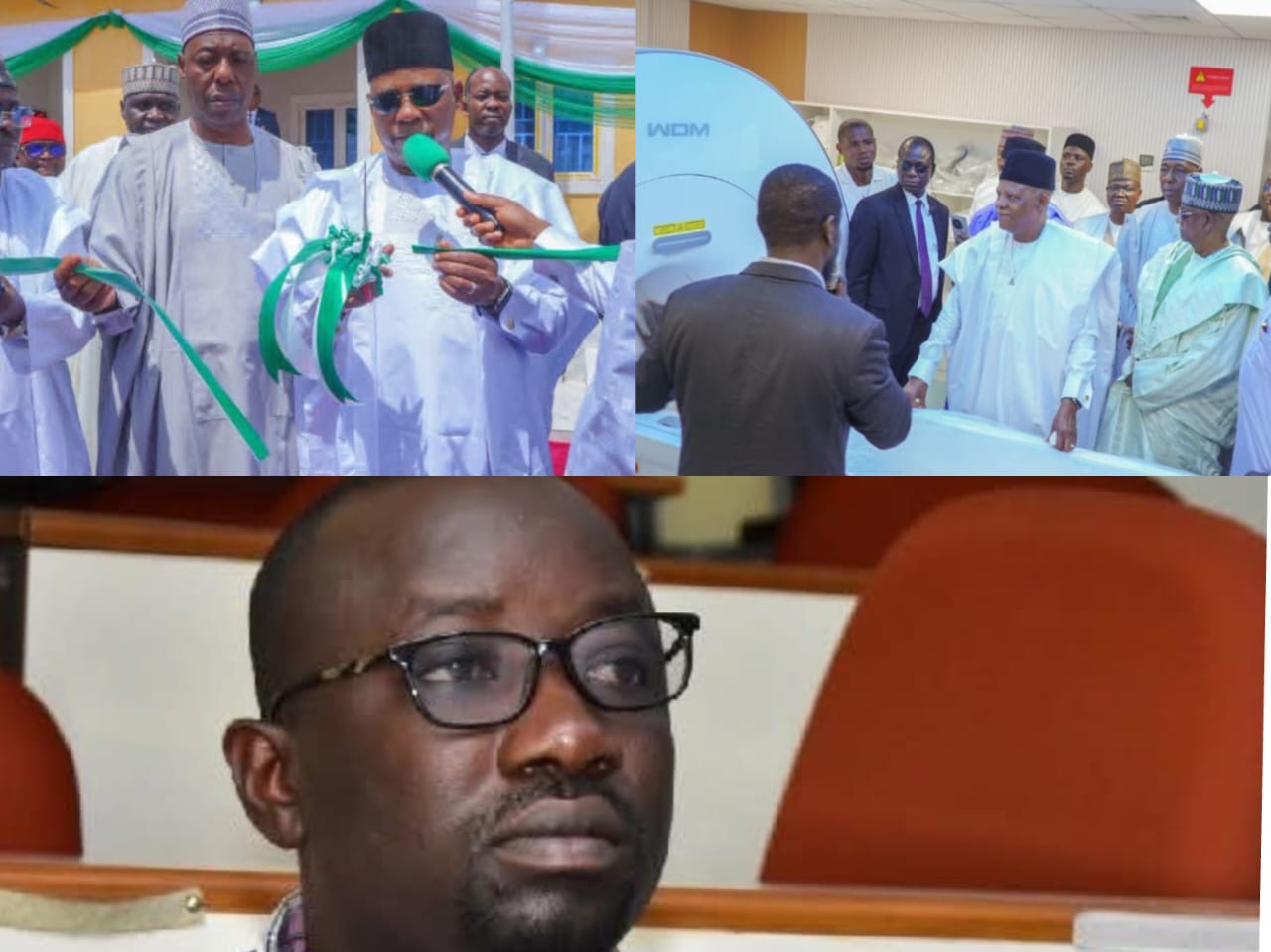
The recent commissioning of the 400-bed Kashim Ibrahim University Teaching Hospital (KIUTH) in Maiduguri marks a decisive turning point in Borno State’s journey from conflict to recovery. For over a decade, residents faced a severe shortage of advanced medical care, forcing families to make long, dangerous trips to Kano, Zaria, or Abuja for basic scans and surgeries. This lack of facilities drained household savings and cost lives. By delivering a modern tertiary hospital directly to the people, the state has moved beyond emergency relief to build a lasting public health institution that serves not just Borno, but the entire Lake Chad Basin.
What makes this milestone remarkable is the fiscal context in which it happened. For years, Borno bore the brunt of a devastating insurgency, suffering billions of naira in destroyed public infrastructure and managing a lean internally generated revenue base. Yet, while wealthier littoral states and oil-rich counterparts receiving hundreds of billions in monthly federal allocations and 13% derivation often struggle to complete secondary clinics or keep diagnostic machines running, Borno has quietly outpaced them. By committing over 15% of its annual budget to health—meeting the benchmark set by the African Union’s Abuja Declaration, which over 30 Nigerian states consistently miss—the state proved that developmental outcomes depend on political discipline and fiscal hygiene, not the size of a treasury.
Equipped with a 1.5-Tesla MRI machine, a 160-slice CT scanner, digital mammography, and modern ultrasound suites, the facility matches the standard found in top tier-one centres in Lagos and Abuja. These tools end the long wait times that often turned curable illnesses into terminal conditions, allowing complex neuro-trauma and cancer cases to be handled close to patients’ support systems. Furthermore, an on-site medical oxygen plant removes the supply bottlenecks and vendor price spikes that crippled many healthcare centres across the country during recent emergencies, ensuring continuous care for critical patients.
This landmark project is not an isolated achievement; it builds on seven years of steady healthcare investments under Governor Babagana Umara Zulum. Since 2019, the administration has constructed and refurbished over 70 solar-powered Primary Healthcare Centres in resettled communities, bringing maternal and child care to the grassroots. At the secondary level, general hospitals in towns like Gwoza and Monguno were upgraded, alongside the expansion of the Biu General Hospital into a 400-bed Specialist Hospital for southern Borno. In addition, the state introduced free kidney dialysis centres in Maiduguri, saving vulnerable families along the Komadugu-Yobe basin from financial ruin.
In a country where state governments often build empty clinic shells while ignoring staff welfare, Borno’s focus on the medical workforce stands out. The co-location of the hospital with the Kashim Ibrahim University College of Medical Sciences creates a reliable training ground for future doctors, nurses, and laboratory scientists. Alongside the mass recruitment of health workers, the absorption of volunteer nurses into permanent civil service roles, and the construction of staff housing across rural outposts, the state is actively building local capacity to shield its clinics against the brain drain affecting Nigerian public hospitals.
Vice President Kashim Shettima captured the essence of the achievement at the commissioning ceremony when he noted that the true legacy of leadership lies not in the length of official convoys, but in the enduring quality of the institutions left behind. In a region where insurgents once tried to tear down modern institutions, opening an advanced medical complex sends a powerful message. It shows that public funds can deliver visible, life-changing benefits rather than short-lived political handouts.
Even so, the work has only just begun. The history of public hospitals in Nigeria is filled with modern equipment that stopped working after a few years due to poor upkeep and neglect. Borno must protect its investments through disciplined biomedical engineering agreements, steady backup power, and transparent hospital administration. The state must also work closely with the Borno State Contributory Healthcare Management Agency (BOSCHMA) and the National Health Insurance Authority (NHIA) so that indigent patients can access these facilities without falling into deeper poverty. Ultimately, KIUTH proves that even in post-conflict terrain, focused governance can out-deliver unguided wealth.
Abubakar M. Kareto is a Public Affairs Analyst and Communications Strategist focusing on governance, public policy, and institutional reform across Nigeria and Africa. He can be reached on X @amkareto and via email at amkareto@gmail.com.