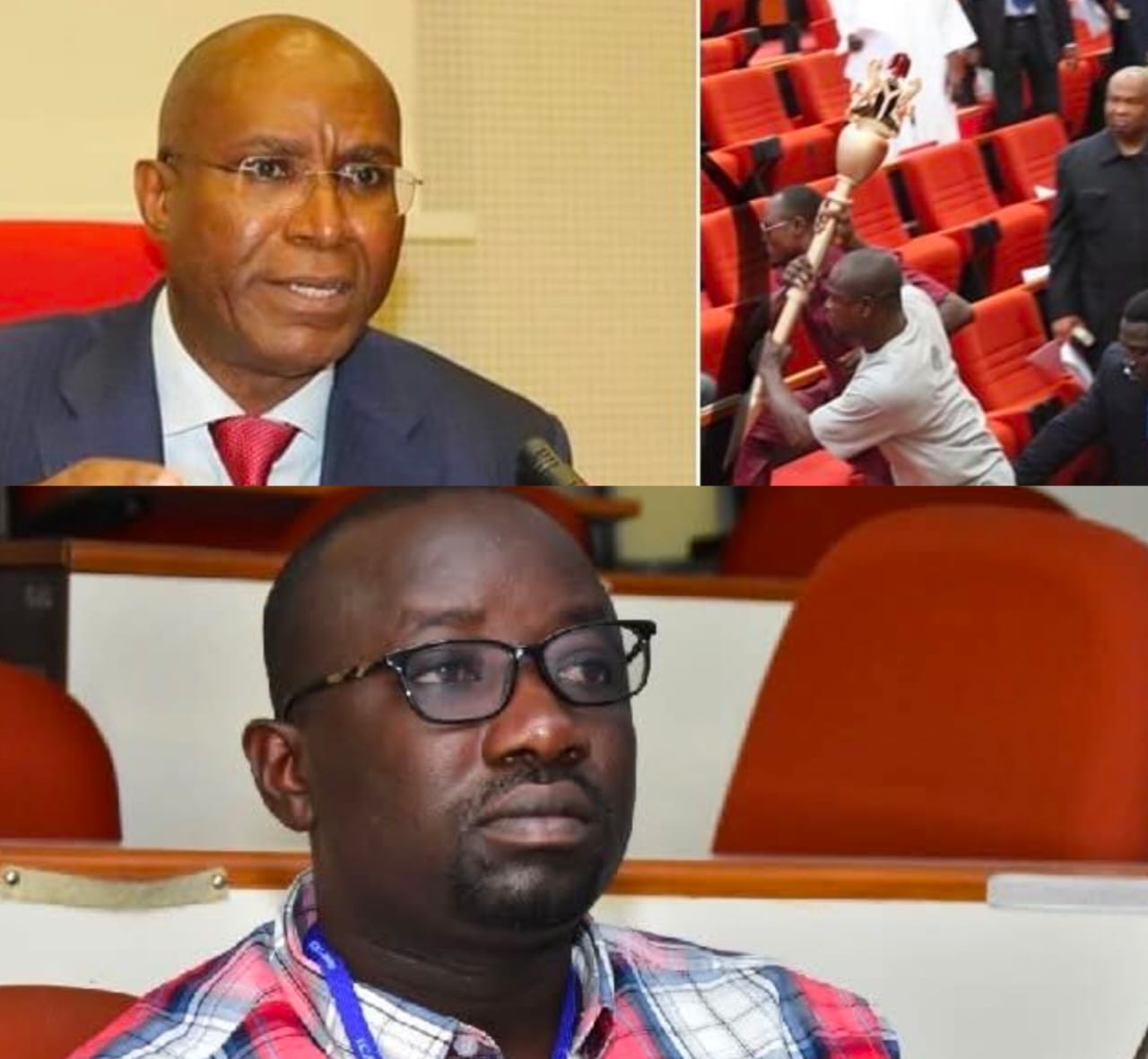
By Abubakar M. Kareto
The political landscape of Nigeria is once again toxically saturated with rhetoric that treats elections not as a democratic contest of ideas, but as a literal war. Recently, former Deputy Senate President and Delta Central senatorial candidate, Senator Ovie Omo-Agege, sent shockwaves across the nation by declaring that anyone attempting to rig the 2027 general elections in Delta State will “rig and die” and should immediately write their will. Coming from a senior legal practitioner, a member of the Nigerian Bar, and a high-ranking political figure, this incendiary proclamation demands rigorous intellectual scrutiny. It transcends ordinary political hyperbole, plunging deeply into a dangerous arena of extrajudicial intimidation that undermines the core ethos of constitutional democracy.
To contextualize this alarming rhetoric, one must recognize that this narrative of lethal deterrence is not entirely unprecedented in Nigeria’s modern political evolution. In February 2019, at an APC caucus meeting in Abuja, then-President Muhammadu Buhari similarly warned that anyone who snatched ballot boxes or led thugs to disrupt voting would be taking the last unlawful action of their lives, ordering security operatives to be ruthless at the expense of offenders’ lives. While Omo-Agege’s recent iteration might be seen by supporters as a desperate indictment of election rigging, it fundamentally exposes a systemic breakdown: when citizens and politicians lose faith in statutory institutions, the language of governance devolves into threats of self-help and vengeance.
The persistent resort to such inflammatory posturing stems directly from selective enforcement and the poor implementation of relevant electoral laws by law enforcement agencies. Nigeria possesses comprehensive statutory provisions under the Electoral Act designed to prosecute ballot snatching, thuggery, and voter suppression through clear legal mechanisms. However, because these laws are often selectively applied, shielding influential figures while punishing minor actors, an institutional vacuum of accountability is created. This persistent failure of state apparatuses forces political actors to abandon institutional processes, giving rise to an environment where extrajudicial threats become a surrogate for effective policing.
Such actions portray the society as lawless and encourage jungle justice, carrying wide-reaching negative effects on Nigeria’s future stability. When leaders openly validate death as an acceptable penalty for electoral malfeasance outside the court of law, they normalize vigilante violence in the public consciousness. This creates a terrifying precedent where mobs and political thugs feel empowered to execute extrajudicial killings under the guise of protecting votes. By substituting constitutional due process with street-level execution, politicians chip away at the moral authority of the state, threatening to reduce Nigeria’s democratic governance to an unrestrained state of nature.
Moreover, the messenger here compounds the gravity of the offense. Senator Omo-Agege is an officer of the court and a former custodian of the nation’s legislative architecture. A lawyer issuing public death threats fundamentally subverts the legal framework he swore to uphold. By bypassing established judicial remedies in favor of a visceral “rig and die” mantra, he implicitly signals to supporters that the protection of the ballot depends on violence rather than statutory enforcement. True deterrence should emanate from the impartial, decisive hand of law enforcement agencies and judicial institutions, not from arbitrary declarations of politicians playing judge, jury, and executioner.
The wider negative effects of this trend on Nigeria’s future democratic stability are profound and far-reaching. Inflammatory campaign language has historically served as a catalyst for voter suppression and post-election violence. When political actors frame opposition victory or potential malpractice as an existential threat warranting death, they effectively disenfranchise the electorate. Vulnerable voters, fearing for their lives, retreat from exercising their civic duties. Consequently, the “rig and die” narrative ceases to be a warning solely directed at electoral fraudsters, morphing instead into a blanket intimidation tactic that suffocates democratic participation and deepens societal instability.
Ultimately, Omo-Agege’s pronouncement, much like previous unguided threats from political elites, represents an institutional and moral failure that must be met with unsparing condemnation by civil society, security agencies, and electoral umpires. Nigeria’s fragile democracy cannot afford to normalize the militarization of its electoral processes through verbal terrorism. Security apparatuses must treat such utterances as red flags, demanding formal accountability regardless of political standing. If 2027 is to be a credible departure from past electoral anomalies, the Nigerian political class must move past violent threats, demand strict, unbiased law enforcement, and uphold the sanctity of constitutional order.
Abubakar M. Kareto is a Public Affairs Analyst and Communications Strategist focusing on governance, public policy, and institutional reform across Nigeria and Africa. He can be reached on X @amkareto and via email at amkareto@gmail.com.