By Abubakar M. Kareto ✍️
Nigerian political history is replete with tales of toxic executive friction. For decades, the relationship between a principal and a deputy has been viewed through a lens of inevitable suspicion, where any display of independent competence by a secondary official is quickly misconstrued as an act of political subversion. This structural paranoia has frequently paralyzed governance, turning the nation’s secondary seat of power into a laboratory for internal party sabotage.
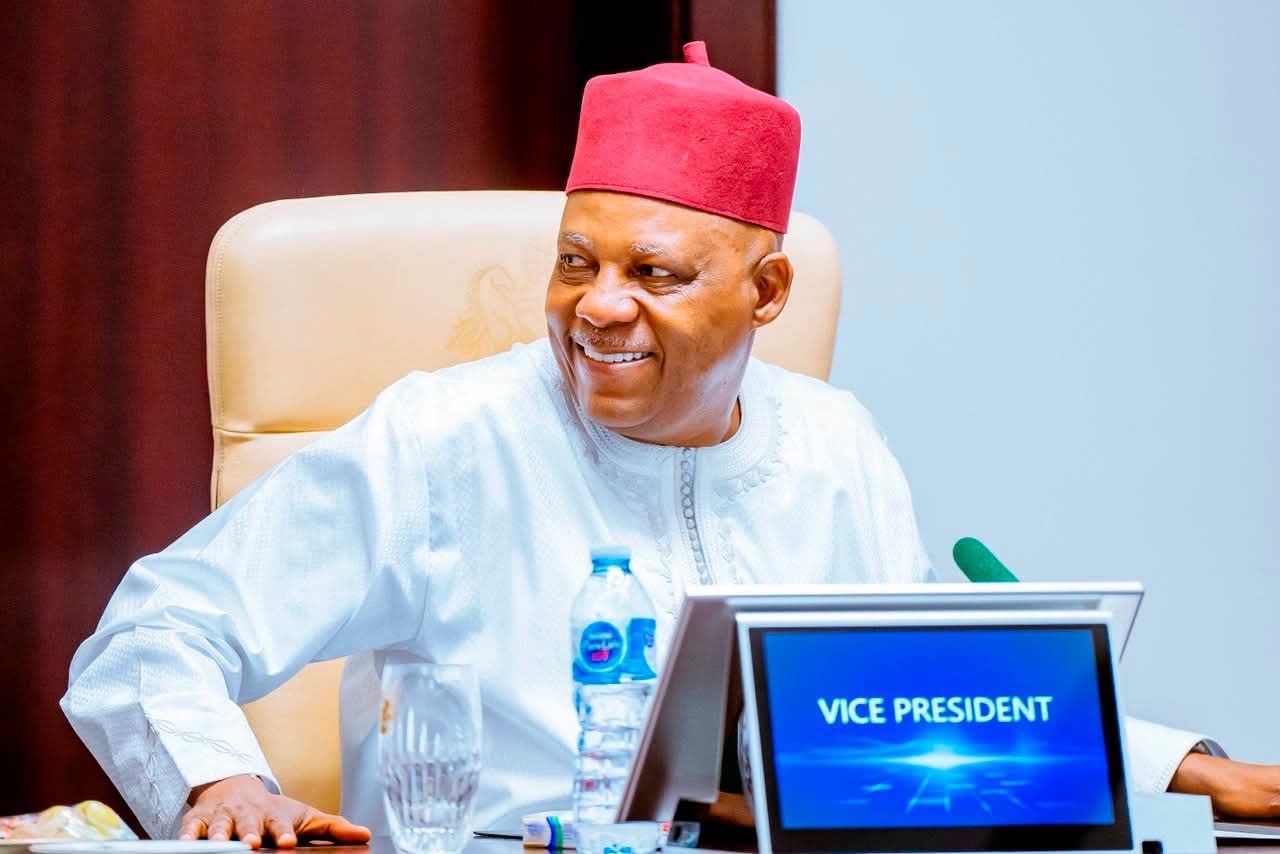
Yet, the contemporary partnership at the apex of the federal government offers a completely different narrative. The political maturity, absolute loyalty, and intellectual focus demonstrated by Vice President Kashim Shettima provide a refreshing departure from the past. For contemporary politicians and students of statecraft across Nigeria, Shettima’s conduct in office provides an important template on how to handle high-level power with dignity, intelligence, and restraint.
Mastering the Art of Managing Distractions 🧘♂️
The most striking lesson from Shettima’s tenure is his sophisticated handling of calculated political distractions. In a media landscape where rumors of internal executive rifts are regularly manufactured by interested actors to create division, Shettima has consistently deployed a strategy of dignified composure.
Instead of jumping into the media arena to engage in public spats or trade insults with detractors, he has consistently taken the high road. His trademark calm response reminds the political elite that true authority is not asserted through loud press releases, but through a quiet focus on constitutional duties.
In a political culture where public officials are often quick to react to every media provocation, his disciplined self-restraint is a powerful example. It shows that an official can maintain their integrity by starving political mischief-makers of the oxygen they need to create chaos.
The Synergy of Loyalty and Competence 🤝
A common flaw among Nigerian politicians is the mistaken belief that loyalty to a principal requires absolute passivity. Conversely, ambitious deputies often assume that demonstrating capacity means competing for the spotlight. Shettima has successfully debunked both myths by showing that absolute loyalty and high-level administrative competence can exist side by side.
His contributions as Chairman of the National Economic Council (NEC) highlight this balance. Rather than operating as a passive placeholder, he has steered the council into a highly productive policy organ. His leadership has guided major structural decisions, including the historic approval of the 112 National Emergency Lifeline to strengthen homeland security across states, the approval of the 83 billion Naira Anticipatory Action Trust Fund for nationwide flood response, and the rapid rollout of public procurement reforms that saved the federal government over 1.1 trillion Naira in a single fiscal year.
This capacity extends seamlessly to international diplomacy. At the World Economic Forum in Davos, Switzerland, Shettima stepped onto the global stage not just to represent an administration, but to passionately advocate for homegrown African solutions, local manufacturing, and continental health sovereignty. By matching a quiet tongue with a heavy administrative workload, he has shown that a deputy can be immensely valuable without ever attempting to outshine their principal.
Elevating Governance from Identity to Intellect 🧠
As an alumnus of the University of Maiduguri and the University of Ibadan, Shettima’s background as an agricultural economist and top-tier banking executive brings immense intellectual weight to his office. This intellectual grounding offers another vital lesson for Nigeria’s broader political space: the critical need to elevate national discourse from identity politics to capacity politics.
While his detractors have repeatedly attempted to view the presidency through the narrow lenses of regional and religious arithmetic, Shettima has consistently focused on macroeconomic realities, human capital development, and structural reforms. He has chosen to speak the language of economic competitiveness, agricultural corridors, and long-term national survival.
This intellectual approach serves as an important reminder to politicians across the federation. It proves that lasting political influence is built on a foundation of ideas, policies, and measurable outcomes, rather than the temporary manipulation of ethnic or religious sentiments.
A Worthy Blueprint for the Future
The decision to retain Kashim Shettima on the 2027 presidential ticket is a logical outcome of this performance. It stands as a clear validation of an institutional partner who chose teamwork over personal ambition and performance over political theater.
For Nigeria’s democratic experiment to mature, the wider political class must actively study the Shettima playbook. Our political system desperately needs more leaders who understand that power requires emotional intelligence, that a deputy’s ultimate strength lies in their dependability, and that administrative quietness can be the most effective way to deliver results. In a political landscape often defined by noise, Kashim Shettima has quietly provided a masterclass in the enduring power of statecraft.
Author’s Bio:
Abubakar M. Kareto is a Public Affairs Analyst and Communication Strategist. His expertise is in National, Subnational, and Continental Governance, Development, and Security Issues. He can be reached via Email: amkareto@gmail.com or on X (formerly Twitter): @amkareto