By Comfort Daniel
For many Nigerian children, the internet is no longer something they visit occasionally. It is a classroom, playground, library, television, marketplace and meeting place, all inside a smartphone.
A child can wake up, reach for a phone and move from a mathematics lesson on YouTube to a TikTok video, a WhatsApp group, an online game or a stranger’s message within minutes. The same device that helps a child understand a difficult school topic can also expose that child to cyberbullying, scams, sexual content, violent material and people who may not have good intentions.
This is the difficult question now facing Nigeria: how much freedom should children under 16 have online, and how much should the government, technology companies and parents intervene?
The debate gained new attention in March 2026 when the Federal Government opened a public consultation on possible measures to protect children online, including the possibility of setting minimum age limits for social media use. The Minister of Communications, Innovation and Digital Economy, Bosun Tijani, said the government wanted public views before developing evidence-based measures.
That means Nigeria has not simply banned social media for people under 16. Rather, the government is considering how children’s access to social media and other digital platforms should be regulated.
For parents, the issue is more than government policy. It is about what happens when a child is alone with a phone.
A young teenager may know how to create a social-media account, download an application and change privacy settings, but that does not necessarily mean the child understands the consequences of sharing a photograph, responding to a stranger or clicking on an unfamiliar link.
UNICEF Nigeria warns that children and adolescents online face risks including cyberbullying, privacy violations and exposure to inappropriate content. It recommends that parents and caregivers talk openly with children about their online experiences, use parental controls and teach them how to block and report abusive users.
The problem is that keeping children safe online cannot simply mean keeping them offline.
For Nigerian children, the internet can also be a doorway to education and opportunity. UNICEF says digital learning platforms can help expand access to quality education, while its Nigeria Learning Passport has been used to provide digital learning opportunities to children.
This creates a dilemma. A child who is prevented from using the internet may be protected from some dangers, but may also lose access to educational resources, information and digital skills that will be important in adulthood.
Nigeria already has challenges with unequal access to technology. UNICEF’s 2024 situation analysis found that only about 24 per cent of Nigerian households had internet access, with the figure falling to 15 per cent in rural areas. It also reported that only about 35 per cent of the population used the internet.
For a child in a well-connected city, the concern may be excessive social-media use. For another child in a rural community, the greater problem may be not having reliable access to the internet at all.
This means a one-size-fits-all approach could create another problem while trying to solve one.
There is also the question of privacy. Age verification may sound simple: if children below 16 should not use certain platforms, platforms must somehow know who is below 16. But verifying someone’s age can require the collection or processing of personal information. That raises another question: how can Nigeria protect children without creating a system that collects even more information about them?
Nigeria’s Data Protection Act 2023 contains specific provisions concerning children and people who lack legal capacity to consent to data processing. The law provides protections around children’s personal data and requires parental or guardian consent in circumstances where consent is the lawful basis for processing.
So the conversation about protecting children online is also a conversation about protecting their privacy.
The debate is not entirely new. In 2023, a bill known as the Child Online Access Protection Bill was proposed in the House of Representatives to address online risks faced by Nigerian children. Civil-society organisations have continued to push for stronger legal protection against online abuse, exploitation and harmful digital content.
The pressure is also coming from outside Nigeria. Countries around the world are experimenting with different ways of dealing with children’s social-media use. Australia has adopted a minimum age of 16 for social-media access, while several European countries and other jurisdictions are considering restrictions of their own. The OECD reported in 2026 that many countries considering age restrictions are focusing on ages 15 or 16.
But international examples also show that regulation is not straightforward.
Age restrictions can be difficult to enforce. Children may attempt to bypass age checks, while parents may create accounts for them or allow them to use adults’ accounts. Stronger verification could also create privacy concerns.
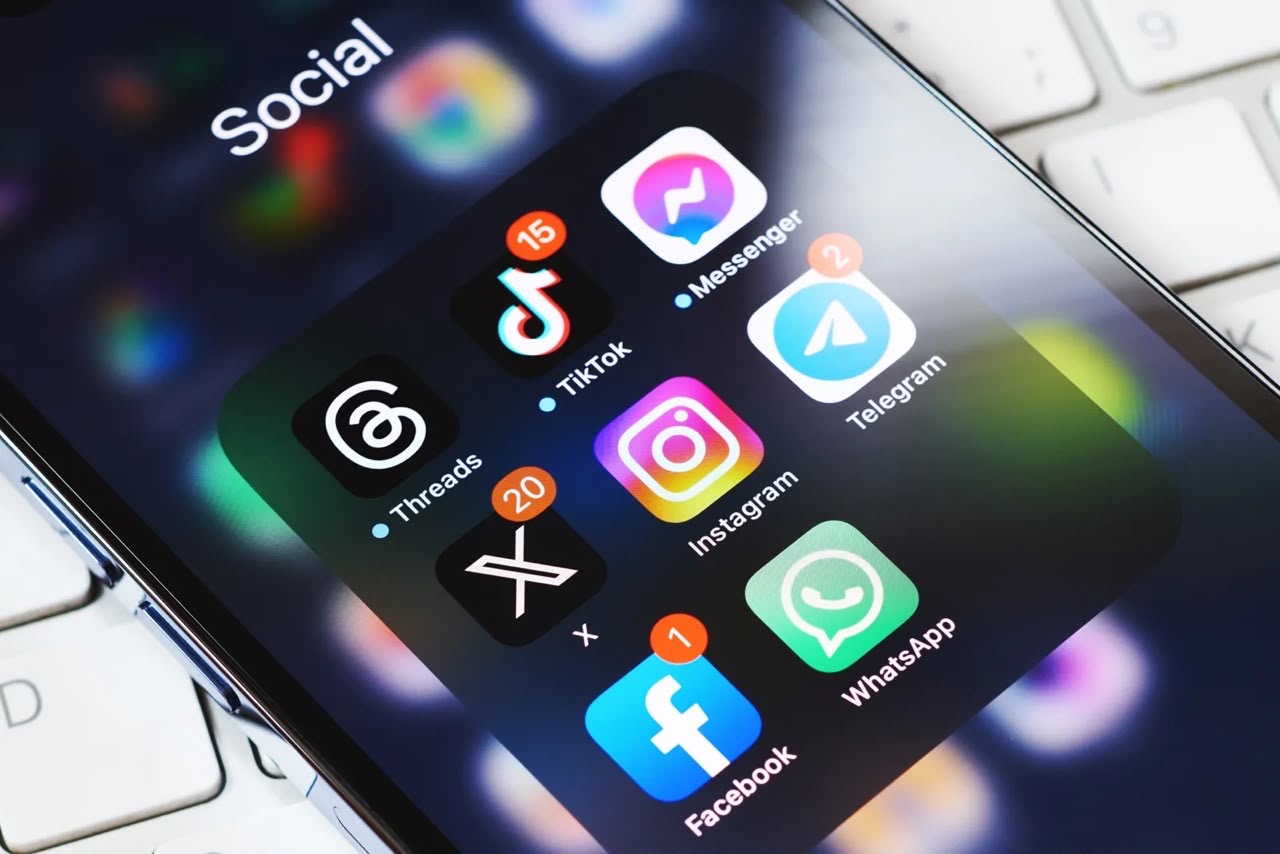
For Nigeria, therefore, the question should perhaps be bigger than whether a child is allowed to open a TikTok, Instagram or other social-media account before turning 16.
The country must ask what kind of digital environment children are entering. If a child sees harmful content, who is responsible? If a stranger approaches a child online, what protection is available? If an algorithm repeatedly recommends disturbing content, what responsibility does the platform have? If a child is bullied online, where can the family report it? And if age verification becomes compulsory, how will the child’s personal information be protected?
These questions matter because children are not simply smaller versions of adults. They are still developing the judgment needed to understand risk, manipulation and the permanence of what they post online. At the same time, they have a right to learn, communicate, participate and benefit from technology.
UNICEF’s research on Nigerian adolescents also points to the importance of digital literacy. Its 2024 situation analysis highlighted concerns about young people’s digital skills and found that girls in some parts of Nigeria felt unsafe using the internet.
This suggests that regulation alone cannot solve the problem. A child may be restricted from one platform today and encounter another harmful platform tomorrow. What happens when the child eventually turns 16? Without digital literacy, the danger does not disappear with a birthday.
Parents therefore have an important role to play. Instead of making the internet a forbidden subject, they can make it a subject of conversation. Children need to know that they can tell an adult when someone threatens, harasses or approaches them online without immediately fearing punishment.
Schools also have a role. Digital literacy should not only mean knowing how to operate a computer. Children should learn how to identify scams, protect passwords, recognise manipulation, report abuse and verify information.
Technology companies, meanwhile, should not leave the entire responsibility to parents.
Platforms design the systems children use. They control recommendation algorithms, reporting mechanisms, privacy settings and age-related protections. If Nigeria introduces stronger rules, platforms will have to play a major part in making those rules meaningful.
For government, the challenge is to find the line between protection and exclusion.
A blanket restriction may appear attractive because it is easy to explain: under 16, no social media. But the internet is far bigger than social media. It contains school lessons, digital libraries, government information, news, educational platforms and opportunities that children should not necessarily be cut off from.
Nigeria’s challenge, then, is not simply to keep children away from the internet.
It is to make the internet safer for them. The child scrolling through a phone in a bedroom may look like an ordinary scene in a Nigerian home. But behind that screen is a world that can educate, entertain, connect and, sometimes, harm.
As Nigeria considers how to regulate online spaces for under-16s, the most important question may not be “Should children be allowed online?”
It may be “What should we do to ensure that when Nigerian children go online, the adults and companies responsible for that environment have done enough to keep them safe?”
The answer will determine whether regulation becomes a wall that keeps children out or a shield that allows them to explore the digital world more safely.