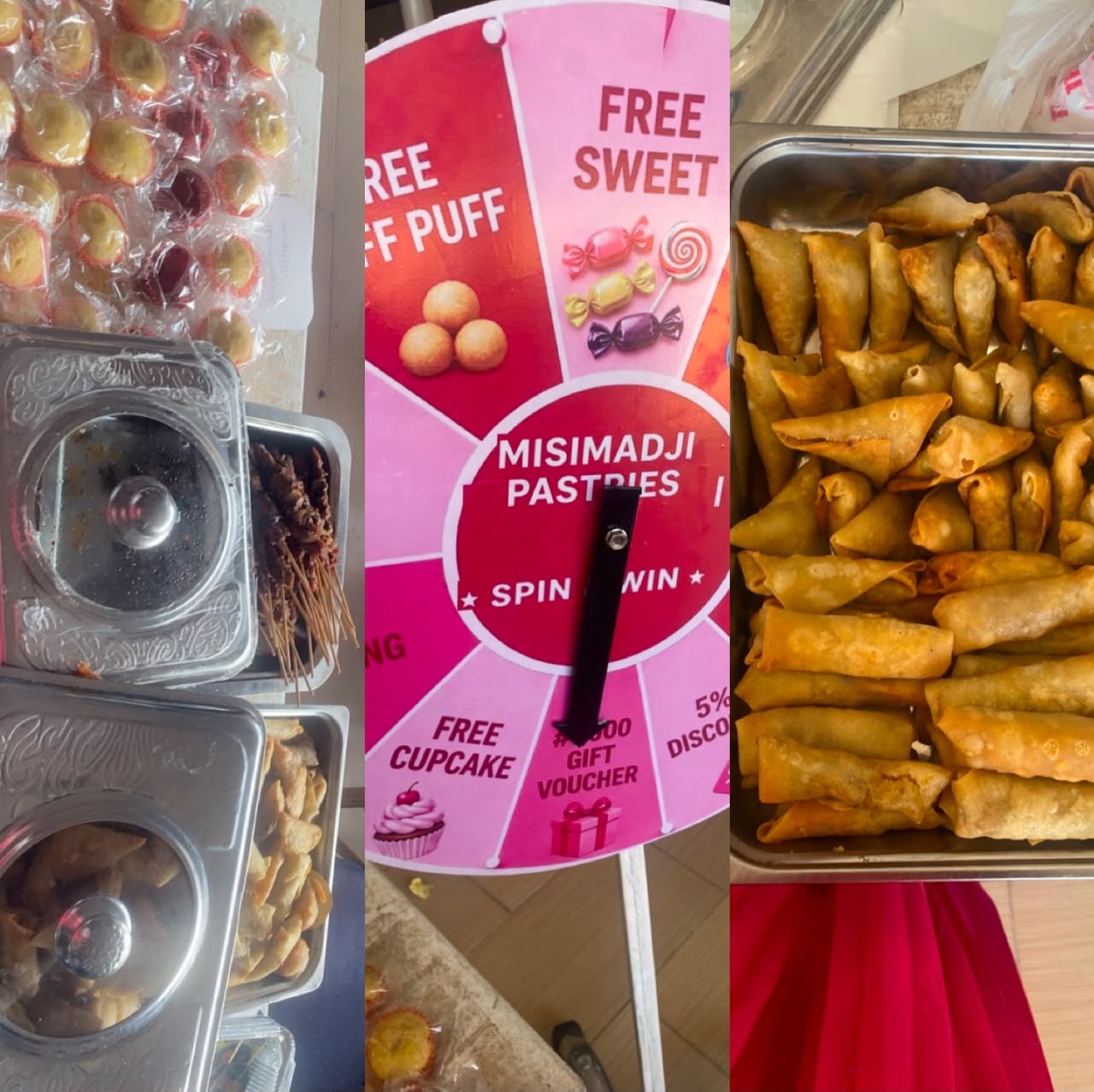
By Misimadji Grace Simeon
Before some students at the University of Maiduguri (UNIMAID) settle into their lectures, they have already responded to customers, prepared orders, promoted products or made sales.
I know this experience firsthand.
As a student who runs Misimadji Pastries, I have had to navigate the demands of lectures and assignments while responding to customers and preparing orders. My experience is one of many stories of students who are turning small businesses into sources of income, independence and opportunities for the future.
For these students, university life goes beyond lectures and examinations. They are also entrepreneurs, learning how to manage customers, finances, time and academic responsibilities while trying to build something of their own.
From pastries and catering to abayas, jewellery and snacks, student businesses are becoming part of campus life. Behind each venture is a different motivation, but the goal is often similar: to earn, learn and prepare for the future.
WHEN SCHOOL MEETS BUSINESS
My own journey with Misimadji Pastries began two years ago when I needed an additional source of income.
Running the business has helped me meet personal and maintenance expenses, but combining it with academics has not always been easy. There are days when customer orders, production and academic activities compete for my attention.
Balancing my business with lectures requires careful planning, especially when orders come at a time when I have an important academic responsibility. When the two clash, I prioritise my education.
Despite the challenges, the experience has given me a bigger vision. I hope to grow Misimadji Pastries and Foods into a major food company, obtain CAC and NAFDAC approvals, establish a larger production space and eventually create employment opportunities.
My experience, however, is only one part of the wider campus entrepreneurship story.
FROM SURVIVAL TO PASSION
For Aminat, who sells thrift abayas and veils, the business began four years ago as a means of coping with financial pressure.
“I started the business to sort out my bills,” she said.
Her journey has not been smooth. She recalls facing insults and eventually losing her entire capital after being scammed.
“It has been very tough, but we kept pushing,” she said.
Support from fellow students has helped her continue. Some customers even patronise her without necessarily needing the products, simply to support her.
What began as a means of survival has gradually become a passion.
“It has now become passion,” she said.
Aminat now hopes to move beyond thrift abayas and introduce newer designs to her customers.
COOKING BETWEEN LECTURES
For Fidausi, a catering business combines her love for cooking with the need for financial support.
She has operated the business for two years and uses much of her income to cover transportation to school.
Her approach to balancing both responsibilities is simple: she makes snacks on days without lectures or when her timetable is less demanding.
But the arrangement becomes more difficult during tests and examinations.
“Sometimes, it’s making snacks on days I have exams or tests. It’s hard to balance the two, but because I need to, I have to,” she said.
While she admits that she sometimes chooses her business because of the financial support it provides, customers continue to encourage her through patronage and referrals.
Her long-term ambition is to open an eatery where more people can experience her cooking and brand.
SMALL SALES, BIGGER AMBITIONS
Oluwapelumi runs a food business selling coconut candy, coconut flakes, garri and potato chips.
She started the venture to become financially independent, earn additional income and make use of her skills and available resources.
The business has also taught her practical lessons in money management and saving.
She prioritises her academic responsibilities and attends to her business during her free time, reducing her activities during examinations. Still, managing time, raising capital and reaching more customers remain challenges.
Her fellow students support the business by buying her products, recommending them and offering feedback.
With more capital, Oluwapelumi hopes to increase production, improve packaging and branding, acquire better equipment and expand through online marketing and delivery services.
JEWELLERY AND THE PURSUIT OF INDEPENDENCE
For Pelumi Bayode, an online jewellery business is a step towards achieving the independence she has always wanted.
She has operated the business for about a year, earning income that helps her meet personal needs and other expenses.
Although she tries to put academics first, there have been occasions when business activities and academic responsibilities have occurred simultaneously.
Limited capital and attracting customers remain major challenges. Fellow students support her through purchases and referrals.
Pelumi hopes to continue the business after graduation and develop it into a bigger brand. With additional capital, she plans to increase her stock, introduce more varieties of jewellery and improve her packaging.
A NEW BEGINNING FOR SARATU
For Saratu Suleman, a 200-level Human Anatomy student, entrepreneurship is a relatively new journey.
She has been selling Rubynase for four months, starting the business to make profit and meet some of her personal needs.
“It helps me to be able to get some petty things for myself,” she said.
The business comes with stress, but Saratu is determined not to allow it to affect her academics.
“I run a business but definitely I don’t let my academic suffer, so I schedule study and business time,” she explained.
Unlike some of the other student entrepreneurs, Saratu does not intend to continue with the same business after graduation. She hopes instead to move into what she describes as a better business opportunity.
WHAT THE LECTURER SAYS
For Engr. Dr. Haruna Musa, a lecturer in GST Entrepreneurship and Woodwork, student entrepreneurship goes beyond making extra money.
He views it as a response to financial pressure, unemployment and the need for practical skills.
Students, he explained, venture into areas including food, personal services, digital services and agribusiness to reduce dependence on their families and meet everyday expenses.
Beyond income, entrepreneurship gives students an opportunity to apply classroom knowledge to real-life problems while developing skills in financial management, marketing, innovation and leadership.
However, Musa identified limited capital, time constraints, inadequate infrastructure and insufficient entrepreneurial knowledge as major challenges confronting student entrepreneurs.
He advised students to put academics first, start small, keep proper financial records, separate business funds from personal money and reduce business activities during examination periods.
He also called for stronger institutional support through mentorship, innovation hubs, training, pitch competitions, access to funding and partnerships with financial institutions, businesses, government agencies and alumni.
MORE THAN A CAMPUS HUSTLE
The stories of these students reveal that entrepreneurship on campus is rarely just about making sales.
For some, it is a way to pay bills. For others, it provides transportation money, personal support or financial independence. For many, it is also an opportunity to develop skills and discover what they can build beyond university.
The challenges are real. Business orders compete with lectures. Examinations can interrupt production. Limited capital can prevent expansion. And setbacks, such as the loss of an entire business capital, can test a student’s determination.
Yet they keep going.
My own experience has shown me that running a business while studying requires more than the ability to sell. It demands time management, discipline, resilience and the willingness to keep learning from both successes and setbacks.
The same determination can be seen in the other student entrepreneurs.
Aminat wants to move beyond thrift clothing. Fidausi hopes to own an eatery. Oluwapelumi wants to build a larger food brand. Pelumi Bayode sees a future for her jewellery business, while Saratu is already looking ahead to a bigger entrepreneurial opportunity.
Their businesses may be small, but their ambitions are not.
With the right support, today’s campus ventures could become tomorrow’s enterprises—and today’s student entrepreneurs could become tomorrow’s employers.
For us, the hustle is not simply something we do between lectures.
It is where ambition meets experience, and where small beginnings can become big dreams.