By Juliet Julius Bitrus, 300 level student from the University of Maiduguri, Faculty of mass communication and media studies, Department of mass communication.
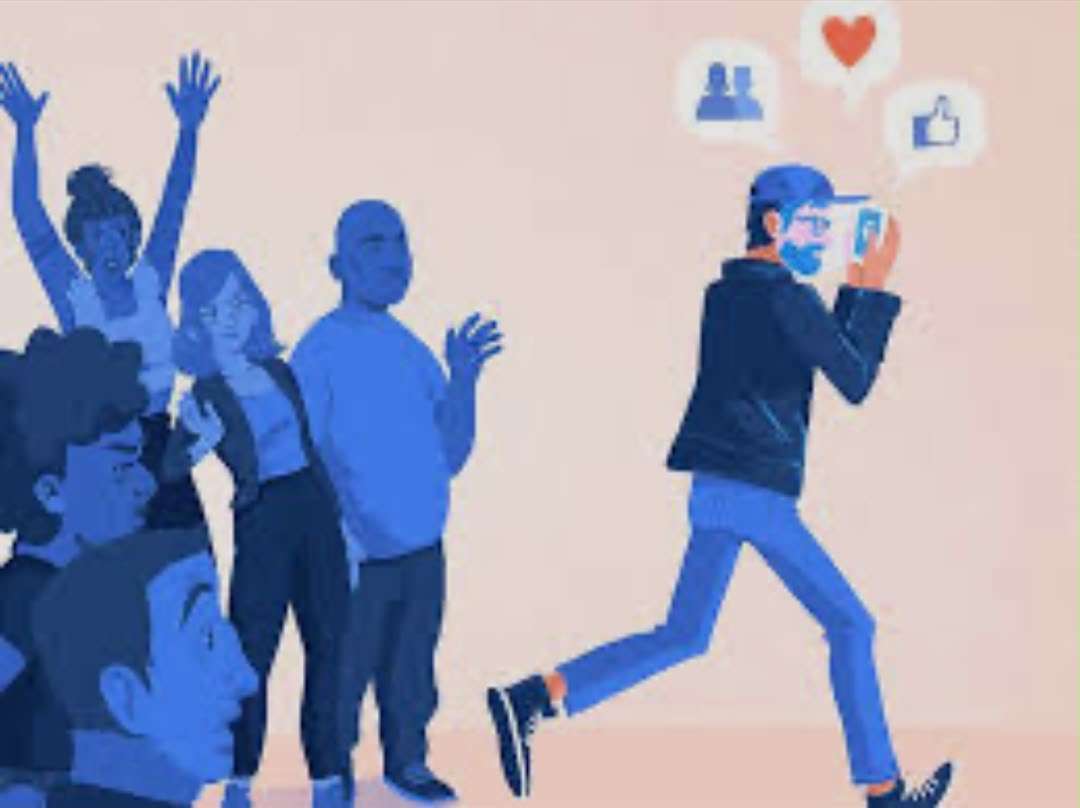
As the café buzzes with conversation, four university students sit around the same table. Their coffees grow cold while their eyes remain fixed on glowing screens. Fingers swipe endlessly. Occasional smiles appear—not because of something someone at the table has said, but because of a meme, a notification, or a video from someone hundreds of kilometres away.
Ironically, not a single word has been exchanged among them in several minutes.
It is a scene that has become increasingly familiar across campuses, homes, restaurants, and even family gatherings. In an age where people can instantly communicate with anyone across the globe, many are asking a troubling question: Has social media truly connected us, or has it quietly driven us further apart?
There is no denying that social media has transformed human communication. Platforms such as Facebook, Instagram, X, TikTok, Snapchat and WhatsApp have made it easier than ever to stay in touch with family members, reconnect with old friends, build professional networks, promote businesses and share life’s memorable moments.
Years ago, reconnecting with a childhood friend often required months of searching. Today, it takes only a few seconds and a search bar.
According to the Pew Research Center, one of the primary reasons people use social media is to maintain relationships with family and friends and reconnect with people they had previously lost contact with. The study found that many users also rely on these platforms to stay updated with current events and strengthen their social connections. For millions of people worldwide, social media has become an important tool for communication, learning, collaboration and community building.
The importance of these platforms became even more evident during the COVID-19 pandemic. Families separated by lockdowns stayed connected through video calls, students attended online classes, businesses reached customers through digital platforms, and communities shared information and support despite physical distancing.
Yet beneath these undeniable benefits lies a growing concern.
Despite living in the most digitally connected era in history, loneliness has emerged as a major public health issue.
According to the World Health Organization (WHO), approximately one in six people worldwide experiences loneliness. WHO also notes that adolescents and young adults are among the groups most affected and identifies excessive or unhealthy digital media use as one of several factors that may contribute to social isolation and loneliness. The organisation warns that loneliness and social isolation are associated with poorer physical and mental health and are linked to hundreds of thousands of deaths each year.
The contradiction is striking.
A person may have thousands of followers, receive hundreds of likes and exchange messages with people across continents, yet still struggle to find someone to confide in during difficult moments.
Researchers explain that while social media makes communication easier, online interactions do not always develop into meaningful relationships. Digital conversations are often brief, carefully curated and centred on appearances rather than genuine emotional connection.
Young people are particularly affected by this digital paradox.
According to Pew Research Center’s 2025 report on Teens, Social Media and Mental Health, many teenagers say social media helps them feel connected to friends, express their creativity and access support. However, many also report feeling pressured to post content that attracts attention, overwhelmed by online drama, or excluded by what they see on social media.
The pursuit of likes, comments, shares and online validation can gradually blur the line between genuine friendship and digital popularity.
Family dinners become silent scrolling sessions. Friends gather physically while remaining mentally elsewhere. Birthdays are celebrated with emojis instead of visits, and conversations that once lasted hours are reduced to short messages and reactions.
Technology itself is not the enemy.
Social media remains one of the most influential communication innovations of the modern era. It has strengthened citizen journalism, amplified underrepresented voices, supported humanitarian campaigns, enabled businesses to reach wider audiences and provided rapid access to information during emergencies.
The challenge lies not in the existence of social media, but in how people choose to use it.
The World Health Organization emphasises that positive social relationships are essential for good health and well-being. It encourages people to strengthen real-life social connections, explaining that digital communication should complement—not replace—meaningful face-to-face relationships.
Perhaps the greatest irony of the digital age is that while connecting has never been easier, truly belonging has never required more intention.
Social media can bridge continents within seconds, but it cannot replace the comfort of a heartfelt conversation, the reassurance of a warm embrace or the healing power of genuine human presence.
As technology continues to reshape society, perhaps the most important notification is not the one that lights up a screen, but the quiet reminder to look up, put the phone away and reconnect with the people sitting right beside us.