By Endurance Jonah Idah
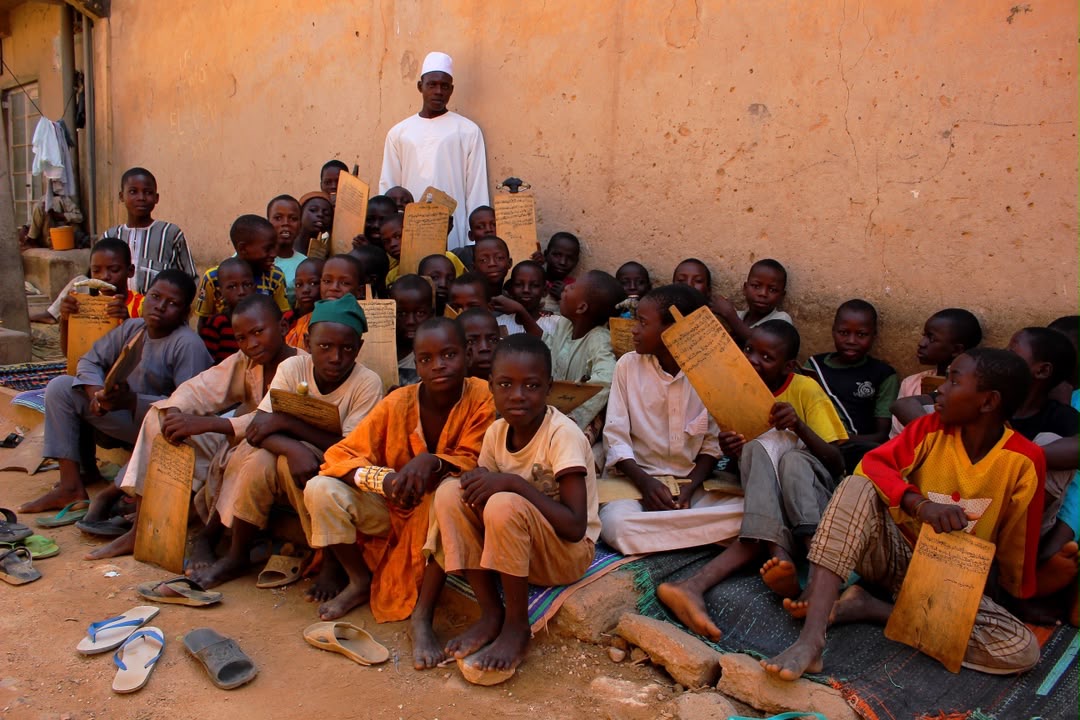
At dawn in northern Nigeria, some children begin their day in classrooms while others begin it on the streets. For many Almajiri children, education, survival and childhood have become difficult to separate.
For generations, Qur’anic education has played an important role in northern Nigeria. Traditionally, children were sent to study under Mallams, where they learnt the Qur’an alongside religious and moral instruction.
The problem today is not the teaching of the Qur’an itself, but the conditions surrounding some of these children. Poverty, weak support systems and limited access to formal education have left many vulnerable to street begging, child labour and other forms of exploitation.
UNICEF has continued to highlight the connection between the Almajiri system and Nigeria’s wider out-of-school crisis, while noting that girls face additional barriers including poverty, early marriage and restrictive social expectations.
Speaking from the perspective of Qur’anic education, Mallam Ibrahim Sani, a Qur’anic teacher in Maiduguri, said the system was never intended to make children beg.“What we see today is not entirely what the traditional system was meant to be. In the past, communities played a stronger role in supporting Mallams and their students, but that support has weakened. I do not believe begging should be part of a child’s education.”
He believes the answer is reform rather than abolition. “Qur’anic education can be combined with Western education and vocational training. Government should support genuine Mallams with facilities, food, healthcare and training.”
Dr. Abdullahi Mohammed, a lecturer in the Department of Islamic Studies at the University of Maiduguri, said the greatest challenge is what happens when religious instruction exists without a broader education. “Qur’anic education is important, but when a child is denied literacy, numeracy and practical skills, his future opportunities become limited.”
He said previous attempts to integrate the systems have faced poor implementation, inadequate funding and resistance in some communities.
According to him, reform should allow children to study the Qur’an alongside formal education and vocational skills while government works with parents, Mallams and Islamic scholars to protect their interests.
That approach is also reflected in recent government policy. The Federal Ministry of Education’s 2026 National Policy on the Enhancement of Almajiri Education in Nigeria provides for the development of Almajiri learning centres while combining religious instruction with broader educational opportunities.
The challenge, however, is whether the policy can succeed where earlier efforts struggled. For Hauwa Mohammed, a Child Protection Specialist with a child-rights organisation in Maiduguri, the issue goes beyond education. “These children can face hunger, street begging, child labour, violence, abuse and other forms of exploitation, while girls may face additional risks such as early marriage and sexual exploitation.”
She said children who spend years outside formal education may find their future opportunities severely restricted. “Nigeria has laws designed to protect children, but poverty, weak enforcement, limited resources and social attitudes continue to make implementation difficult.”
The situation of girls deserves particular attention. While the traditional Almajiri system is primarily associated with boys, girls in vulnerable households may also be excluded from school and pushed into domestic work, early marriage or other forms of dependency.
UNICEF has documented efforts aimed at reaching both Almajiri children and out-of-school girls, including a digital-learning initiative in Sokoto that provides education, vocational skills and life-skills training.
For one former Almajiri student, who requested anonymity, the debate is deeply personal. “I was very young when I left home to learn the Qur’an. I received Qur’anic lessons, but life was difficult, and begging became part of our daily routine.”
He recalled having little food and limited help when he became ill. “I did not have the opportunity to attend formal school, and today I sometimes wonder how different my life would have been if I had received both Qur’anic and Western education.”
Yet he does not reject the religious education he received. “I still value what I learned about the Qur’an, but I wish children like me could learn in a safe environment without having to suffer on the streets.”
His experience reflects the central dilemma of the debate. For many families, Qur’anic education remains culturally and religiously important. But children should not have to choose between religious learning and the basic education, safety and opportunities they need to build a future.
Several factors have kept the problem alive. Poverty pushes some families toward traditional arrangements they cannot otherwise afford to replace. Communities may resist changes they believe threaten their religious traditions, while government programmes have sometimes suffered from weak implementation, limited funding and poor monitoring.
UBEC announced in 2025 that a national committee had been established to address the Almajiri and wider out-of-school-children crisis. The Federal Government has since continued developing policies aimed at improving Almajiri education.
But policy alone will not be enough. Reform will require government to provide properly supported learning centres, basic literacy and numeracy, vocational training, healthcare and safe accommodation. Mallams and Islamic scholars will need to be part of the process rather than treated as obstacles. Parents and communities must also be encouraged to see education as preparation for both faith and life.
Critics argue that the continued presence of children begging on the streets shows that the existing model has failed and should be abandoned.
Supporters of reform believe that removing Qur’anic education altogether would ignore a deeply rooted religious tradition and the wishes of many communities.
The more practical question may be what should be preserved and what must change. The teaching of the Qur’an does not require children to beg for food. Religious instruction does not require children to remain outside formal education. Tradition does not have to mean the loss of childhood.
The future of the Almajiri system will ultimately depend on whether Nigeria can protect children while preserving the values communities consider important.
Government must move beyond policies on paper and ensure that reforms reach actual learning centres. Parents must understand that religious education and modern education can exist together. Mallams and religious leaders can help reshape the system by rejecting child begging and supporting safer forms of learning.
Most importantly, children must remain at the centre of the debate. The question is no longer simply whether the Almajiri system should be reformed or abandoned. It is whether Nigeria can preserve what is valuable, remove what harms children and give every child boy or girl the opportunity to learn, grow and build a future beyond survival.