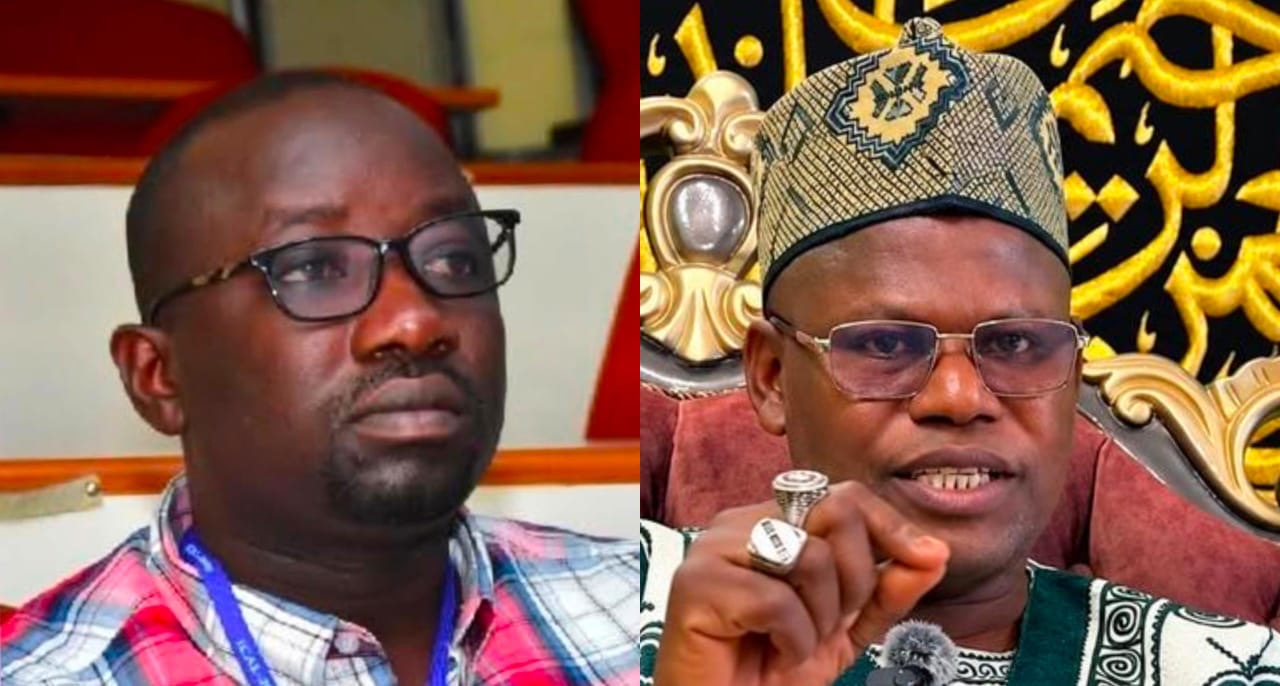
By Abubakar M. Kareto
On the evening of Monday, October 26, 2026, the quiet town of Dutsin-Ma became the epicenter of an all-too-familiar Northern Nigerian tragedy. Two assailants on a motorcycle pulled up to the gate of Sheikh Yahaya Ibrahim Masussuka’s residence, opened fire, and fled into the dark. Within minutes, Sheikh Masussuka, a fiercely independent and highly controversial Islamic scholar, lay dead alongside his friend, Adamu Abubakar. This was not the opportunistic violence of bandits raiding a village for ransom, nor was it a robbery gone wrong. It was a cold, calculated, doorstep execution.
The tragic paradox of Sheikh Masussuka’s death lies in its timing. At the moment he was gunned down, he was preparing to host a Peace and Unity Gathering scheduled for October 31, 2026. A man actively organizing dialogue for communal harmony was silenced by bullets. As the dust settles over Dutsin-Ma, this assassination forces us to confront two fundamental questions that haunt the contemporary North: Can Arewa be saved? Can Arewa ever know peace?
Our major problem in Northern Nigeria is the sheer audacity of attempting to force an ideological belief on everyone—a dangerous mindset where one group believes it holds a divine monopoly on truth and must suppress all others. Having traveled to many countries across the globe, I have rarely witnessed a place where people indulge in this kind of destructive, sectarian intolerance except in Nigeria. Religion is ultimately personal. The fundamental duty of a civilized citizen is to practice their faith peacefully while allowing others the absolute freedom to practice theirs as guaranteed by the laws of our land.
Instead, we have chosen a perilous path where human lives are sacrificed on the altar of theological disagreement. Sheikh Masussuka was widely associated with the Qur’aniyyun movement, advocating a return to the Qur’an as the primary source of faith. In an ideological landscape dominated by entrenched establishments, his views were branded as existential heresy. Hostile preachers targeted him with dangerous, inciting sermons, with some issuing explicit death threats simply because they perceived his doctrine as a threat to their hegemony. Yet, theological disagreements must be fought with text, logic, and public debate—never with lead.
Those who engineered this assassination must remember a fundamental truth of history: killing a man never kills his message. By gunning down Sheikh Masussuka, his killers have unwittingly amplified his legacy, propelling his sermons into the public spotlight and convincing many that his teachings carry unassailable authenticity. Bullets cannot destroy an idea; they only martyr the messenger. Far from silencing his doctrine, this act of violence guarantees that even more voices like Masussuka will inevitably emerge across the region.
The aftermath of his murder has exposed an even deeper moral decay, as members of opposing sectarian groups flooded social media platforms to celebrate his execution. Such shameless revelry over extrajudicial bloodshed reveals how deeply hatred has poisoned our religious space. This toxic atmosphere did not emerge overnight; the Katsina State Government had previously summoned Masussuka before a panel of Ulama following complaints about his doctrine, where he formally reported threats from members of rival groups. Leaving him unprotected despite these clear warnings represents an egregious failure of state protection.
This brings us to critical, unanswered questions surrounding the narrative being spun in the wake of the tragedy. Security commentaries—such as those circulating audio claims regarding groups like Ansaru—demand rigorous, skeptical scrutiny. Why did Ansaru never utter a single word about Masussuka in the past, only to have unverified claims or sudden audio narratives surface immediately after his murder? Furthermore, we have witnessed individuals publicly setting up cameras within our towns to gleefully record videos celebrating Masussuka’s assassination. Are these individuals local fifth columnists, or what is their direct nexus with violent underground cells? We must ask: who truly invited Masussuka for a Muqabala confrontation, and who stands to benefit from wrapping a targeted sectarian assassination in the cloak of insurgent groups?
Northern Nigeria is watching history repeat itself with frightening precision, bearing echoes of a structural denial that has long plagued our region. We all recall how Sheikh Ja’afar Mahmud Adam and Sheikh Muhammad Auwal Albani Zaria were brutally gunned down. Yet, following their unjust murders, society hypocritically engaged in scapegoating—blaming various external actors while refusing to confront the internal theological roots of the crisis. Historically, Sheikh Ja’afar himself appointed Mohammed Yusuf as the leader of the Ahlus Sunna youth wing in Maiduguri, and late Sheikh Albani Zaria openly acknowledged that these movements once shared the same ideological space before Yusuf and Shekau split to pursue an extreme, isolationist doctrine. Despite these clear historical facts, major establishments like the Izala movement have persistently denied that Boko Haram’s leadership ever emerged from within their theological fold. By covering up these lineage truths rather than prescribing honest remedies, Arewa allowed sectarian extremism to metastasize into the violent proxy tactics now threatening independent scholars today.
If this relentless issue of sectarian intolerance and religious violence is not urgently and honestly addressed in Northern Nigeria, then we should completely forfeit our collective hope for future development. A region consumed by internal bloodletting over clerical differences will forever repel investment, destroy social trust, and cripple its own human capital.
Arewa can still be saved, and Arewa can know peace, but only if we establish once and for all that the answer to a sermon must never be a gun. Dominant clerical establishments must cease using pulpit accusations of heresy to license extrajudicial violence, while government institutions must aggressively prosecute anyone issuing death threats. The Katsina State Police Command and intelligence agencies must look beyond convenient audio claims and immediate gunmen to unmask the local urban collaborators, camera-wielding cheerleaders, and ideological sponsors behind this crime. Sheikh Masussuka’s murder is a stark reminder that peace requires justice, tolerance, and the consistent enforcement of the rule of law.
Abubakar M. Kareto is a Public Affairs Analyst and Communications Strategist focusing on governance, public policy, and institutional reform across Nigeria and Africa. He can be reached on X @amkareto and via email at amkareto@gmail.com.