By Abubakar M. Kareto
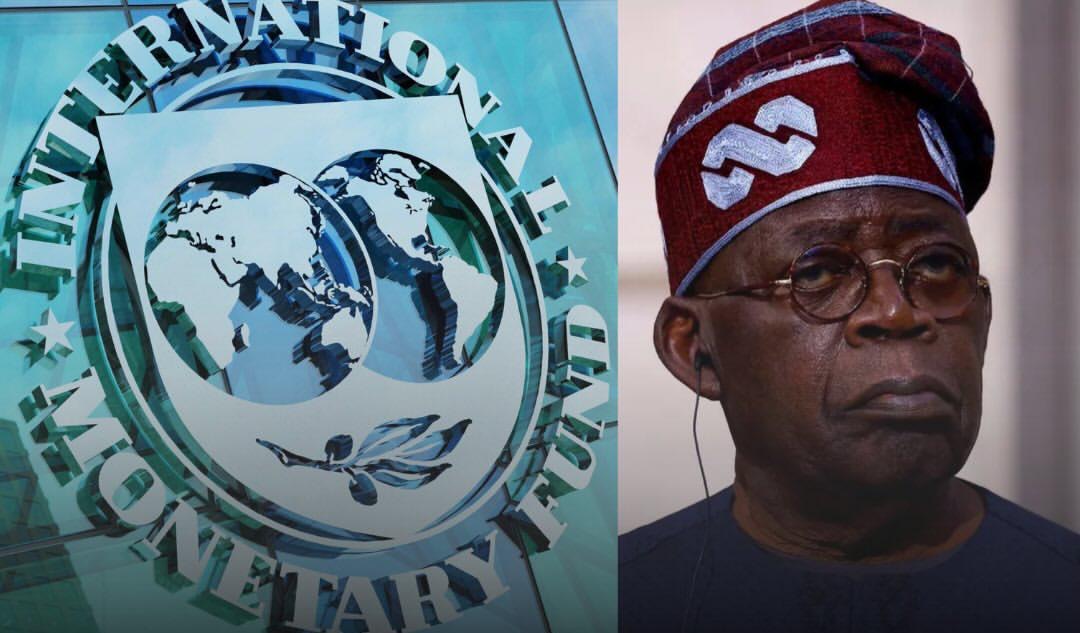
The debate surrounding fiscal sustainability in developing economies has taken a predictable turn. In its 2026 Article IV Consultation report on Nigeria, the International Monetary Fund returned to its well-worn playbook, recommending that the federal government introduce new consumption taxes.
Specifically, the multilateral lender wants to see Value Added Tax extended to fuel products alongside fresh excise duties on telecommunications services like calls and data.
The underlying economic logic is straightforward on paper: Nigeria possesses one of the lowest revenue-to-GDP ratios globally, and desperately needs domestic resource mobilization to close its massive infrastructure and social spending deficits.
Yet, this policy prescription ignores a fundamental structural reality. You cannot build a sustainable, resilient economy by aggressively taxing a population already sandwiched between systemic poverty, food insecurity, and persistent inflation.
The Fund argues that these proposed measures could generate an additional 3.9 percent of Gross Domestic Product within three years.
However, when these models are translated into the reality of a country where multi-dimensional poverty affects over sixty percent of the population, the human and economic costs far outweigh the fiscal yield.
To understand why this strategy fails, one must look at the direct transmission mechanism of consumption taxes on low-income households. Unlike progressive income taxes that scale with wealth, flat taxes on essential commodities like petrol and communications are deeply regressive.
A laborer in Kano or an artisan in Enugu spends a significantly higher proportion of their daily income on transportation and basic connectivity than a high-net-worth individual in Lagos. When a government levies a tax on fuel, it does not just raise the price at the pump.
It triggers a cascade of price increases across the entire supply chain, directly inflating the cost of transporting food from agricultural belts to urban markets.
At a time when millions of Nigerians are facing severe food insecurity, adding fiscal weight to the logistics of survival is an incredibly dangerous policy gamble.
The continental data reveals that this trend forms part of a problematic pattern of revenue extraction across Sub-Saharan Africa. Historically, multilateral institutions have urged African states to cross the fifteen percent tax-to-GDP threshold, which is widely considered the bare minimum required to fund basic state functions.
According to the African Tax Outlook, the average tax-to-GDP ratio across thirty-five African nations stands at roughly 15.1 percent.
In comparison, Nigeria has historically lagged behind at under ten percent, while peer nations boast significantly higher baselines: Ghana stands at 16 percent, Kenya holds at 15 percent, Senegal boasts 20 percent, and South Africa leads at 23 percent.
In an aggressive pursuit of these continental benchmarks, several nations have turned to consumption and digital services taxes as quick fiscal fixes, often with counterproductive results.
When East African nations implemented stricter excise duties and mobile transaction levies over the past decade, the short-term revenue gains were quickly offset by real-world economic distortions. Instead of formalizing the informal sector, these policies disproportionately penalized micro-enterprises that rely entirely on cheap data and digital transactions to operate.
In a similar vein, when Ghana introduced its Electronic Transfer Levy, the immediate consequence was a sharp contraction in digital transaction volumes as citizens reverted to cash to evade the tax, effectively undermining years of progress in financial inclusion.
Furthermore, the argument that increased tax revenues will automatically fund robust social safety nets is historically weak in the context of African public financial management.
The international financial institutions consistently suggest that the pain of new taxes can be mitigated if cash transfer systems are properly funded. But this assumes the existence of flawless state administrative capacity and comprehensive social registers, both of which remain deeply flawed across sub-national governments.
In reality, the revenue collected through regressive taxation is frequently absorbed by rising debt-servicing costs or bureaucratic overhead. In Nigeria’s current fiscal architecture, debt service is budgeted to absorb roughly forty-five percent of projected revenues, meaning that fresh taxes on the vulnerable are far more likely to feed creditors than fund palliatives.
True fiscal reform does not lie in squeezing more revenue out of a struggling populace through fuel and telecom taxes. Instead, it requires structural changes aimed at broadening the corporate tax base, eliminating inefficient customs duty waivers, and aggressively tackling the informal economy’s upper echelons.
Nigeria is already proving that alternative paths exist. Through the ongoing implementation of the Presidential Fiscal Policy and Tax Reforms Committee mandates, the nation’s tax-to-GDP ratio is projected by analysts to rise toward 10.2 percent purely through automated compliance, data integration, and systemic harmonization, rather than rate hikes.
According to the multilateral lenders’ own research, comprehensive administrative reforms aimed at improving compliance among large enterprises could add over three percent to a developing nation’s GDP without placing an extra burden on the poor.
No nation has ever achieved sustainable development by taxing its citizens into destitution. If the federal government yields to external pressures to tax basic connectivity and fuel, it risks further dampening consumer demand, stalling small-scale industrial growth, and exacerbating an already volatile socio-economic environment.
Rather than expanding indirect taxation on survival priorities like energy and communication, policy architecture must focus on productivity, plugging systemic revenue leakages, and fostering an environment where businesses can thrive. True financial stability is achieved by growing the economic pie, not by starving the people who are trying to bake it.
Abubakar M. Kareto is a Public Affairs Analyst. He can be reached via email at amkareto@gmail.com