By Abubakar M Kareto
The core test of any democratic legislature lies in its procedural integrity and its moral authority to act as a check on executive power.
When a parliament consistently trades institutional rigour for political convenience, its oversight functions dissolve into political theatre.
Under the leadership of Senate President Godswill Akpabio, Nigeria’s 10th National Assembly has increasingly found itself navigating a storm of procedural controversies, institutional friction, and public relations crises that raise fundamental questions about parliamentary governance in Africa’s largest democracy.
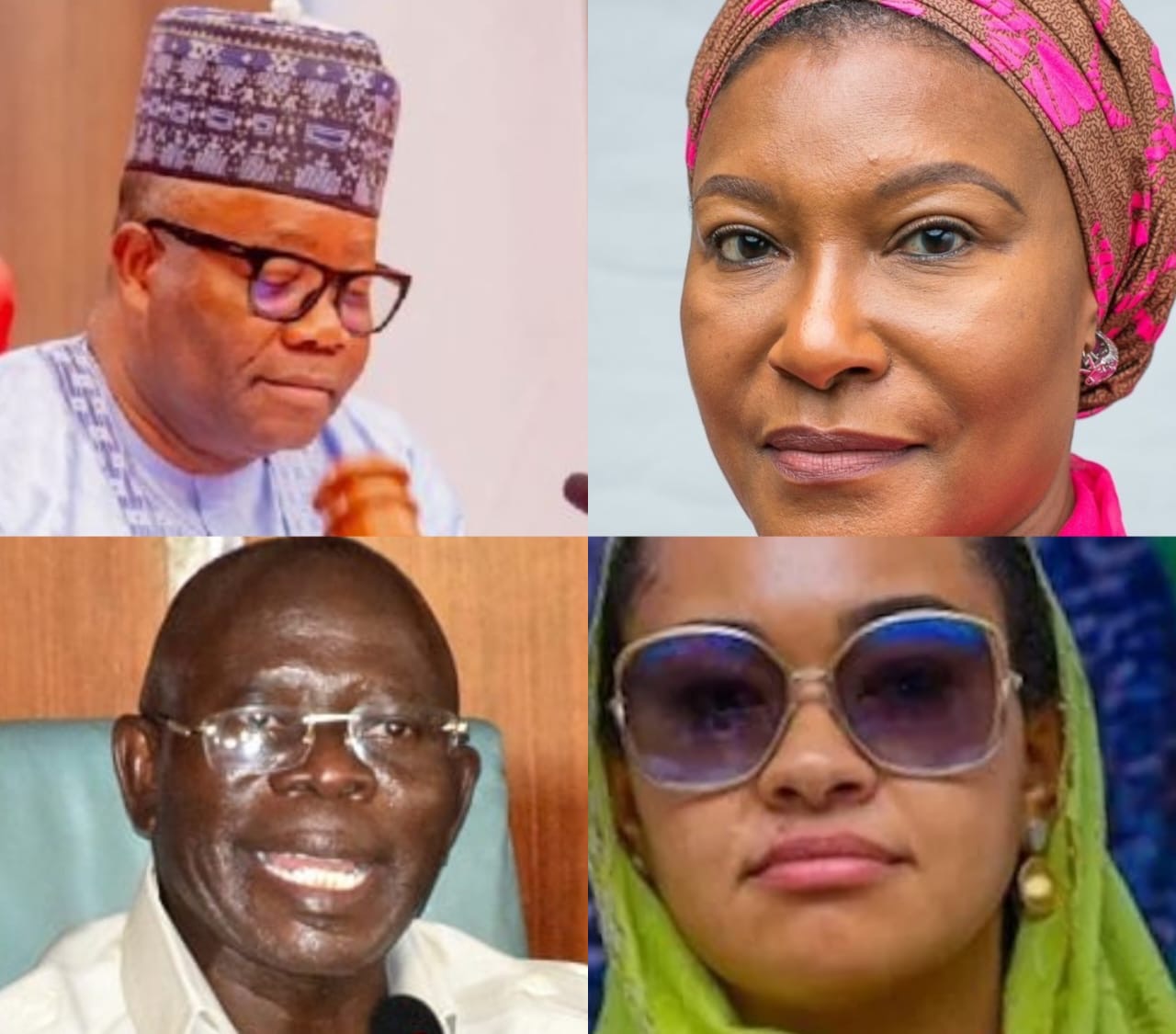
The latest flashpoint exposes a deeper systemic vulnerability. Allegations surfaced during an interview with Senator Adams Oshiomhole on Africa Independent Television regarding the six-month suspension of Kogi Central Senator Natasha Akpoti-Uduaghan. Oshiomhole indicated that multiple lawmakers, including FCT Senator Ireti Kingibe, discovered their names and signatures appended to a committee disciplinary report they had neither seen nor endorsed.
While Oshiomhole subsequently adjusted his terminology, denying an explicit claim of forgery while clarifying that administrative registers from general attendance were inappropriately substituted to serve as signatures for the final report, Senator Kingibe publicly confirmed the discrepancy.
Speaking on Arise News, Kingibe verified that a photocopy of her signature appeared on a document she had no hand in drafting, observing that the legislature increasingly functions as a cooperating arm rather than an independent check on executive authority. This administrative sleight of hand underscores a broader pattern of institutional erosion.
“The legislature has increasingly functioned as a cooperating arm of the Executive rather than an independent institution responsible for oversight and accountability.” ~ Senator Ireti Kingibe
This subjugation of legislative independence was laid bare in a viral video showing the Senate President engaged in overt praise-singing for President Bola Tinubu. For citizens and political observers alike, it is utterly embarrassing to see the head of the legislative arm of government, an institution constitutionally mandated to check the excesses of the executive, adopting the posture of a praise singer. This public display of subordination compromises the sacred principle of the separation of powers, reducing the leadership of the apex legislative chamber to a de facto extension of the presidency.
To analyze the structural trajectory of the 10th Senate is to review a series of high-profile controversies that have systematically redefined the relationship between the legislature and the Nigerian public.
In August 2023, the institutional dignity of the chamber was severely compromised by a live microphone gaffe.
The announcement that a financial token had been dispatched to lawmakers’ accounts to enable them to enjoy their holidays, which was rapidly amended on-air to prayers to your mailboxes, became an immediate symbol of systemic insulation from the socioeconomic realities of the broader populace. This disconnect was further magnified during a plenary discussion regarding proposed electricity tariff hikes.
The deployment and subsequent mocking of the citizen refrain “let the poor breathe” by the Senate leadership drew sharp national condemnation, framing the chamber as indifferent to contemporary macroeconomic strains.
The institutional response to internal dissent and whistleblowing has reached a critical threshold, signaling a highly defensive posture within the chamber.
When Senator Abdul Ningi alleged that approximately ₦3 trillion within the 2024 national budget lacked explicit project ties, the response was not an independent legislative audit, but a swift, televised three-month suspension of the accuser.
This pattern of internal control mirrors broader allegations regarding the operational integrity of the National Assembly. Public assertions made by Representative Ibrahim Auyo that lawmakers faced internal financial demands ranging between ₦1 million and ₦3 million merely to have their bills or petitions introduced on the floor have further damaged public trust, triggering litigation by public interest groups demanding a comprehensive anti-corruption investigation.
Concurrently, the 10th Senate has frequently faced criticism for its rubber-stamp approach to external executive requests, deeply weakening its constitutional mandate.
The rapid-fire approval of multi-billion-dollar external loans and the superficial vetting of high-level presidential nominees have fueled deep concerns that the mechanism of checks and balances has been systematically hollowed out.
This executive alignment is matched by a rigid internal governance strategy that often resembles a winner-takes-all political approach. High-profile ranking senators who actively opposed Akpabio’s leadership bid openly accused the establishment of punitive committee allocations, sidelining valuable legislative experience in favor of pure political loyalty.
These internal fractures within the upper chamber have periodically burst into open view through high-profile confrontations between the Senate President and former Chief Whip Ali Ndume.
Ndume’s repeated public assertions that bills were being accelerated through the legislative process without proper scrutiny or distribution eventually led to dramatic plenary walkouts, illustrating deep structural polarization that cannot be easily masked. Ultimately, a legislature cannot command public trust when its procedural transparency is constantly subject to debate.
If the 10th Senate is to salvage its institutional legacy, it must move away from the politics of executive pacification and internal reprisal. Real democratic stability requires an independent, rigorous, and empathetic parliament, one that treats constitutional procedures not as administrative obstacles, but as the foundational pillars of national sovereignty.
The Author
Abubakar M Kareto is a professional Public Affairs Analyst and Communications Strategist specializing in governance, public policy, and institutional stability across Africa. He can be reached via email at amkareto@gmail.com.