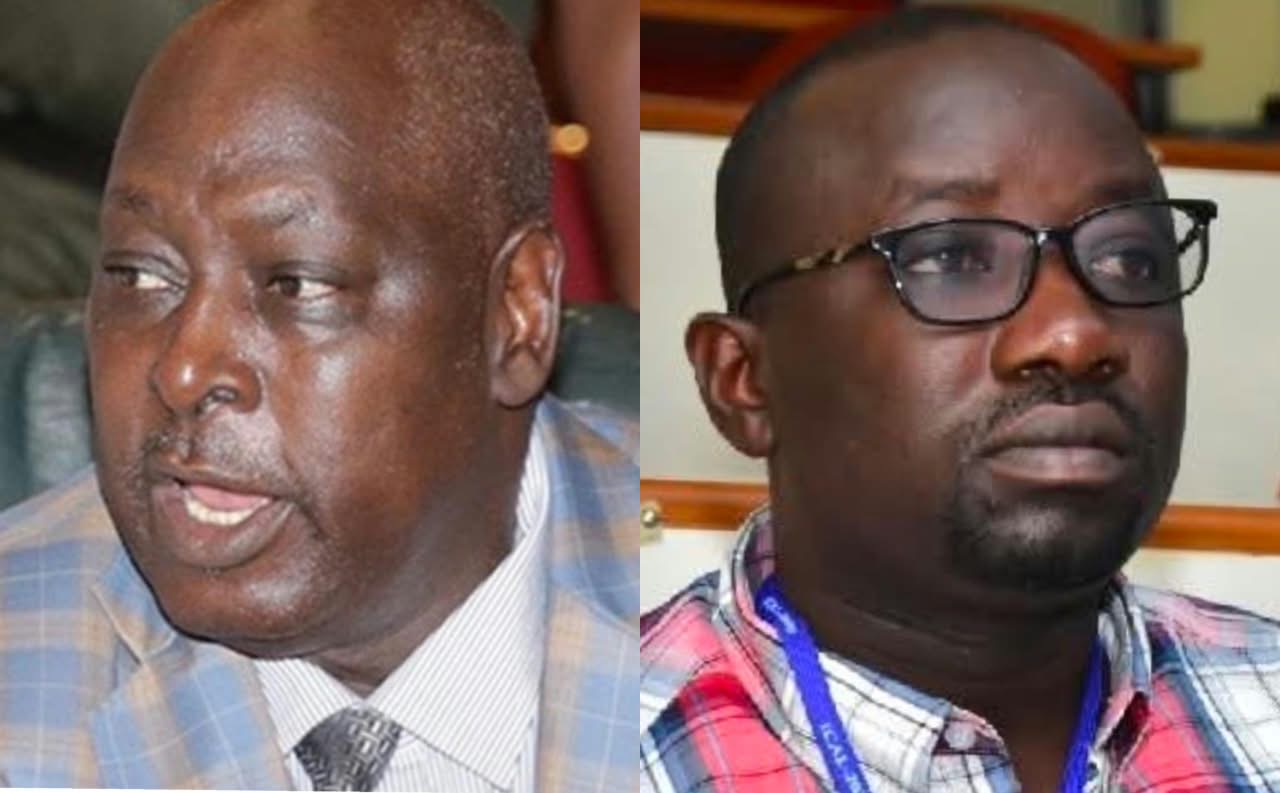
By Abubakar M. Kareto
There is a big difference between a new member who brings value and one who brings trouble. A good recruit brings numbers and votes; a bad one brings non-stop fights. For the past ten years, Engineer Babachir David Lawal has shown everyone where he stands. Political parties keep running after him because they are carried away by his big title: former Secretary to the Government of the Federation, self-styled northern Christian voice, and a man who knows how to hold a microphone. But by the time party leaders realise what is happening, it is always too late. The brief media buzz he generates is never worth the massive bill that follows him. He has a clear pattern: he enters a party, demands immediate operational control, takes sides in local fights, attacks stakeholders in the open, and walks away the moment things do not go his way. In the end, the host platform is left with court cases, parallel executives, alienated candidates, and endless press wars that do nothing to help the opposition defeat the ruling party.
Look at the APC, a house he actually helped build. Lawal started as an ANPP organiser for Muhammadu Buhari in Adamawa, followed the movement into the CPC, and sat on the merger committee that formed the ruling party. By 2015, he reached the top as SGF. That should have been his greatest achievement, but the office quickly became an embarrassment for the government. The Senate investigation into North-East contracts turned the grass-cutting affair into a national scandal. Following the recommendations of the Vice President Yemi Osinbajo investigative panel, Buhari suspended him in April 2017 and sacked him in October. Even though a court later discharged and acquitted him, the political damage was permanent. A public figure removed from the highest administrative office in the land carries heavy baggage, and any party forced to spend its time defending him has already paid a costly tax. In 2023, he broke away from the APC completely over the Muslim-Muslim ticket. He moved to support Peter Obi, rejected the declared results as outright fraud, and began tearing down the very party that made him nationally known. The builder simply turned into a demolition crew on live television.
The African Democratic Congress repeated the same mistake when they made him North-East vice chairman. Adamawa State did not get peace; it got institutional trench war. Lawal’s camp, Senator Aisha Binani’s structure, and rival claimants to the state executive fought dirty, resulting in court injunctions, parallel congresses, and angry walkouts by party stakeholders. When national coalition maneuvers and backdoor agreements favored Atiku Abubakar, Lawal dumped the ADC, shouting that the system was run by a rigging machine. The party was left holding the smouldering wreckage of its Adamawa chapter while its former zonal leader had already packed his bags looking for another platform. Then on 22 September 2026, the Nigeria Democratic Congress made the exact same blunder. Party leaders received him with excitement in Abuja, handed him control of the regional campaign apparatus, and expected sitting governorship candidates to fall in line. Within days, six of those candidates, led by Binani, issued a joint statement refusing to recognise him. Their reason was simple: party leaders did not consult them at all. Politics is local. The NDC did not gain a regional general; they sparked an internal mutiny before the campaign had even opened.
A politician who causes trouble and fractures three different platforms in four years is not just unlucky. He is simply too expensive and dangerous to keep. Even as a national commentator, you cannot rely on him. He is widely seen as someone who plays ethnic and religious politics rather than offering genuine national leadership. A real political party survives on unglamorous grassroots work: who controls the ward congresses, who delivers the delegates, and who can help candidates win in the villages. Lawal does not care about that slow process; he just wants to grab power from the top as soon as he arrives. Binani is not his rival because of political trivia; she proved her strength by building a massive statewide machinery and winning a historic governorship ticket in Adamawa. For the NDC to install Lawal over that same woman as regional supervisor was pure political malpractice. It was sacrificing dependable field soldiers for an Abuja armchair general.
His style of talking makes it impossible for people to settle disputes peacefully. Once he goes on television or social media calling colleagues a syndicate, a coven, or a rigging machine, there is no way for anyone to step down without feeling completely humiliated. How can an opposition coalition succeed when it relies on a man whose first reaction is to publicly destroy anyone who disagrees with him? Worse still, it destroys trust inside the party. Loyal members who have been sweating on the ground begin to lose faith in the national leadership. Candidates stop listening to Abuja because they feel big politicians are just brought in from outside to hijack their hard work. That kind of bad blood is fatal for an opposition that is already trying to survive ahead of 2027.
The point here is not about a prison sentence. The court sat and acquitted him, but a serious political party should not wait for someone to go to jail before knowing if he is an electoral liability. The real test is very simple: whenever Babachir Lawal enters a party, does he make it stronger or does he scatter it? The APC broke apart internally once he launched his bitter campaign against their ticket. The ADC in Adamawa was paralysed by parallel executives, while the national body was weakened when he walked away. And now, the NDC in the North-East has entered serious crisis within just one week of announcing him. Nigerian parties receive defectors all the time, but most politicians bring crowds and real votes. Lawal brings an entirely separate camp that immediately challenges the local leaders already working on the ground.
A politician removed by presidential panel from top office and constantly accused of stoking ethnic and religious division can never be a credible national voice for any serious party. If the NDC leaders thought they could use him as a respected elder or campaign asset, they read the political mood completely wrong. To make matters worse, they handed him control of the exact zone where his biggest political enemy operates. Babachir Lawal cannot bring people together; he can only polarise and divide. Making him a party leader is pure self-sabotage, because the party will spend all its time managing his personal fights instead of taking on the ruling government. The simple truth is clear for everyone to see: welcoming this guest always causes far more damage than any good it promises.
Abubakar M. Kareto is a Public Affairs Analyst and Communications Strategist focusing on governance, policies, economy, and institutional reforms across Nigeria and Africa. He can be reached on X @amkareto and via email at amkareto@gmail.com.