By Abubakar M. Kareto
For over a decade and a half, Borno State has stood as the epicenter of the Boko Haram insurgency. While public discussions often center on casualty figures, counter-insurgency operations, and displacement statistics, an equally devastating economic reality remains overlooked. The persistent state of insecurity has created a heavy fiscal burden, forcing the state government to redirect critical public funds away from long-term developmental projects toward urgent humanitarian relief, community resettlement, and security logistics.
In standard public finance, state governments deploy their capital budgets toward projects that generate long-term economic growth. These include regional transport corridors, commercial agriculture, industrial parks, advanced healthcare facilities, and modern learning institutions. In Borno, however, governance has had to operate under an emergency fiscal regime. Over the past seven years, roughly seventy percent of the state’s total budgetary allocations have gone directly into security operations, internally displaced persons management, relief distribution, and basic physical reconstruction.
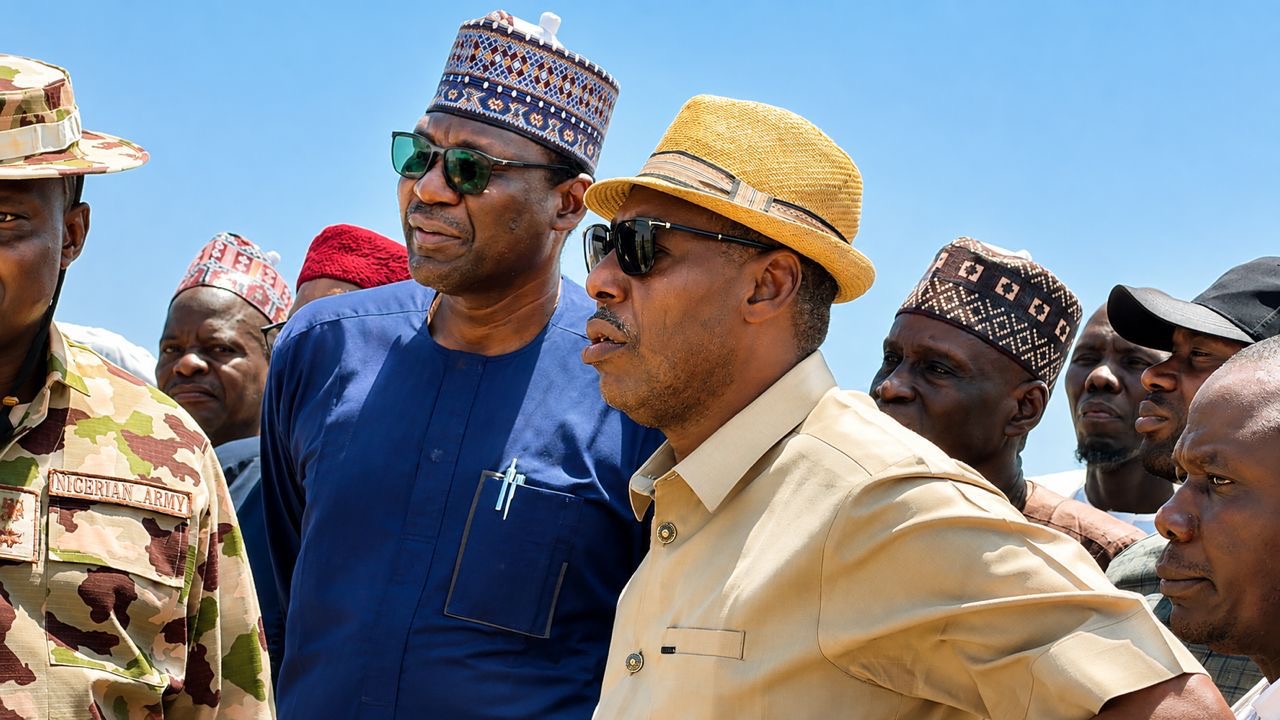
This reality creates a continuous cycle where public spending merely replaces destroyed assets rather than expanding the state’s economic base. The recent high-level assessment in Mallam-Fatori, the headquarters of Abadam Local Government Area, illustrates this challenge. As a border community with direct links to the Niger Republic, Mallam-Fatori once served as a vital commercial transit point. Insurgent violence reduced its public institutions to rubble. The state government must now fund the complete rebuilding of primary and secondary schools, an Islamiyya school, and a primary healthcare facility to enable displaced residents to return.
While these investments are necessary to restore human dignity, they represent replacement expenditure. When public revenue is repeatedly spent to rebuild the exact same facilities across multiple local government areas, net developmental progress grinds to a halt. Capital that should fund commercial irrigation projects across the Lake Chad Basin or establish processing factories is consumed by basic reconstruction materials, security trenches, and emergency housing.
This sub-national security burden is practical, expensive, and relentless, demanding direct funding from the state treasury to sustain both federal armed forces and local auxiliary formations. The administration frequently procures and delivers customized tactical gun trucks, patrol fleets, and surveillance hardware directly to Operation Hadin Kai, the Nigeria Police Command, and the Rapid Response Squad to secure vulnerable transit highways. Alongside these hardware procurements, Governor Zulum regularly provides direct operational allowances, camp utilities, and financial interventions to frontline military units, while sustaining thousands of Civilian Joint Task Force members and local hunters with monthly stipends, uniforms, and equipment. Beyond active operational costs, the state also bears long-term social liabilities by funding multi-million Naira bereavement packages for the families of fallen military officers and comprehensive educational scholarship schemes for the orphaned children of slain volunteers.
Yet, despite this exhausting expenditure on security, relief, and reconstruction, the Borno State Government has demonstrated remarkable fiscal dexterity by driving visible urban modernization. The transformation of Maiduguri and other key regional centers is unmistakable, characterized by massive flyover bridges, extensive dual-carriageway networks, state-of-the-art mega schools, and modern vocational institutes. This dual-track approach, balancing emergency survival in the hinterlands with ambitious capital modernization in urban centers, proves what Borno could accomplish if unburdened by conflict.
However, sub-national ingenuity has structural limits, and the sustainability of this progress now rests squarely on federal action. The Federal Government must step up its strategic obligations by decisively securing the liberated and resettled communities along border corridors. National defense architecture must deploy permanent garrisons, secure agricultural perimeters, and restore economic corridors so that returning populations can safely resume farming and trade. Borno cannot indefinitely shoulder the sovereign security bill of the nation. Until the federal authorities provide airtight protection across these frontier towns, the state’s reconstruction efforts remain in perpetual vulnerability.
Borno cannot achieve lasting economic transformation while carrying an open-ended emergency tax on its public purse. Defeating insurgency requires full federal military enforcement alongside the liberation of sub-national finances, allowing the state to redirect its full wealth toward sustainable, wealth-creating development.
About the Author
Abubakar M. Kareto is a Public Affairs Analyst and commentator on governance, policy, and media dynamics. He can be reached via email at amkareto@gmail.com and on X (formerly Twitter) @amkareto.