By Abubakar M. Kareto
For over 10 years, governance across the North-East has operated under the psychology of emergency. State administrations functioned as isolated islands, bogged down by the daily pressures of security containment and dependent on monthly federal handouts. Even more frustrating has been the track record of the North-East Governors’ Forum itself. Since its inception in 2020, the forum has struggled with consistency. Meetings have often been sporadic, delayed by political distractions or electoral cycles, leaving citizens skeptical about whether their leaders possess the sustained institutional stamina to sit together, track commitments, and push through long-term regional development.
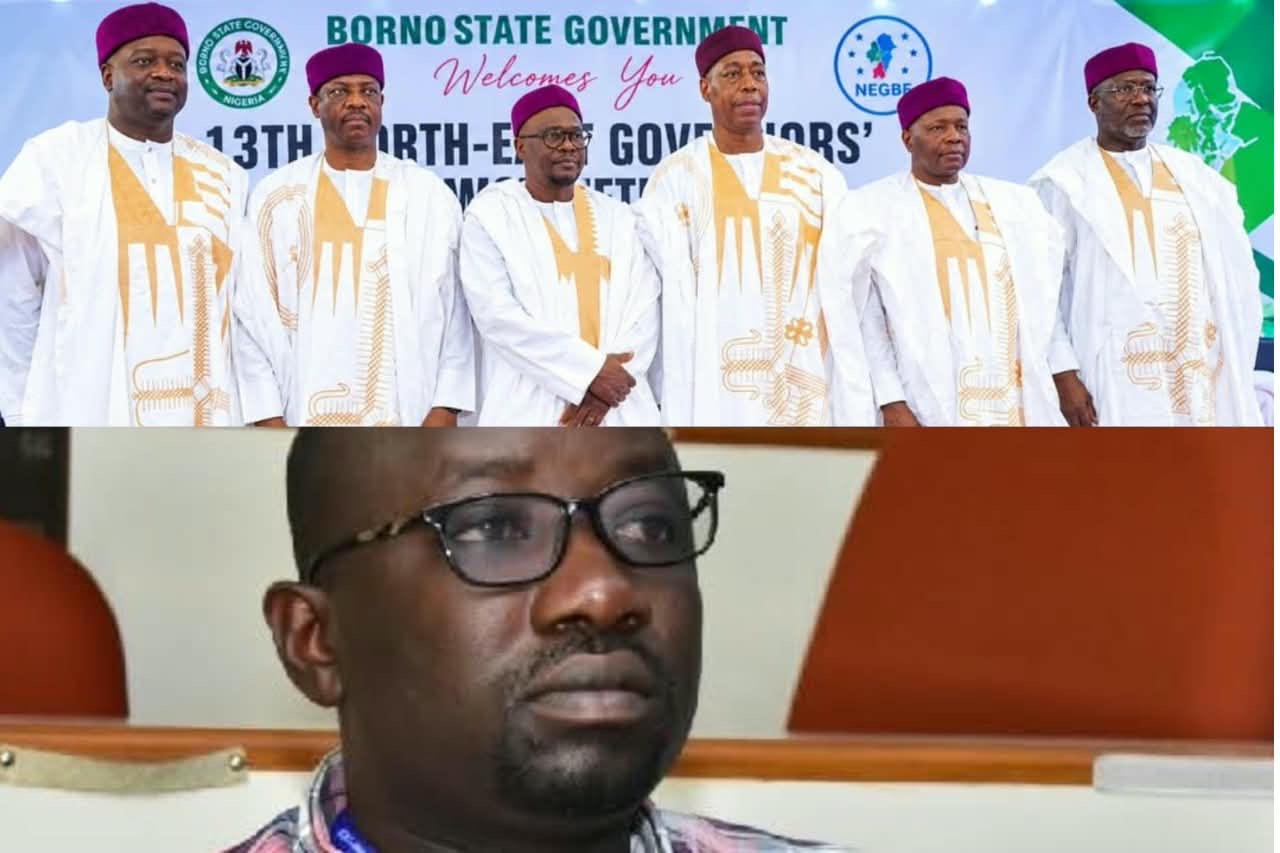
The 13th meeting held in Maiduguri offers a different, more promising signal. Much of the credit for keeping this fragile alliance alive belongs to Borno State Governor Professor Babagana Umara Zulum. His direct, no-nonsense leadership has provided the anchor the forum desperately needed, pulling his peers back to the table and forcing a shift in thinking. Under his chairmanship, the 6 governors are attempting something that Nigerian regional blocs frequently preach but rarely deliver: shifting from crisis containment to coordinated regional capitalism.
The core of this new strategy lies in energy federalism. Under the Electricity Act, sub-national governments are no longer captive bystanders to a fragile, centralized national grid. The Dadin Kowa plant in Gombe has established that sub-national power generation can deliver tangible megawatts. Yet, the real test of the forum’s collective influence sits in the high hills of Taraba. The 3,050-megawatt Mambilla Hydropower Project has survived decades of legal wrangling, abandoned site promises, and bureaucratic inertia in Abuja. Clearing its legal hurdles is a vital step, but it is only paper. Unless the governors use their combined political weight to secure sovereign federal financing guarantees, Mambilla will remain a monument to unfulfilled potential. In the interim, tapping the vast solar belt across the region through off-grid and mini-grid installations is the only realistic way to power cottage industries and irrigation belts.
Energy without movement is dead capital, and the logistics plan adopted in Maiduguri tackles a harsh economic geography. The region spans over 270,000 square kilometres, marked by rough terrain, security checkpoints, and soaring post-subsidy transport costs. Introducing Compressed Natural Gas corridors alongside the 10,000 electric tricycles, 300 electric taxis, and 10 electric buses provided through the North East Development Commission will offer immediate cost relief for working-class families and smallholder farmers moving goods to local markets. The proposal for an intra-regional air shuttle will inevitably attract criticism from skeptics who see it as an elite luxury. Yet in a vast territory where highway transit often means losing entire business days or navigating lingering security blind spots, rapid commercial connectivity between Maiduguri, Yola, and Gombe is a basic tool for regional trade.
Resource pragmatism also anchors this new agenda. While global climate debates advocate for rapid decarbonization, the governors recognize that the sub-region cannot afford ideological purity. Calling for the sustained development of the Kolmani field and the resumption of crude exploration in Borno’s Magumeri and Gubio basins is an effort to secure local feedstock. Natural gas and petroleum discoveries within the Chad Basin can provide the domestic energy and internal revenue required to fund public infrastructure without waiting for unpredictable allocations from the Federation Account.
The real threat to this entire economic architecture is demographic. The North-East possesses one of the youngest populations on the continent. Left unskilled and unemployed, these young men and women represent a persistent vulnerability that no military operation can permanently neutralize. The forum’s commitment to vocational skills, technological training, and modern education is an existential necessity. Lasting peace is not sustained by soldiers on patrol; it is maintained when a young person has a productive trade and a predictable income.
The ambition laid out in Maiduguri is clear, but the graveyard of Nigerian public policy is littered with eloquent communiqués. The hard work begins now. If the forum has been guilty of inconsistency in the past, it cannot afford that luxury anymore. Cross-border initiatives across 6 states require an institutional engine, not just periodic handshakes. The governors must establish a joint, permanent technical secretariat backed by binding state legislation to survive political transitions and party rivalries. More importantly, they must pool sovereign capital into a joint regional infrastructure fund to attract serious private sector co-investment.
Where there is political will, there is always hope. The North-East has endured unimaginable hardship, yet the resolve displayed by its leadership in Maiduguri proves that despair is not destiny. If the governors sustain the focus demanded by Zulum and match their words with concrete financing, this blueprint can transform the region from a humanitarian zone into an economic powerhouse. The real evaluation of their work will not happen at their 14th meeting in Gombe through another communique, but in the actual factory chimneys smoking, cheaper freight moving on the roads, and kilowatts lighting up rural communities.
Abubakar M. Kareto is a Public Affairs Analyst and Communications Strategist focusing on governance, policies, economy, and institutional reforms across Nigeria and Africa. He can be reached on X @amkareto and via email at amkareto@gmail.com.