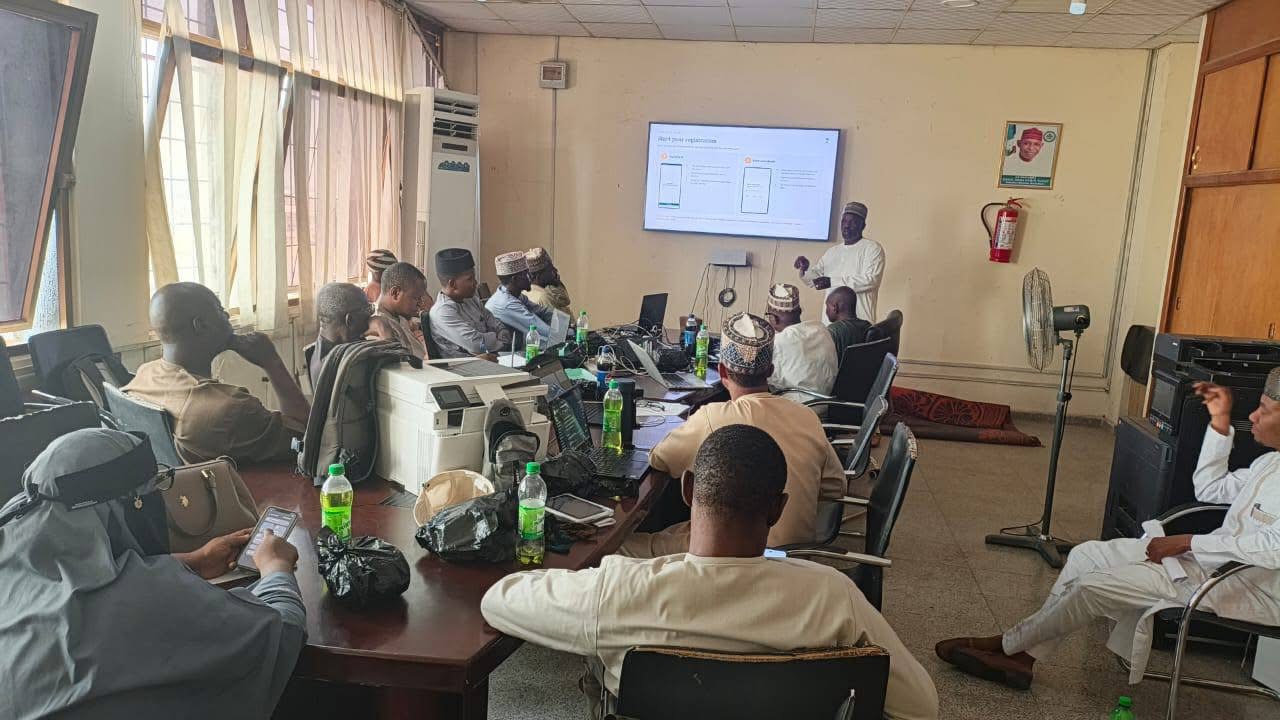
The Kano State Ministry of Education, with support from UNICEF Nigeria, has trained 20 master trainers on the implementation and effective utilisation of the Nigeria Learning Passport (NLP) in the state.
The one-day capacity-building workshop focused on strengthening digital literacy and equipping the master trainers with the skills required to support the effective use of the digital learning platform in schools.
Speaking at the training, the Deputy Director, Education Management Information System (EMIS) and Statistics and lead component for Nigeria Learning Passport in Kano, Malam Naziru Surajo, said the 20 master trainers were expected to train 500 teachers on digital literacy.
He said the trained teachers would, in turn, train about 70,000 primary and secondary school pupils and students across the state.
According to Surajo, certificates would be issued to students at the end of the programme.
He described the Nigeria Learning Passport as a digital learning platform designed to provide Nigerian children and young people with access to curriculum-aligned educational content, including lessons, learning materials and assessments.
He added that the platform was also designed to support learning continuity, particularly for learners facing limited or intermittent internet connectivity, while providing teachers and other education stakeholders with digital resources to complement classroom instruction.
Surajo said the initiative in Kano was expected to strengthen awareness and utilisation of digital learning, while building the capacity of master trainers and technical teams to support schools, teachers and learners in using the platform effectively.
He said effective utilisation of the Nigeria Learning Passport would expand access to quality digital learning resources, promote independent learning, strengthen digital literacy and contribute to improved learning outcomes.
The initiative, he added, would also promote greater equity in access to educational opportunities for learners across the state.