By Abubakar M. Kareto
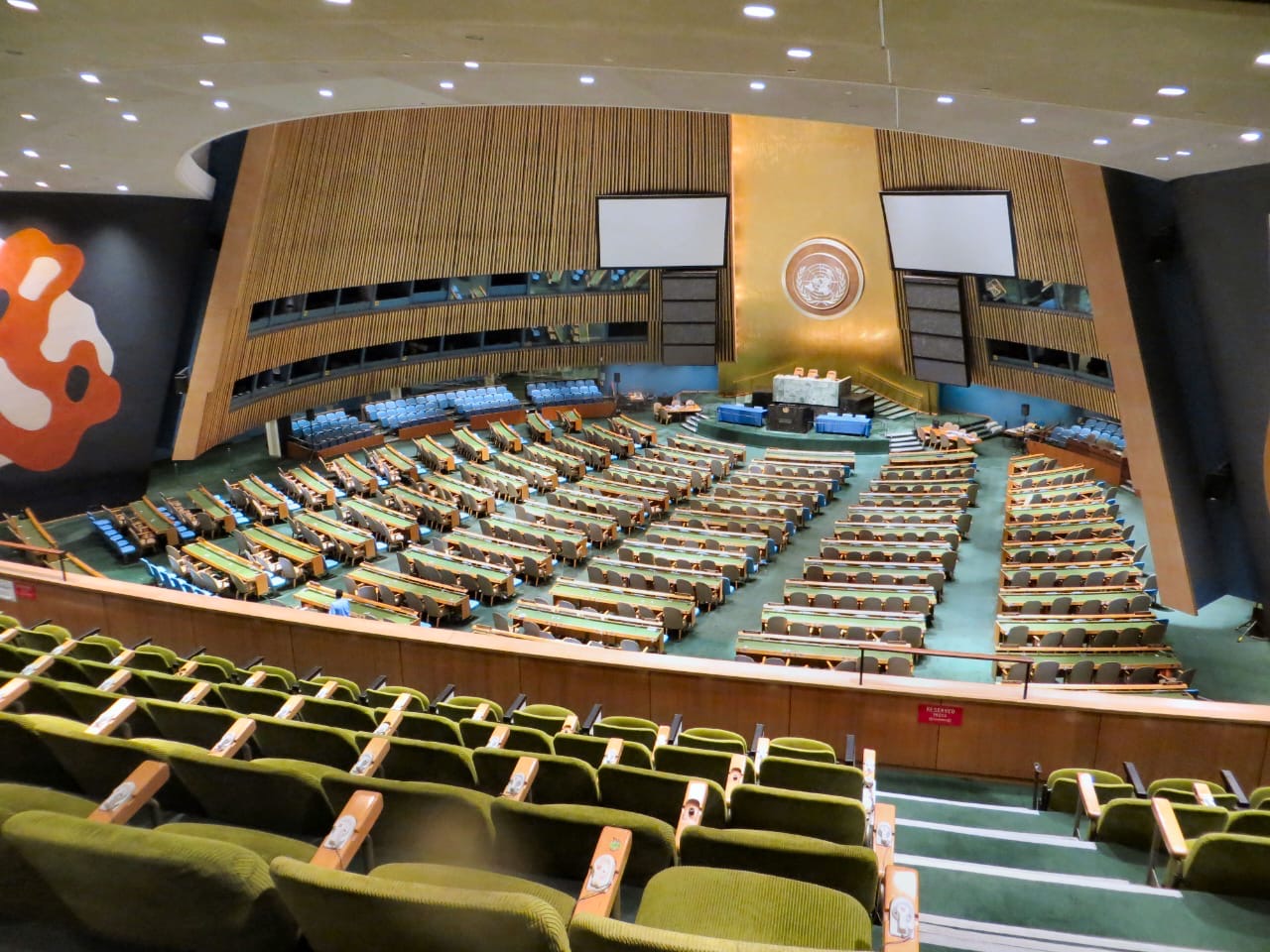
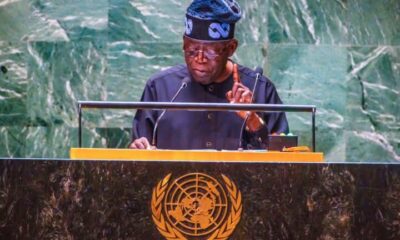
When the United Nations was forged in the smoldering aftermath of global catastrophe in 1945, its foundational covenant was codified with unambiguous clarity: humanity would outlaw the right of conquest, dismantle the ancient doctrine of imperial predation, and commit sovereign nations to the peaceful adjudication of conflict. For eight decades, that consensus has weathered seismic ideological fractures, proxy confrontations, and structural cynicisms. Yet never has the foundational instrument of the modern international order been so brazenly deconstructed in its own physical sanctuary as it was this week. Standing before the iconic green marble rostrum of the United Nations General Assembly, United States President Donald J. Trump delivered an address that did not merely challenge the multilateral order; it performed a public execution of the United Nations Charter.
The legal demolition began with an explicit existential threat issued from a stage specifically established to banish such language from diplomatic discourse. Pondering whether to incinerate the Islamic Republic of Iran and drive an entire nation into hell with no hope of future generations, the American president struck at the very jugular of Article 2, Paragraph 4. The Charter explicitly binds all sovereign members to refrain in their international relations from the threat or use of force against the territorial integrity or political independence of any state. By transforming the podium into an altar of preemptive obliteration, the speech violated not only Article 2(3) on the peaceful settlement of disputes but the overarching mandate of Article 1(1) to maintain collective peace. When the head of state of the UN’s primary host nation openly contemplates total annihilation, the presumption of international law ceases to function as a deterrent; it degrades into a suggestion.
The assault progressed seamlessly from the Persian Gulf into the Caribbean Basin, where the bedrock principle of non-intervention was treated as an obsolete inconvenience. Proclaiming that his administration is pursuing fundamental change in Havana and declaring that the sovereign state of Cuba is doomed to fall, Trump stripped away even the diplomatic pretense of respecting the self-determination of peoples codified under Article 1, Paragraph 2. The sovereign equality of nations, enshrined under Article 2(1), was systematically substituted with an unabashed assertion of hemispheric policing. When great powers reserve the prerogative to declare foreign governments illegitimate and mark them for forced collapse, the rules-based order dissolves into an empire of spheres, where geographic proximity to a superpower nullifies the legal shields of smaller states.
That imperial logic found even sharper militarized expression in the unilateral redefinition of global law enforcement. Announcing the deployment of armed forces to execute lethal strikes across maritime boundaries and designating regional criminal cartels as enemy combatants marked for summary elimination or indefinite extrajudicial detention, the rhetoric bypassed the entire legal architecture of international conflict resolution. The United Nations Charter was engineered precisely to prevent states from arrogating to themselves the authority to wage war across international waters under the cover of domestic security declarations. Discarding the requirement to settle disputes through peaceful, legal, and cooperative multilateral frameworks under Article 2(3) codifies an unsettling doctrine: the global commons belong only to those with the naval tonnage to enforce their will.
Yet it was the celebratory autopsy of Venezuela’s sovereignty that delivered the most fatal blow to the post-war legal architecture. Recounting deep military incursions into the Venezuelan capital to arrest an adversary and subsequently boasting of capturing tens of billions of barrels of foreign crude under the medieval banner of “to the victor belong the spoils,” the address completed a terrifying doctrinal regression. The entire edifice of post-1945 jurisprudence—from the Nuremberg Principles to the Geneva Conventions—was erected explicitly to criminalize wars of aggression fought for resource expropriation. To boast of military intervention as an investment prospectus, executed to extract oil concessions on an unprecedented scale, is to reinstate the 19th-century law of the jungle at the heart of the 21st century’s premier legal chamber.
This spectacle presents the developing world, and the African continent in particular, with a chilling reckoning. For decades, the Global South has endured the lecture of rules-based governance while navigating the structural hypocrisy of the UN Security Council’s veto monopoly. But the events in New York this week strip away the final layer of institutional decorum. African nations—who constitute over a quarter of the assembly yet wield zero permanent veto power—are summoned to Midtown Manhattan not as equal sovereign partners, but as an optical audience assembled to legitimize great-power predation. If international law can be publicly violated four times over in forty-five minutes without institutional consequence, the multilateral covenant no longer offers protection to the vulnerable.
The broader geopolitical consequence is an irreversible acceleration of global fragmentation. When the principal architect of the United Nations publicly scoffs at sovereign equality, non-intervention, and the prohibition of conquest, it sends an unmistakable signal to the rest of the world: reliance on the Charter is a strategic vulnerability. This posture validates the massive global pivot toward multi-alignment, bilateral transactionalism, and alternative coalitions like the expanded BRICS bloc. Sovereign nations can no longer afford to outsource their security guarantees or economic vitality to an institution that sits paralyzed while its foundational charter is shredded from its own lectern.
The lesson of this General Assembly is as sobering as it is absolute. The green marble rostrum is no longer the sanctuary of collective security; it is a monument to the primacy of raw coercion over codified right. The era of sentimental multilateralism is dead, buried under the rhetoric of annihilation and plunder. For African states and the wider Global South, survival in this emergent international disorder will not be won through eloquent appeals to treaties that the powerful discard at whim. It will require cold, unapologetic realpolitik, calculated strategic hedging, and the urgent construction of sovereign economic leverage before the spoils of the next conquest are taken from our own soil.
Abubakar M. Kareto is a Public Affairs Analyst, Commentator, and Communications Strategist. His focus includes governance, policy, politics, economy, and media dynamics in Nigeria and Africa. He can be reached via email at amkareto@gmail.com and on X @amkareto.