By Abubakar M. Kareto
The recurring waves of anti-migrant hostilities in South Africa represent a deeply embarrassing situation for the African continent. When foreign nationals, many of whom are fellow Africans, face targeted violence, harassment, or displacement, it directly undermines the foundational ideals of Pan-African solidarity, free movement, and economic integration.
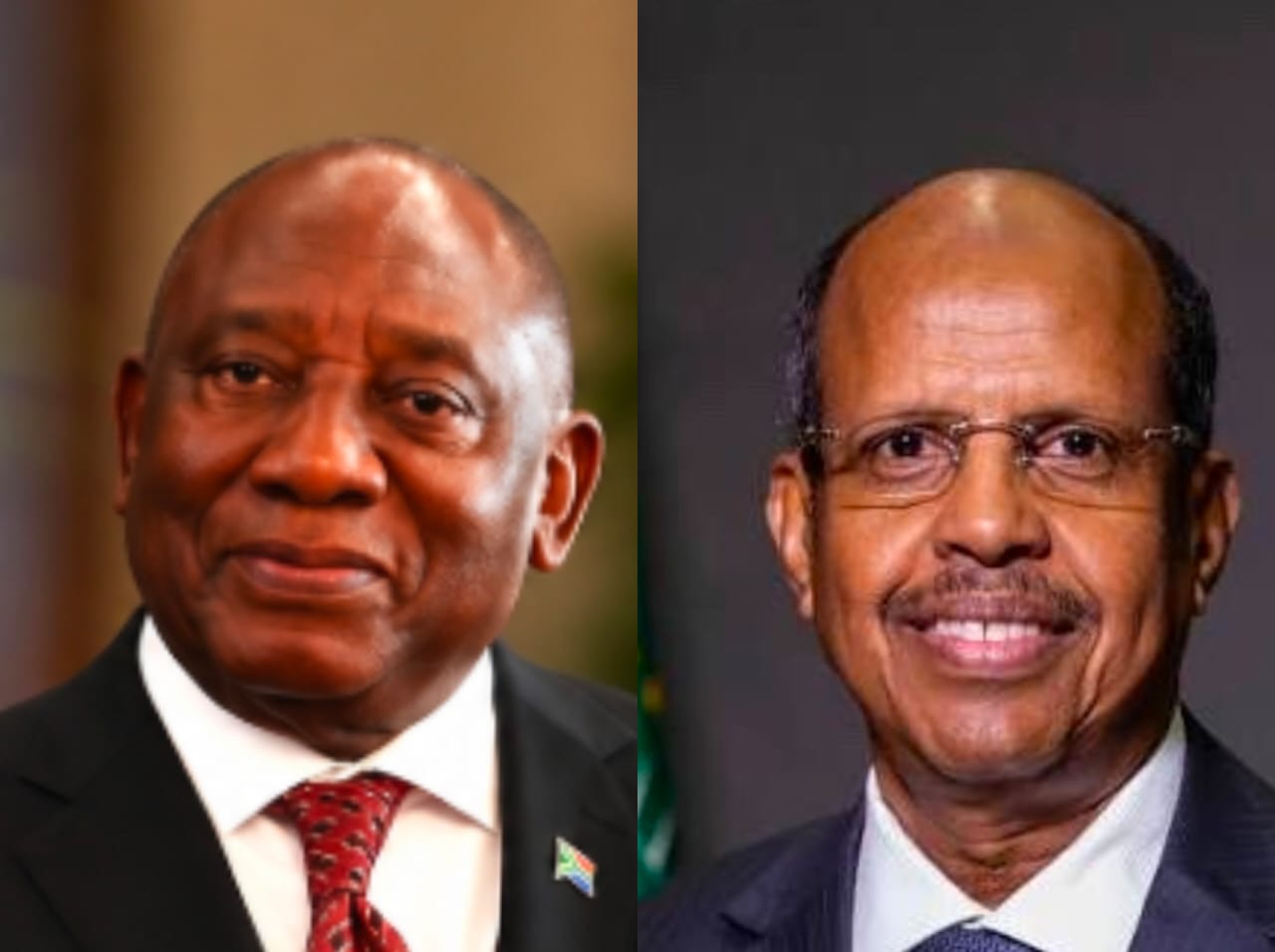
The recent statement by the Chairperson of the African Union Commission, Mahmoud Ali Youssouf, acknowledging the severity of these attacks and committing to engage South Africa at the continental level, is a necessary step. However, an objective public policy analysis requires looking beyond surface-level outrage and examining the complex political, social, and economic forces driving this unrest.
Beyond Individual Blame: The Vulnerabilities of Populist Democracy
It is easy to isolate President Cyril Ramaphosa and place the entire blame on his administration in Pretoria. Yet, a rigorous analysis shows that Ramaphosa is operating within the rigid political incentives of an electoral democracy. When a government faces overwhelming public pressure, political leaders often bend to majority sentiment, even when that sentiment is driven by misplaced anger and mob mentality.
This dynamic illustrates one of the fundamental vulnerabilities of democratic systems: the temptation to follow the crowd rather than lead with uncomfortable truths. Scapegoating foreign nationals becomes a convenient political tool for local groups and political actors seeking quick popularity. Blaming immigrants allows political leaders to deflect attention away from decades of policy failures, systemic corruption, and severe infrastructure deficits.
The Socio-Economic Engine: What the Numbers Show
Hostility toward migrants does not happen in a vacuum. It is continuously fueled by stark economic numbers that reveal a society struggling to absorb its own population.
Data from Statistics South Africa shows that the official national unemployment rate remains exceptionally high at around 32.9 percent, while the expanded definition, which includes discouraged job seekers, exceeds 42 percent. The situation is far worse among the younger population. Youth unemployment for individuals aged 15 to 24 sits above 60 percent, leaving millions of young people without formal jobs, education, or skill acquisition opportunities.
When more than six out of ten young citizens lack economic prospects, widespread frustration inevitably spills into the streets. In lower-income townships, this frustration manifests as violent competition for informal retail markets, service jobs, and stretched public amenities. Reports indicating that over 160,000 foreign nationals have been displaced or forced to leave the country in recent months demonstrate the immense human cost of this structural crisis.
Moving Past the Legacy of Apartheid Through Education
For South African society to move forward, its people must stop allowing the psychological legacy of Apartheid to dictate contemporary attitudes. Decades of institutionalized segregation, inequality, and spatial exclusion left deep historical wounds. However, turning inward and directing economic grievances against fellow Africans is a short-sighted reaction that prevents genuine national progress.
Apartheid ended over three decades ago, and continuing to let historical trauma serve as an indirect excuse for xenophobic attacks blocks long-term development. The sustainable solution requires massive institutional investment in education, technical training, and skills acquisition.
South Africa must upgrade its educational systems to equip its youth with modern skills tailored for industrial growth, technology, and entrepreneurship. Foreign traders running small local shops are not the root cause of South Africa’s economic stagnation. The real bottleneck is an underperforming educational pipeline and sluggish private-sector job creation.
Diplomatic Wisdom: How the African Union Must Step In
The intervention of the African Union under Mahmoud Ali Youssouf is essential, but it must be executed with high diplomatic tact and wisdom. A purely confrontational or aggressive stance toward Pretoria will only trigger defensive nationalism among the local population and alienate South African authorities.
The African Union Commission should focus on constructive, institutional solutions. The AU ought to partner with South Africa to establish clear continental frameworks for labor migration, border management, and intelligence cooperation to address criminal networks without demonizing law-abiding African migrants.
At the same time, regional partners across West, East, and Central Africa must work with Pretoria through official diplomatic channels. Tabling this matter at the AU summit will give South Africa a formal platform to address its internal economic pressures while firmly committing to uphold human rights and regional integration agreements.
African progress cannot occur in an environment where citizens of one nation view neighboring Africans as threat vectors. It is time for South Africa to reject myopic scapegoating, invest heavily in the education of its young people, and step up as a pillar of a united and prosperous continent.
About the Author
Abubakar M. Kareto is a Public Affairs Analyst and Strategic Communications Strategist focusing on continental, national, and sub-national governance, socio-economic issues, and public policy dynamics across Nigeria and Africa.
X (formerly Twitter): @amkareto
Email: amkareto@gmail.com