By Abubakar M. Kareto
For decades, the economic narrative of Northern Nigeria was spun on the spindles of world-class textile mills and written across sprawling fields of white gold. From the vast cotton belts of Funtua, Gusau, Gombe, and Kano to the industrial hub of Kaduna, the region stood as an undisputed manufacturing powerhouse. At its peak between the 1970s and late 1980s, Nigeria hosted over 175 integrated textile mills, employing well over 350,000 direct industrial workers, generating over $2 billion in annual turnover, and sustaining millions of indirect livelihoods for smallholders, ginners, and traders. Kaduna alone earned the proud moniker of the Manchester of West Africa, anchored by industrial giants like Kaduna Textiles Limited, Arewa Textiles, United Nigerian Textiles Limited, and Nortex. Cotton was not merely a cash crop; it was the lifeblood of regional solvency, rural prosperity, and social stability.
The systemic collapse of this vital sector over the past three decades remains one of the most painful industrial setbacks in West African history. Today, Nigeria’s annual lint cotton output hovers below 80,000 metric tons, a dramatic decline from historical heights, while the nation spends an estimated $2 billion annually importing processed textiles and used clothing. A combination of unchecked smuggling, severe power infrastructure gaps, policy flip-flops, and an uncritical reliance on exporting raw commodities dismantled the domestic value chain. Mills shuttered their gates, vast cotton fields lay fallow, and thousands of skilled workers were plunged into unemployment. Yet, the intrinsic agricultural potential of Northern Nigeria remains intact. The region retains over 60 percent of the nation’s fertile arable land, ideal agro-climatic conditions for cotton cultivation, and millions of energetic young people eager for productive work.
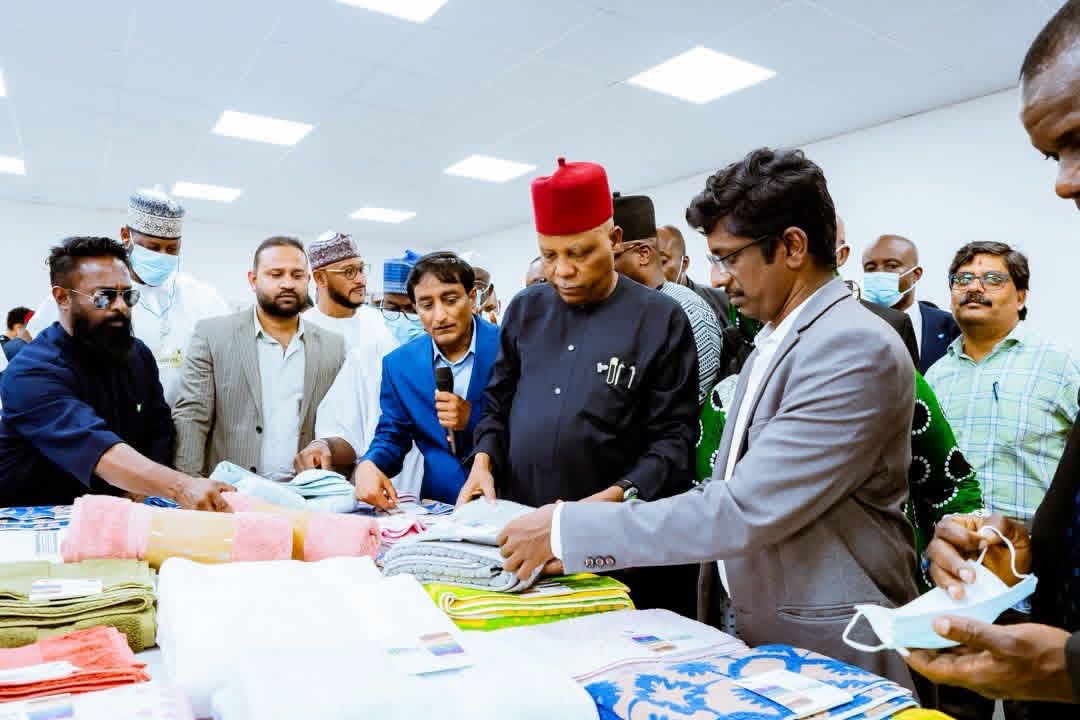
It is against this backdrop of untapped potential that the recent high-level economic mission led by Vice President Kashim Shettima demands national commendation. Leading a delegation of state governors to inspect the Glo-Djigbé Industrial Zone in Cotonou, Republic of Benin, the Vice President demonstrated a pragmatic, hands-on approach to economic leadership. Rather than relying on theoretical white papers, Vice President Shettima took subnational leaders directly to the frontline of West Africa’s modern industrial transformation. This strategic peer-learning initiative reflects a deliberate commitment to shifting Northern Nigeria away from economic apathy toward an aggressive industrial rebirth.
The rationale for examining the Beninese model is compellingly supported by hard data. Over the past decade, Benin Republic underwent a remarkable agricultural and industrial overhaul, emerging as Africa’s leading producer of seed cotton, with annual yields climbing from 450,000 metric tons in 2016 to over 700,000 metric tons in peak seasons. For years, however, Benin suffered from the same structural trap that plagues much of the continent: exporting nearly 100 percent of its raw ginned cotton to foreign markets, only to import expensive finished garments. To break this cycle, Benin established the 1,640-hectare Glo-Djigbé Industrial Zone in partnership with Arise IIP. Within just three years of operation, the zone began transforming the country’s economic baseline. Designed to process up to 40,000 tons of raw lint cotton annually across its first-phase integrated mills, the zone produces millions of meters of sheeting fabric, thousands of tons of high-grade yarn, and millions of ready-to-wear apparel items. Global retail brands have already contracted multi-million-piece apparel orders from the facility, proving that West Africa can meet rigorous international garment manufacturing standards.
The lessons from Benin Republic deliver a stark truth: raw commodity export is economic leakage, while localized, vertically integrated processing is the true engine of wealth creation. Out of the $370 billion global trade in cotton products, Africa benefits from only about one percent, primarily because raw lint accounts for a small fraction of total financial value. The overwhelming share of capital, foreign exchange, and employment resides in spinning, weaving, dyeing, and garment assembly. Seeing a neighboring nation transform its economy by mastering this exact chain provides both a challenge and an undeniable blueprint for Northern Nigeria.
The insights gathered from Cotonou must not be allowed to gather dust in administrative archives. Northern Nigeria possesses a vastly superior landmass, a larger labor force, and a deeper domestic consumer market than Benin Republic. To convert this potential into prosperity, the delegation’s visit must immediately translate into a strategic economic roadmap across Northern states. First, Northern governors must set aside dedicated, secure land belts for cotton farming and processing along historic cotton-growing corridors, complete with streamlined titling, tax incentives, and robust security coverage. Second, addressing the historical flaw of power instability requires state governments to partner with private developers to anchor these processing zones with dedicated off-grid solar, gas, or hydro-power generation to guarantee uninterrupted industrial output at competitive tariffs. Finally, smallholder farmers must be supported with high-yield seed varieties and guaranteed offtake agreements, positioning Northern Nigeria as a dominant apparel supplier under the African Continental Free Trade Area, which serves a market of 1.3 billion consumers.
Vice President Kashim Shettima has set the direction, provided the vision, and opened the door to regional industrial integration. The responsibility now rests on the Northern Governors’ Forum, private investors, and policy strategists to execute this transition with single-minded urgency. Northern Nigeria built the original industrial foundation of the nation on the back of the cotton ecosystem, and with deliberate policy execution, it can do so again. By converting raw agricultural strength into modern manufacturing power, the region can revive its legendary factories, employ its youth, and once again lead West Africa’s industrial renaissance.
Author’s Bio:
Abubakar M. Kareto is a Public Affairs Analyst and Communication Strategist. His expertise is in National, Subnational, and Continental Governance, Development, and Security Issues. He can be reached via Email: amkareto@gmail.com or on X (formerly Twitter): @amkareto