~ Abubakar M Kareto
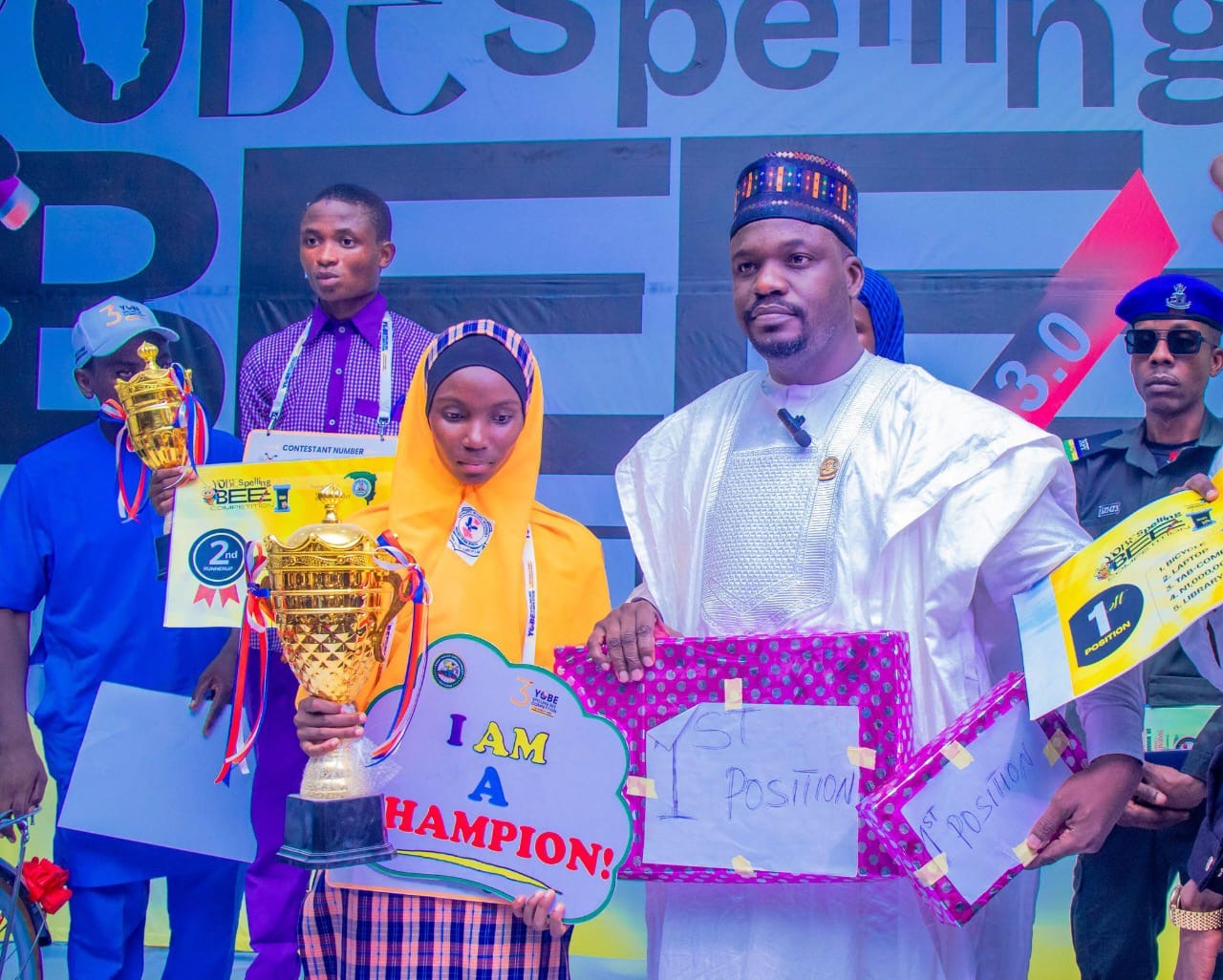
For decades, external narratives framing northeastern Nigeria were routinely restricted to grim statistics of conflict, displaced communities, and infrastructural deficits. Yet, true societal rebuilding does not happen solely through the reconstruction of roads or physical structures; it is fundamentally realized through the quiet, methodical rehabilitation of human intellect. In a region where anti-education dogma once sought to extinguish the light of learning, every child stepping onto a stage to articulate, spell, and master language represents an ideological victory. The conclusion of the 3rd Yobe State Spelling Bee Competition at Government Girls Unity College, Damaturu, provides undeniable proof that the state has decisively crossed a critical threshold. It is no longer an era of tentative optimism or patronizing clichés; the young have not just promised to grow, the young have grown.
Having served as the Chief Judge in the preceding edition of this competition, I followed this year’s proceedings with intimate appreciation and professional scrutiny. What unfolded was nothing short of an intellectual festival. Watching the sharp, disciplined poise of 144 pupils drawn from public, private, and special schools across all 17 local government areas, one fact became glaringly obvious: Yobe has designed a rigorous, inclusive model worthy of national emulation. This is an arena that restores radical hope to the perceived village kids and children living with disabilities, proving that raw brilliance knows no social boundary when given a fair platform. It is thoroughly entertaining, encouraging, and deeply uplifting to watch young minds tackle complex words with unflinching composure.
The clean sweep of the top 3 spots by Nguru Local Government Area, led by champion Zainab Mohammed Grema of Reading Model School, followed by Mohammed Ishaq Madaki and Aisha Mohammed Alah, speaks volumes about organic, grassroots depth. It proves that the pedagogical revival is not confined to executive enclaves in the capital, but has ignited a chain reaction across rural classrooms, motivating teachers and communities to demand more from their pupils.
This transformation did not occur by accident. This program was conceived by Dr. Mohammed Goje long before now. He sustained and improved it during his tenure heading the State Emergency Management Agency (SEMA), transforming an emergency recovery initiative into what has today matured into an inspiring national benchmark. Dr. Goje is indeed a consummate system improver whose execution capacity turns innovative concepts into institutional realities. Equally vital has been the steady hand of Governor Mai Mala Buni, whose encouraging support all through has provided the political will and resources necessary to place human capital at the absolute peak of governance.
The ripple effect is already commanding substantial private sector confidence, exemplified by corporate partners like the Nigeria Food Corporation stepping forward with a 20 million Naira commitment. When serious capital begins investing in cognitive arenas rather than routine handouts, it signals a profound shift. Furthermore, with Yobe students already securing podiums in global competitions such as the Teen Eagle contest in the United Kingdom, Damaturu is demonstrating that rural Nigerian children can seamlessly stand shoulder to shoulder with the brightest minds on earth.
The rest of the North East and indeed Northern Nigeria must observe what Yobe is achieving and take notes. Post-conflict reconstruction without aggressive cognitive investment is a hollow strategy. By establishing this high-stakes intellectual festival as an enduring civic tradition, Yobe State has proven that rigorous meritocracy will thrive where skeptics once predicted ruin. The foundation is solid, the standard is set, and the standard-bearers are already stepping onto the world stage.
Abubakar M. Kareto is a Public Affairs Analyst and commentator on governance, policy, politics and media dynamics in Nigeria and Africa. He can be reached via email at amkareto@gmail.com and on X @amkareto.