By Abubakar M. Kareto
In the noise of modern political commentary across Nigeria’s media landscape, public discourse frequently collapses into emotional taking of sides. When serious claims involving national security, terror financing, and missing billions dominate headlines, the duty of an objective analyst is not to wave a banner for any politician, but to stress-test those claims against procedural facts, security protocols, statutory law, and basic logic.
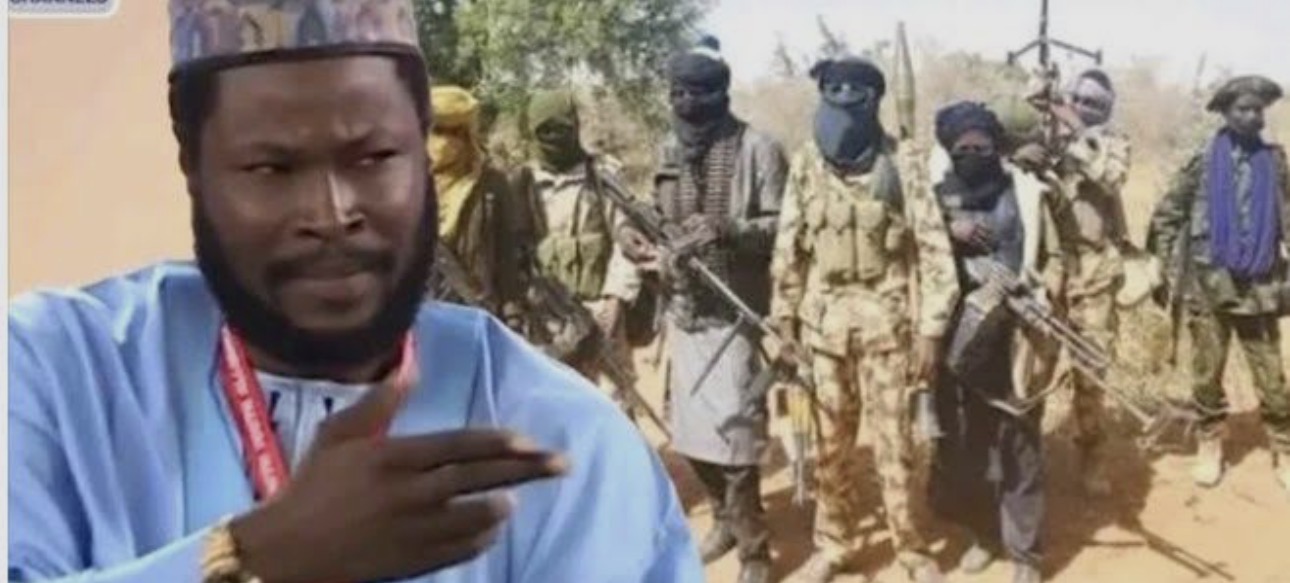
Evaluating the recent media exchanges between Samaila Kaigama of the Borno South Youth Alliance and Senator Ali Ndume over the tragic abduction of 416 residents from Ngoshe in Gwoza Local Government Area requires stripping away sensationalism to examine the operational mechanics of what actually transpired.
One does not need to be a partisan defender of Senator Ali Ndume to recognize that the narrative presented by Mr. Kaigama suffers from deep structural flaws, procedural anomalies, and critical legal contradictions.
The Priority Misalignment: Auditing Ransoms vs. Stopping Terror Financing
The most glaring flaw in Mr. Kaigama’s public crusade is a fundamental shift in moral and legal priorities. In his media appearances, Kaigama’s primary outrage appears focused not on the illegal and dangerous precedent of state or private actors paying billions to terror groups, but on the whereabouts of missing funds.
Fixating on accounting discrepancies within an illegal transaction reveals a troubling perspective. Paying financial ransoms to proscribed groups like Boko Haram or ISWAP is an explicit violation of federal counter-terrorism laws that directly fuels the regional insurgency. By treating an illicit ransom payout as a legitimate business transaction subject to public accounting rather than a grave national security breach, Kaigama normalizes terror financing while focusing entirely on monetary loss.
Operational Absurdity and the Physical Reality of Currency
From an operational and logistical standpoint, the claim that a lawmaker diverted or handled billions of naira in illicit ransom cash collapses under the sheer physical reality of Nigeria’s monetary structure. Senator Ndume addressed this operational absurdity directly during his national television interviews, stating plainly that he has never seen one billion naira in physical cash in his entire lifetime, let alone five billion naira.
Moving five billion naira in physical currency into an active conflict zone like the Mandara Mountains requires massive logistical operations, heavy transportation, and extensive physical coordination. High-ranking, vocal lawmakers in the Northeast operate under continuous monitoring by national intelligence agencies and financial intelligence units. Suggesting that billions in physical cash could be privately moved, routed, or diverted through a lawmaker without immediate detection by state security apparatuses ignores the basic financial intelligence architecture governing counter-insurgency operations.
Public Solicitation and the Commercialization of Human Trauma
The most disturbing evidence undermining Kaigama’s standing as an objective mediator is his direct involvement in public financial solicitations using private banking channels. Recent broadcast messages circulated by Kaigama under the umbrella of the Borno South Youth Alliance reveal a calculated strategy of exploiting graphic, traumatizing footage of insurgent executions to induce panic and crowd-source ransom funds from the public.
In these messages, Kaigama explicitly requested public donations toward raising fifty million naira, directing citizens to transfer money into his personal Guaranty Trust Bank account number 0114051221 under the account name Samaila Ibrahim Kaigama, complete with personal WhatsApp contact lines for transaction verification. Leveraging graphic execution videos of captives to solicit private banking transfers under the guise of humanitarian rescue crosses every professional, ethical, and legal boundary. Using personal bank accounts to collect public funds for terror ransoms turns a humanitarian tragedy into an unregulated, high-risk financial enterprise.
Predator vs. Intermediary: The Exploitation of Victims’ Families
To evaluate the credibility of an accuser, one must scrutinize the methods used throughout the crisis. Reports indicate that the rift between Senator Ndume and Mr. Kaigama deepened after Ndume discovered that Kaigama was soliciting money directly from the desperate families of the abductees, instructing them to deposit funds into private banking channels.
It is particularly revealing that a growing number of affected victims and families are now stepping forward to openly testify about how Kaigama extorted them during their most vulnerable moments. Intelligence and insider sources have noted that Kaigama operated with astonishing recklessness, unsmartly utilizing his personal GT Bank account as the primary collection point for these illicit funds. A straightforward financial audit and basic ledger check on that single personal account by investigating authorities have already exposed a massive, undeniable paper trail of unauthorized financial collections.
Direct findings from regional communication channels further compound this paper trail. A close examination of circulating audio recordings across local WhatsApp groups reveals damning, direct evidence implicating Kaigama in coordinated solicitations and unauthorized negotiations. Listening to these voice notes leaves no doubt about the commercialized nature of his operations.
Ndume severed direct communication, retained those banking details, and handed them over to intelligence authorities. Soliciting payments from traumatized rural families and the general public under the guise of an informal rescue operation represents a predatory approach to a national crisis. Handing those financial records and account details over to the Department of State Services and the National Security Adviser reflects the response of a public official upholding federal anti-terrorism statutes rather than protecting a private financial scheme.
Political Rivalry: The Electoral Ambition Behind the Accusations
To fully comprehend the timing and intensity of this media campaign, one must examine the underlying political dynamic shaping the contest in Borno South. Widespread speculations and political reports identify Samaila Kaigama as a senatorial candidate under the Accord Party platform and directly vying for the same Borno South Senatorial seat occupied by Senator Ali Ndume.
This political rivalry exposes a crucial underlying motive. When an active political opponent contesting for a legislative seat uses high-profile media appearances to level staggering, unverified criminal allegations against the incumbent, the public must view such maneuvers through the lens of electoral warfare. Utilizing sensitive national security matters, tragic hostage crises, and unbacked claims of terror financing as tools to dismantle an electoral opponent’s political standing represents a dangerous weaponization of human suffering for campaign leverage.
The Statutory Framework: The Legal Trap of Unauthorized Mediation
Under Nigerian law, specifically the Terrorism Prevention and Prohibition Act of 2022, engaging in unsanctioned financial communications, public fundraising, or ransom negotiations with proscribed terror groups carries severe criminal liability.
A fundamental question that must be asked is who designated Samaila Kaigama as an official mediator in the first place. Neither the Federal Government, the Borno State Government, the Military Joint Task Force, nor the Ngoshe Stakeholders Forum ever issued a formal mandate or legal clearance for any private individual to negotiate with insurgents or collect public funds. Positioning oneself as an unauthorized intermediary in touch with active Boko Haram or ISWAP commanders regarding multi-billion naira ransoms puts that actor completely outside statutory law.
Public officers cannot act as private clearinghouses or paymasters for terror ransoms. Upon receiving these communications, Senator Ndume’s immediate handover of Kaigama’s contact and banking details to the National Security Adviser, the Department of State Services, and military command was a mandatory legal requirement under federal anti-terrorism statutes. A public figure involved in illicit diversions does not voluntarily submit his primary contact person and banking paper trails to the highest levels of national intelligence.
A Consistent Public Record Against Terror Financing
To properly evaluate motive, an analyst must examine a lawmaker’s established stance on counter-insurgency policy. Senator Ndume’s public record on terror financing reveals a long-standing refusal to endorse or participate in cash concessions to insurgents.
Ndume has consistently condemned the extraction of illegal levies, farm access taxes, and ransom payments from rural populations in the Northeast. In Senate proceedings and public briefings, he has maintained that allowing insurgents to extract cash from vulnerable citizens creates a self-sustaining war economy that validates insurgent leverage and prolongs the conflict. When approached by constituents seeking financial aid to pay off insurgent demands, his position has remained firm: paying off terrorists fuels the insurgency.
The breakdown in the relationship between both men occurred precisely because Ndume refused to participate in raising or handling private ransom funds. His public record reflects an unwavering insistence that state-led military action, enhanced troop funding, and official intelligence operations must take precedence over clandestine cash exchanges and informal account collections.
The Imperative for Public Disclosure and Speedy Investigation
As a policy analyst closely monitoring these developments, I personally insist on a swift, transparent, and comprehensive investigation by our national security apparatus. The Department of State Services (DSS) or any security agency currently investigating Samaila Kaigama must make the findings of this inquiry fully public. The Nigerian populace deserves total clarity, and the security apparatus must reveal whatever inspired this dangerous campaign once the investigation concludes.
No individual should be allowed to sit on national television, leverage broadcast airtime, and float weighty, unbacked allegations against public figures or state institutions without facing immediate legal scrutiny. Allowing unvetted assertions of this scale to circulate without statutory consequences sets an absurd precedent. Clear-cut public accountability cuts both ways. Security agencies must thoroughly audit the private bank accounts used by Kaigama to solicit funds from vulnerable families and the general public. If an open investigation reveals that Kaigama fabricated these claims to falsely implicate a public officer, accuse the government of state-level terror financing, and conduct unauthorized financial solicitations, he must be dealt with decisively under the full weight of the law. Levying frivolous or malicious allegations that touch on active terrorism is not harmless political commentary; it is an assault on national stability that demands swift prosecution to deter future blackmail.
Demand for Joint Intelligence Confrontation
When a public figure is falsely accused in the media, the ultimate test of integrity is a willingness to face statutory scrutiny. Rather than limiting his response to defensive media statements, Senator Ndume formally requested that the National Security Adviser and the Department of State Services convene a joint investigative session where both he and Kaigama are brought together for formal interrogation under oath.
A politician involved in financial diversion does not demand an open, joint intelligence confrontation before the top security agencies of the nation. Demanding a sworn, face-to-face interrogation before state intelligence authorities shifts the dispute from the court of public opinion to formal legal scrutiny, forcing the accuser to present verifiable evidence, forensic bank trails, and digital proof under penalty of perjury.
The Selective Outrage of Rights Groups and Sensationalist Outlets
The narrative surrounding this entire saga has been further distorted by the knee-jerk interventions of international advocacy groups and sensationalist media platforms. We now see international bodies like Amnesty International rushing to issue canned statements calling for the immediate release of Samaila Kaigama, treating a critical national security investigation as routine state harassment.
Amnesty International, my foot!
It defies logic to suggest that after an individual steps into the public square to level staggering, unverified allegations of state-sponsored terror financing and missing billions, statutory intelligence authorities should simply fold their arms and do nothing. Levying accusations that touch on active terrorism and national security is not a casual game. The man has serious questions to answer, and accountability must cut both ways.
During his media appearances, Kaigama repeatedly boasted that he possesses concrete evidence to back up his claims. It is therefore commonsensical that the Department of State Services (DSS) and state security apparatuses bring him in to produce that evidence under formal, sworn interrogation. An investigation is not a violation of rights; it is the standard mechanism through which claims of national magnitude are subjected to legal scrutiny.
This dynamic is made worse by the sensationalist framing favored by activists like Omoyele Sowore and similar media outlets. Rather than reporting facts objectively, these platforms consistently package security narratives to serve a predetermined agenda against state intelligence agencies. Framing every lawful invitation or investigation of a self-styled accuser as “state oppression” misleads the public and undermines national security.
Responsible public policy commentary requires waiting for the DSS and relevant security authorities to thoroughly investigate the facts, audit the financial trails, and present the real issues to the Nigerian public based on evidence rather than media theater.
The International Counter-Terrorism Dimension
The issues raised in this controversy extend beyond local political rivalries in Borno South. Because active terrorist organizations like ISWAP operate as regional cells connected to international terror networks, fabricating or floating unverified narratives regarding multi-billion naira security payouts carries serious international security implications.
Nigeria’s standing within international counter-terrorism coalitions, financial intelligence partnerships, and regional anti-money laundering frameworks depends heavily on strict adherence to terror financing prohibitions. Normalizing rumors that government entities or senior lawmakers distribute unvetted billions in cash to insurgent commanders damages Nigeria’s strategic intelligence sharing with foreign partners. Treating national security matters as media soundbites undermines the international credibility of Nigeria’s military operations in the Lake Chad Basin.
The Flawed Venue: Trial by Media vs. Institutional Accountability
The venue chosen for these accusations reveals a fundamental procedural flaw. If an actor possesses genuine, verified intelligence regarding state-level corruption in an active hostage crisis, the statutory destination for such evidence is a sworn petition to the Department of State Services, the Defence Intelligence Agency, or the Economic and Financial Crimes Commission.
Because facilitating ransom payments is illegal, a self-styled mediator cannot go to court to enforce an agreement or demand a financial commission. Preferring a television studio over an intelligence agency avoids formal interrogation. In an intelligence office, anyone claiming direct contact with terror commanders is subjected to immediate forensic vetting, digital phone line analysis, and strict burdens of proof. A television studio offers maximum emotional impact with zero legal risk, allowing an accuser to conduct a trial by media while evading the scrutiny of law enforcement.
Community Disavowal and Statutory Hostage Protocols
In crisis management, timing and community endorsement dictate motive. The abduction in Ngoshe occurred months prior, and the captives were eventually freed through state intelligence and military channels. Why wait until weeks after the victims returned home to launch a national broadcast campaign alleging missing millions? Genuine humanitarian intervention occurs in real-time during an active threat to life; a multi-month delay followed by a media blitz reflects political timing rather than emergency response.
This timeline gap is compounded by the formal disavowal issued by the Ngoshe Stakeholders Forum. When the legitimate representatives of the affected community and victims’ families clarify that an actor had no mandate or authority to negotiate on their behalf or collect funds on their account, it undermines the credibility of the entire campaign. Hostage resolution in active combat zones is managed through statutory military frameworks, such as Operation Hadin Kai and national security directives, not through informal private actors collecting cash into personal bank accounts.
Conclusion: Preserving National Security Integrity
Demanding transparency from elected representatives is a cornerstone of democratic accountability, and Senator Ndume, like any public official, remains answerable to the law and his constituents. However, accountability must be anchored in verifiable evidence, statutory process, and institutional integrity, not unbacked assertions aired for maximum theatrical effect.
Allowing media trials to replace structured intelligence reporting sets a dangerous operational precedent. It compromises ongoing counter-insurgency operations, provides unintended propaganda to terror groups, and weaponizes human tragedy for political ambition. Security agencies must now follow through on a speedy, transparent investigation, make their findings entirely public, audit all private bank accounts used to solicit funds, clear the air for the people of Borno South, and hold false accusers fully accountable under federal law.
About the Author
Abubakar M. Kareto is a Public Affairs Analyst and Strategic Communications Strategist focusing on continental, national, and sub-national governance, socio-economic issues, and public policy dynamics across Nigeria and Africa.
X (formerly Twitter): @amkareto
Email: amkareto@gmail.com.